whizzy1919@gmail.com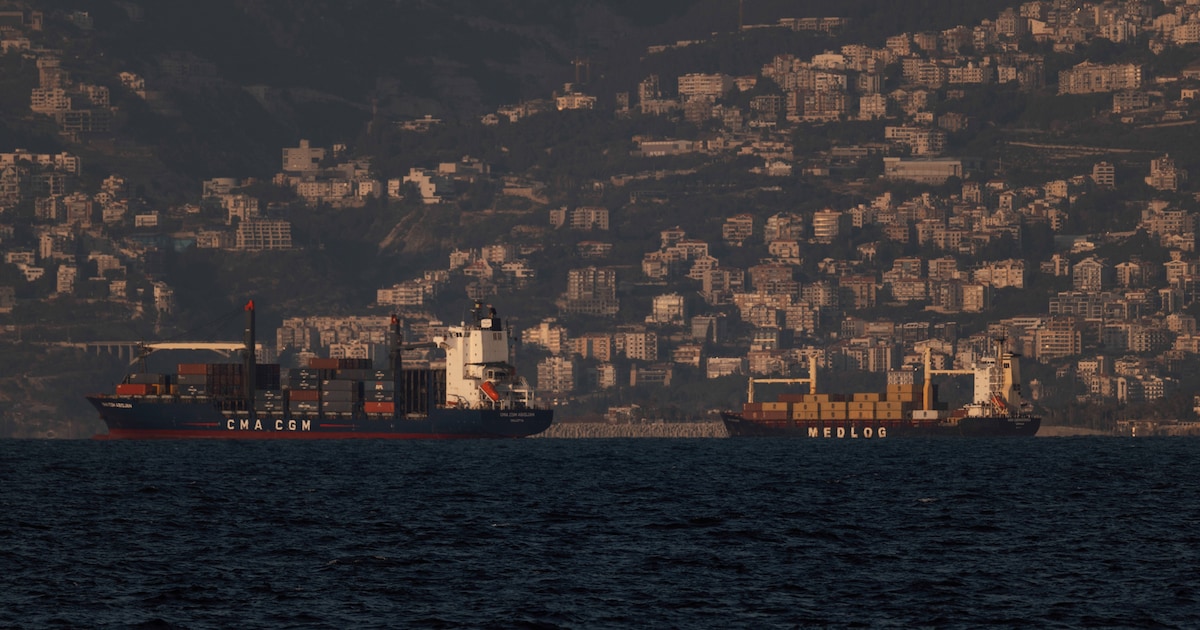
The situation in the waters of the Middle East is becoming increasingly precarious for seafarers. “Unknown projectiles” are said to have already hit ships. The provisions on board only last for a limited time.
The situation is becoming increasingly precarious for seafarers in view of the Iran war. The British one Maritime Security Authority (UKMTO) recently announced that at least three ships were attacked in the Persian Gulf and the Strait of Hormuz.
The strait marks a key route for global oil trade. There was talk of “unknown projectiles” hitting the respective ships.
One thing is clear: The Iran war has trapped numerous ships in the waters of the Middle East. These include the Persian Gulf, the Strait of Hormuz and also the Gulf of Oman. Merchant shipping has almost come to a complete standstill – the risk of being hit by drones, missiles or mines is too great.
Around 30 ships belonging to German shipping companies were affected
Local shipping companies are also affected and are in a race against time. In response to a FOCUS online query, the Association of German Shipowners (VDR) said: “There are currently around 30 ships from German shipping companies in the Persian Gulf, which are effectively trapped in the region due to the tense security situation.” These include container ships, tankers and bulk carriers as well as two cruise ships.
The situation is stressful for the people on board. They would have to endure a tense situation for days, including “regular safety briefings and constant communication with the shipping company on land,” according to the VDR.
“At the same time, everyday life for the seafarers continues: engines have to be operated and the crew ensures that the ship remains maneuverable and safe at all times. A merchant ship cannot simply be ‘parked’ like a car.”
Even if it is “at rest” or only slightly moving, operation, maintenance and safety must be continuously guaranteed. This means that the seafarers have to do their work in constant tension for their own safety. Constantly accompanied by uncertainty as to how the situation in the war zone will develop.
Race against time
The VDR further writes: “As far as supplies are concerned, most merchant ships are basically prepared to remain self-sufficient for a longer period of time. Provisions, drinking water and consumables are usually bunkered in such a way that a crew can be supplied at sea for several weeks.”
But one thing is certain: food and other supplies won’t last forever. The sailors have been stuck in the Middle East for more than ten days. How long this situation will last is unclear.
If waiting times lengthen or routes change drastically, supplies will have to be organized sooner or later. According to VDR, this can be done via ports, suppliers or other logistical solutions. And this is close to or even in the middle of a war zone.
,regionOfInterest=(972,561)&hash=a239f329ac6872f2196eceebf2e9c6a3a678d34ac7245aa01c884c194222d5ee)
Simply sailing off is not an option for most seafarers. There are said to be sea mines in the Strait of Hormuz. Marine expert Moritz Brake said on ZDF, This was a big issue even before the war began.
Mines could be placed in the water “very easily” and without much technical effort. At the same time, they are “very, very difficult to clear.” According to the marine expert, ship radar data shows that there is little traffic in the strait at the moment. The Strait of Hormuz is apparently being avoided. Brake: “The risk is enormous.”
“The Iranians can hit virtually any ship”
Shipping expert Sal Mercogliano also highlighted the uncertain overall situation in an interview with “Frankfurter Allgemeine Zeitung” (FAZ) pays attention. After all, there are other dangers. For example through drones.
“I would advocate that the US escort some empty tankers through the Strait of Hormuz into the Gulf to test the situation,” he told the paper.
“The US must demonstrate that it can guide ships through the Strait despite the threat posed by Iranian drones and unmanned watercraft.” Mercogliano also pointed out that other areas are also considered danger zones, such as the Persian Gulf. In many places it is no wider than 180 kilometers.
“The Iranians can hit practically any ship there,” he told the “FAZ”. According to Mercogliano, this is also because it is relatively easy to find out the position of a sea vessel. For example via satellite images, and many ships can be seen from the coast.
“System can withstand some shocks”
“In addition, the Gulf is teeming with small fishing boats. Nobody can prevent a fisherman from picking up a satellite phone and relaying the position of a tanker,” said the shipping expert. He believes that the critical point has not yet been reached in view of the current attacks.
“The system can withstand some shocks. However, if we don’t solve the problem within the next seven days, it will become serious.” Liquefied gas deliveries from Qatar could then no longer be replaced, and things would also become difficult with oil.