whizzy1919@gmail.com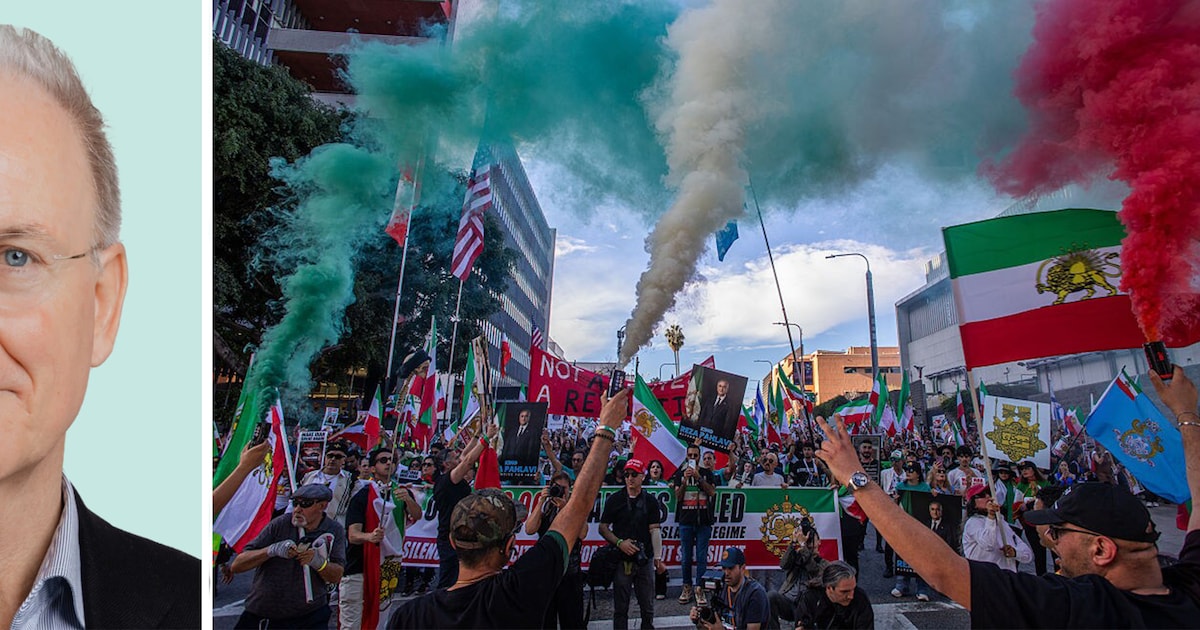
While so-called caliphate demonstrations are often characterized by aggression, exiled Iranians in Germany show a different picture. FOCUS online chief correspondent Ulrich Reitz explains the historical and cultural reasons – and why he considers the Greens’ stance to be a mistake.
Under the motto “Freedom for Iran,” thousands of people demonstrated against the mullahs’ regime in Germany over the weekend. Israeli, American and Iranian flags flew side by side – without violence, without burning flags.
For FOCUS online chief correspondent Ulrich Reitz, this is no coincidence, but rather an expression of a fundamental difference.
When asked why Iranian demonstrations are so different from so-called caliphate demonstrations, which are often characterized by aggression and violence, Reitz answers unequivocally: “Persians are not Arabs.”
Reitz: Democracy in Iran is conceivable
He points to Persia’s millennia-old history and emphasizes that Iran was only Islamized in the seventh century. The current regime is the result of a revolution in 1979 that hijacked an ancient people.
At the same time, there is “a strong, educated middle class” in Iran and the hope “that a population is capable of building a democracy or something that comes very close to a democracy.”
That’s why a caliphate demonstration by Palestinians is socio-politically “the complete opposite of a liberation demonstration by Iranians who have found a new home here. It is the complete opposite.”
There are “really qualified international lawyers” such as those from the University of Bonn, who the attacks considered justifiable under the aspect of self-defense and a possible humanitarian intervention.
At the same time, he reminds us of the internal brutality of the regime: “Khamenei’s henchmen shot down over 30,000 demonstrators and killed them in their torture chambers.”
Reitz: Greens with fatal misjudgment for 47 years
Reitz is particularly harsh on the Greens. He speaks of “a line that leads from a mistake from 1979 to Annalena Baerbock.”
To illustrate this, he quotes former Foreign Minister Joschka Fischer from 1979: The Islamic revolution “is also and especially directed against the penetration of the consumerist atheism of Western industrial societies.”
Many leftists at the time saw Ayatollah Khomeini as a liberator and not a “clerical fascist.” This misjudgment continues to have an impact today.
For Reitz, the difference can also be seen on German streets: for the Iranian exiles it is a freedom movement against an oppressive regime and for the Palestinians it is demonstrations with the opposite thrust.