whizzy1919@gmail.com
The Iran war is causing prices to plummet. What the markets fear – and what the right strategy for investors is now.
Hope has disappeared that the Iran war will end quickly. Instead, the worst fears were: the Strait of Hormuz is impassable and the price of oil is skyrocketing. It has now even passed the $100 per barrel mark. There is increasing panic on the stock markets and prices are falling massively.
Why are stocks selling off?
What began as a moderate reaction on the stock markets has now escalated into panic. The prices are falling massively. The DAX corrected over eight percent in just over a week of the Iran war. The index is now at a central support of around 23,000 points. This is where the future direction will be decided. A slip below 23,000 points could trigger further technical selling.
The reasons for the sale lie in the high level of uncertainty. Nobody knows what will happen next in the Middle East. The consequences for inflation, the economy and company profits could be severe. In such situations, many investors prefer to sell rather than wait.
What are the consequences for inflation?
The energy costs are an important component of the inflation rate. Inflation is therefore likely to be significantly higher in March. The big question is: Will this be a short-term surge? It becomes dangerous when second-round effects occur, i.e. companies pass on their increased costs through higher prices. Higher energy prices not only make fuel and gas more expensive, but also transport, industrial production, intermediate products and consumer goods. The graphic compares different scenarios. In the worst case scenario, the oil price is 120 dollars per barrel and the gas price is 90 euros/MWh for six months.
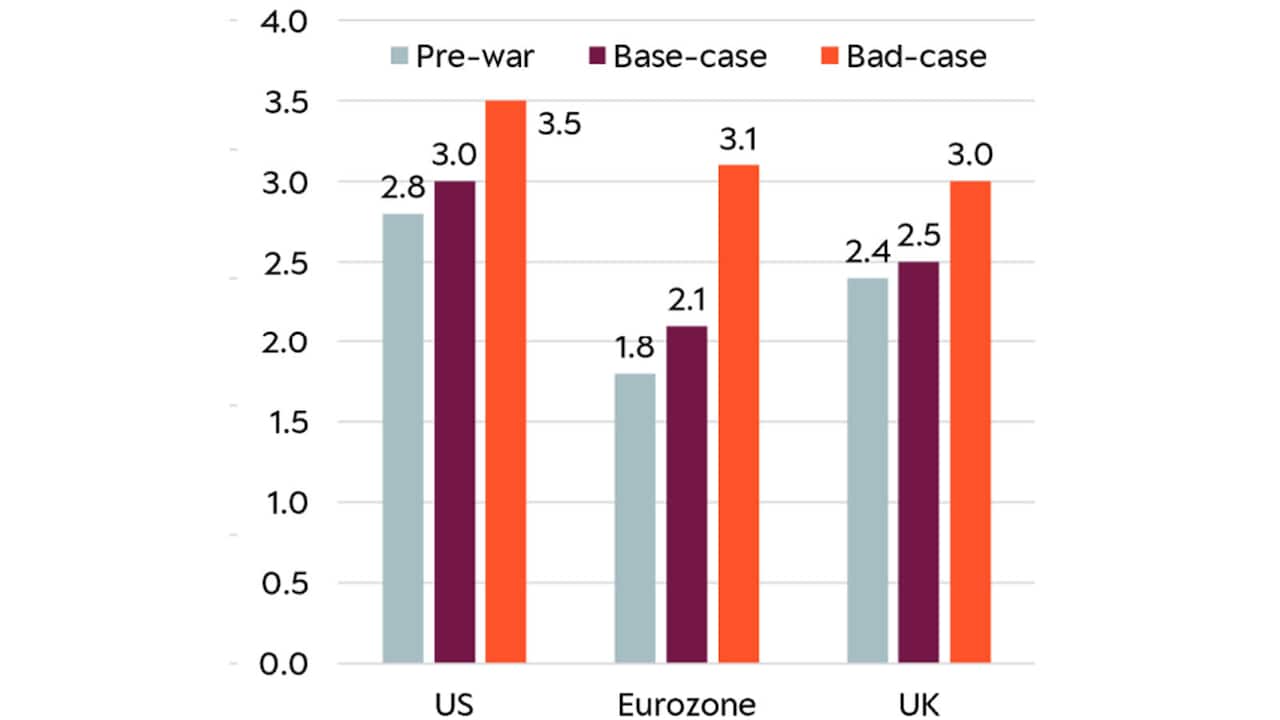
There is also pessimism on the stock markets here. Markets are preparing for a more restrictive monetary policy. Bond yields are rising. Higher interest rates than expected would also be a negative factor for stocks.
What impact does the oil price have on the economy?
High energy costs burden consumers and companies alike. Less is consumed and profits fall. If income declines, investments are often postponed and canceled. This also weighs on growth.
The graphic from Berenberg Bank shows what could be threatening. As with inflation, the word case scenario is an oil price above 120 dollars/barrel and a gas price of 90 euros/MWh for six months.
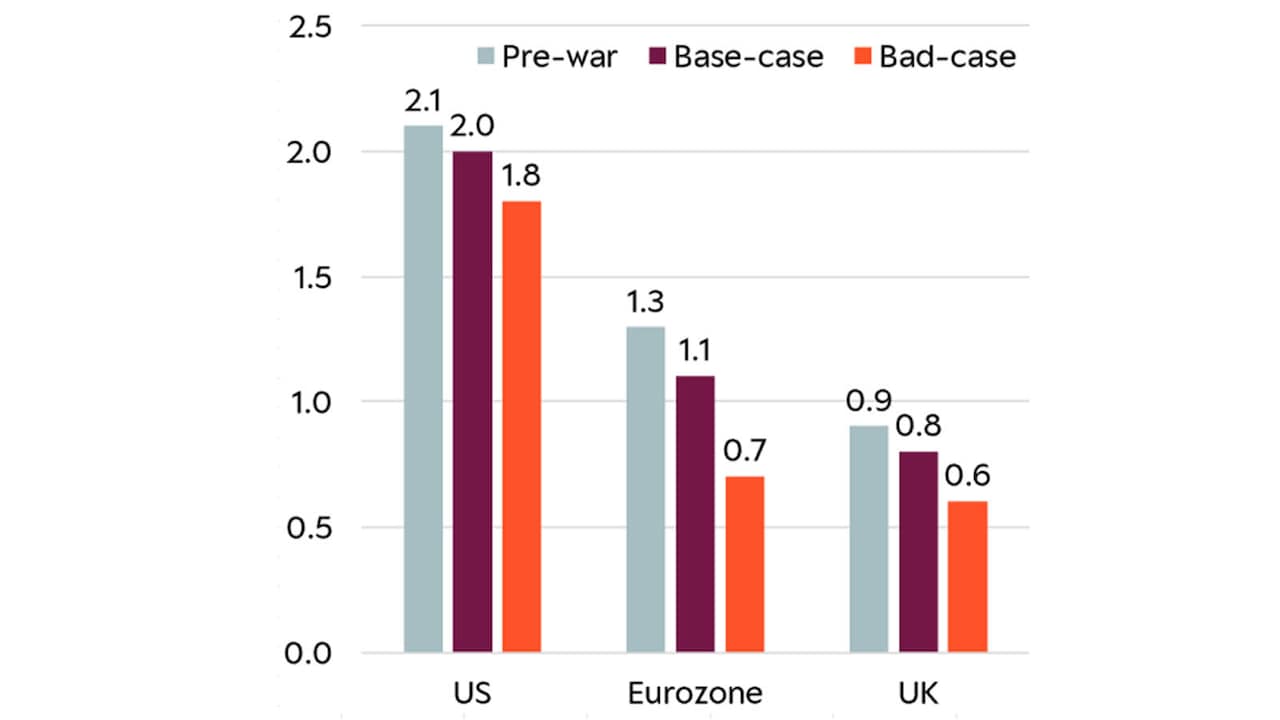
However, oil price shocks today are no longer comparable to previous crises. Despite the recent jump above $100, the economic consequences of a war with Iran are likely to be more limited than in previous decades. One reason for this is the structural change in many economies. On average, the service sector is significantly less energy-intensive than traditional industry. Additionally, the International Energy Agency shows that global energy intensity has improved over the long term, although progress has slowed recently. Higher oil and gas prices remain relevant, but today they affect an economy that is less energy dependent per unit of value added than in historical shock phases.
What is the right strategy now?
Even if the stock market is currently expecting an escalation of the war, it can all be over quickly. US President Trump is under pressure. Falling stock prices and rising gasoline prices do not match his promises to improve the lives of Americans. Furthermore, there is little popular support for the war, polls show. Since Trump has never precisely defined his goals in the Middle East, he could flexibly declare victory and offer Iran a deal. The relief would directly lead to an increase in prices.
That’s why it makes sense not to panic now. The price slide is an opportunity to purchase previously expensive stocks at a cheaper price. Anyone who has a savings plan can now look forward to getting more ETF shares for their money.
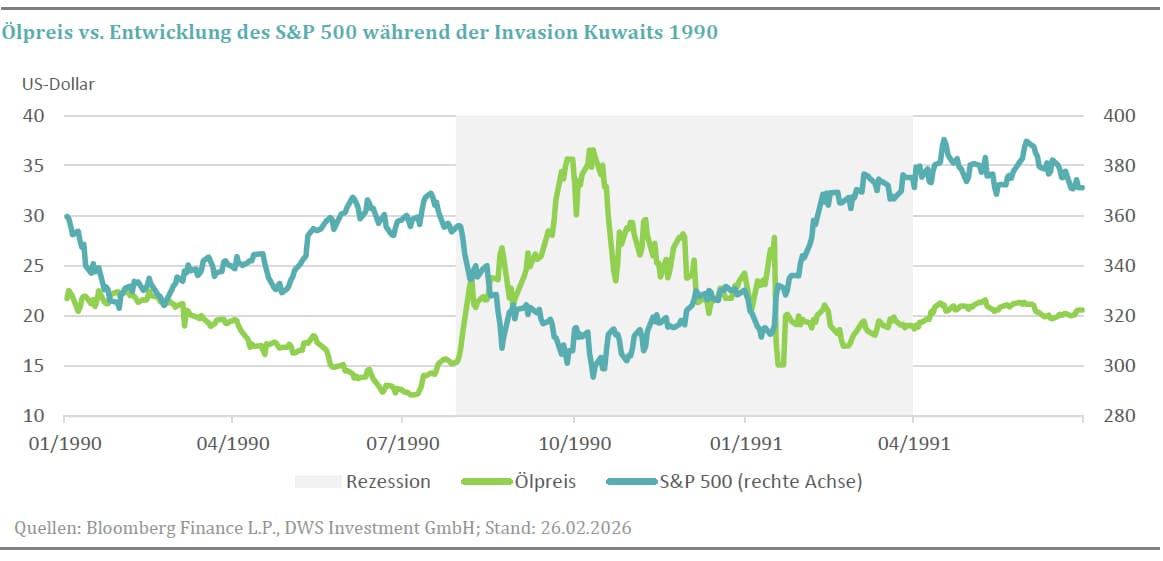
A look at the Iraq war in 1990 (see graphic) is helpful for your nerves: there was a severe slump in the markets of 20 percent. The low point was reached after two months, and the decline was evened out again after six months.