whizzy1919@gmail.com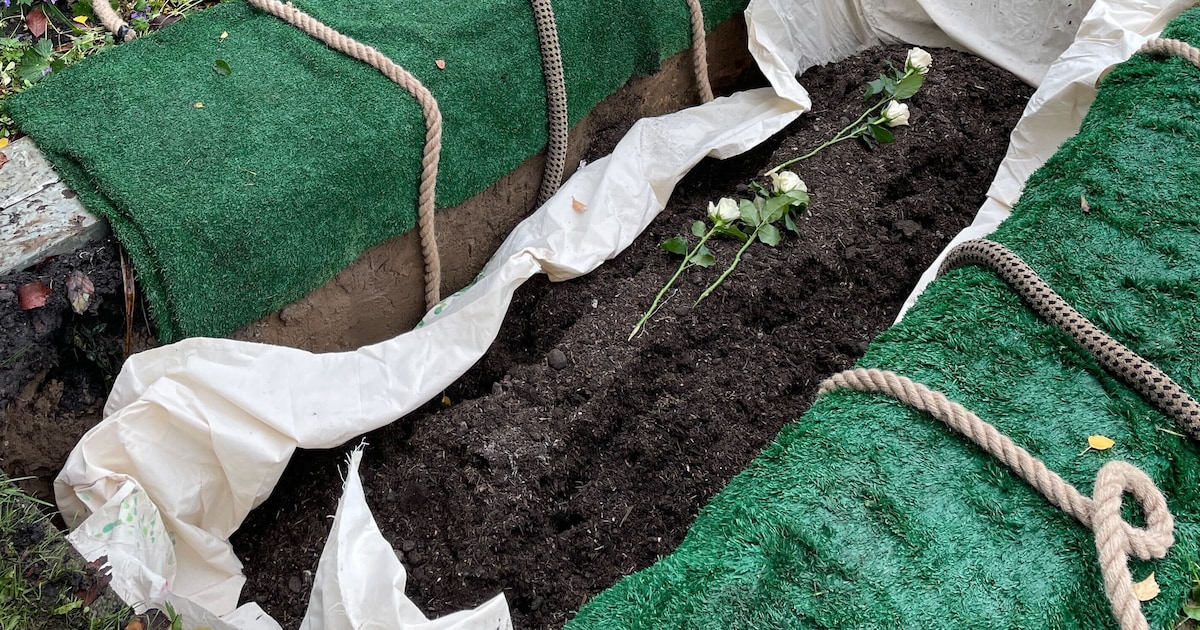
“A tree is now growing on her grave”: More and more Germans are choosing a new culture of farewell with “reburial.” With this model, a German startup is now even active in the USA.
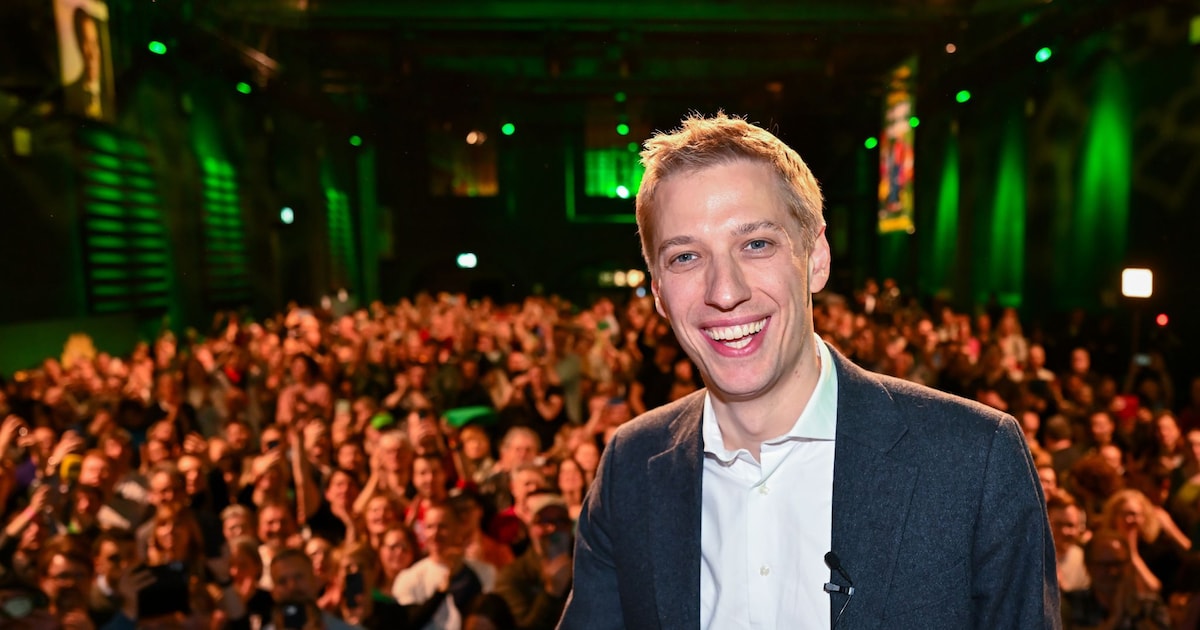
When Pablo Metz spoke to his 96-year-old grandmother about her final wishes, she complained about a dilemma: German laws only allowed burial or cremation, gravestone or urn – variants of a system that primarily works at a distance. But she wanted closeness, she said: “Actually something like that, so that I can somehow still be present in your life.”
This sentence motivated him to come up with an idea that today operates under the brand name “My Earth”. When his grandmother died shortly before her 100th birthday, her grandson fulfilled her last wish: her body was not burned or placed in a coffin, but “reburied.” Within 40 days, their tissue disintegrated into humus. “A little tree is now growing on her grave,” says Metz, 45. “It was something very special for our family.”
Together with the mechanical engineer and industrial engineer Max Hüsch, 38, the business economist founded the Berlin company Curriculum Vitae (“Circle of Life”) at the end of 2020. A startup in an industry where little has changed for more than 150 years.
Pour beer into the grave
Anyone who decides to have a reburial first goes through familiar steps after death: the body is cared for, washed, dressed and laid out. But then another chapter begins: the embedding in the coffin-sized “cocoon”, which is somewhat reminiscent of a modern jacuzzi. “It is made of recycled plastic because it requires less energy to produce and is therefore more sustainable than stainless steel in the overall life cycle analysis,” explains Metz.
More than half of the families are involved in the embedding in the cocoon and help to bed the deceased on straw, hay and alfalfa. “Many people add flowers, some add a piece of chocolate,” says Metz. A man gave his deceased friend one last beer: he opened the bottle and carefully poured it into the cocoon. The bottle stays outside, “but everything that is organic is allowed in to a certain extent.”
70 degrees in the cocoon
There is no need for chemical additives. Instead, a controlled ventilation system in the cocoon creates the conditions that microorganisms need: oxygen, moisture and an optimal carbon-nitrogen ratio.
“The body itself can’t handle it,” says Metz. “We adjust this with hay and straw, also with clover or alfalfa.” Intensive decomposition sets in immediately in the cocoon: bacteria and fungi break down tissue, the temperature rises to up to 70 degrees Celsius, germs are killed, and after about 40 days, a homogeneous, crumbly substrate – soil – remains. Sensors monitor temperature, humidity and oxygen supply. A slow, regular rocking movement of the cocoon on wheels ensures that liquids remain evenly distributed.
“All organic life eventually becomes earth”
For this purpose, Curriculum Vitae has set up two “Alvaria” (Latin for beehives) in former chapels in the New Mölln Cemetery and the Eichhof Park Cemetery in Kiel; it smells of hay and straw. Larger bone remains are ground up, similar to cremation, but without a flame.

The Institute of Forensic Medicine at the University of Leipzig, which is scientifically supporting the project, comes to the conclusion that the bones age as much in 40 days as they do in 20 to 50 years in an earthen grave. This novel burial method may colloquially be called composting, but the technical term is “natural organic reduction” (NOR).
“All earth was once organic life,” says Metz. “And all organic life eventually becomes soil. And that’s exactly what happens.”
Demand is increasing
The earth is placed in a cloth and given to the undertaker, who organizes the funeral with the family. “We are not a funeral home,” emphasizes Metz. Instead, Curriculum Vitae now works with more than 200 funeral homes in Germany and neighboring countries.
Reburial is still a niche, but a growing one. According to Metz, “My Earth” has carried out around 70 reburials so far, and demand is increasing. Schleswig-Holstein initially permitted re-interment in 2022 as a pilot project; Burying the resulting earth is now also permitted in cemeteries in Hamburg and Mecklenburg-Western Pomerania.
The cost is around 4,250 euros, comparable to a cremation, which, according to the Federal Association of German Funeral Directors, costs an average of between 4,000 and 4,500 euros.
Meadows of life instead of rows of graves
Together with cemeteries, “My Earth” has developed so-called living meadows: areas that are only mown twice a year so that the meadows bloom. “This is of course valuable for biodiversity,” says Metz. “We put the earth there and the tree can then be planted in these cemeteries.”
Because German burial laws stipulate that families are not allowed to take the earth home with them, the team is looking for symbolic ways out. “We are launching an offer that we call My Tree,” says Metz. “You can plant a tree in the ground at the grave site in selected cemeteries and take it home in a plant pot after a year.” The earth stays where it legally has to stay – the tree becomes a movable, living souvenir.
A comparative study by the insurer DELA, which examined different types of burial based on environmental indicators, came to the conclusion that reburial only causes around ten percent of the environmental impact of a cremation, primarily because cremations require fossil fuels and leave up to 800 tons of filter residue as hazardous waste every year. My soil uses biofilters made from wood chips that can be composted after three years.
Who chooses this path? “The largest group just likes the idea of becoming earth and being preserved in this cycle of life in nature,” says Metz. “Earth to earth.” A second large group are people who consistently design their lives sustainably: “They say: I try to make as many decisions as possible that are good for this world, good for my grandchildren. And now, at the last step, not to do that when there is an alternative that still feels good?”
Concerns about “signaling effects”
An engineer from Stuttgart, who had worked at Daimler all his life, traveled to Kiel specifically to see the process. “I understand how the technology works,” he said at the end. “I want to do that.”
Metz and Hüsch claim that they had numerous discussions with funeral directors, religious representatives and pastors before founding the company, but criticism also comes from these quarters. The Bavarian Ministry of Health, for example, rejected reinterments because they suggested “a violation of the dignity of the deceased and the general public’s sense of piety.” The former head of the Saxony-Anhalt Catholic Office, Stephan Rether, also found “the public signal effect of the reburial extremely worrying. Here, unlike with coffins or urn burials, there is no perception of personal identity in death.”
The Kiel theology professor Hartmut Rosenau, on the other hand, came to the conclusion in a 13-page analysis that a reinterment preserves the dignity of the deceased, the general moral feeling and the respectful treatment of the deceased.
From Schleswig-Holstein to Brooklyn
While laws are still being debated in Germany, “Natural Organic Reduction” or “human composting” is already legal in around a dozen states in the USA, especially on the West Coast. The company Recompose in Seattle has been a pioneer since 2020. The images are similar: steel vessels, carefully controlled processes, in the end sacks of earth that end up in cemeteries, forests or gardens.
Of all the markets that have the lead, they are now looking to Germany. Green-Wood Cemetery in Brooklyn, one of the oldest and most prestigious cemeteries in the USA, has decided to collaborate with “My Earth”. In the park cemetery founded in 1838, where Civil War generals and popular artists as well as simple New York families are buried, an area could be created by the end of this year in which 14 cocoons from Germany will stand.
“They looked at it very, very closely and were here in Germany several times,” says Metz. “And ultimately the overall concept convinced them – also because of the special focus on sustainability.”

“We don’t want to ban anything”
One detail also plays a role here: efficiency. “I weigh around 80 kilograms, and I become 80 to 90 kilograms of new earth,” says Metz. “If I were to be composted at Recompose, my 80 kilograms would become at least 250, more likely 400 kilograms of new soil because more substrate is added there.”
Thanks to the sensors, Metz can even see on the screen that everything in the cocoons in New York is being composted as planned from Germany.
For Metz, this is more than just an export success. It is a symbol of how much people’s wishes regarding death are changing internationally. He sees re-interment not as a replacement, but as a supplement. “We don’t want to ban anything,” he says. The aim is to offer a third option alongside burial and cremation.
German burials? “Not so innovative”
Re-earthing arises in a field of tension between innovation and persistence. In Germany, says Metz, “people are not as innovative everywhere as other countries.” Funeral laws would have to be adjusted, and some in the cremation industry were specifically working against the new form. “There is fear of innovation,” he says. “There’s nothing like that in the USA. In the USA, re-earthing providers are regularly recognized by the industry for their innovation.”
A “circle of friends” of almost a thousand people has formed around “My Earth” who, on behalf of the Reerdigigung Foundation, speak to politicians on a voluntary basis, organize events, approach funeral homes and do media work. The aim: to establish a practice that is technically controlled – and at the same time builds a symbolic bridge between body, soil and memory.
“The mission is fulfilled,” says Metz, “when it is normal to say: I will be reburied.”
Maybe then a small tree will grow on many graves. Like his grandmother’s.
FOCUS online Earth is dedicated to the climate crisis and how to overcome it.
Fact-centered. Well-founded. Constructive. Every Friday as a newsletter.