whizzy1919@gmail.com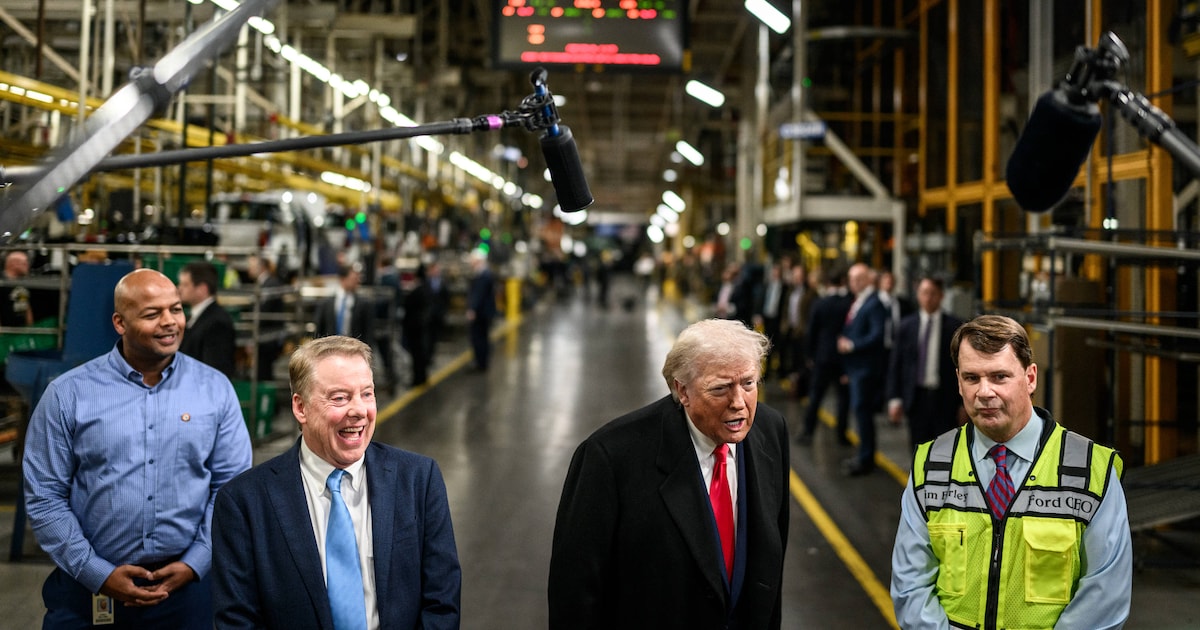
While the USA is blocking Chinese electric cars with tariffs and tech bans, Ford is bringing an unusual model into play: joint ventures with China. The idea follows an old pattern – only this time in the opposite direction.
January 2026. Detroit. Donald Trump talks about Chinese car manufacturers. And says: “Let the Chinese in.” He says: They should build factories in the USA. Hire Americans.
There is an idea behind this Ford CEO Jim Farley. And a playbook that we in the auto industry know all too well. Today we’ll look at why the USA could open its car market to China now of all times. And what that means for us in Europe.
Jim Farley is scared
January 2026. Ford CEO Jim Farley meets with senior Trump administration officials. He makes a suggestion: Chinese manufacturers should be allowed to produce in the USA. In joint ventures with American companies. The US company holds the majority. Profits and technology are shared.
Why does he want that? At the end of 2025, Ford buried its EV strategy:
- Several electric models canceled
- $19.5 billion written off
The EV division alone has made a loss of over $16 billion since 2022. About China, Farley says: “With the existing factories in China, they have enough capacity to serve the entire North American market. That would put us all out of business. And: “If we lose that, we have no future at Ford.”
Ford boss is targeting joint ventures with China
He means the global technology competition with China. Not just for electric cars. Also in software, batteries and connected vehicles. BYD has ford overtaken in global sales figures. Farley drives one privately Xiaomi SU7, which he imported from China. He calls Xiaomi “the Apple of China”. The man knows what’s coming.
Farley’s logic: It’s better to bring in Chinese technology through joint ventures now than to be overwhelmed in five years. But it’s not that easy.
Philipp Raasch was at Mercedes for 10 years. Today he writes in his newsletter Der Autopreneur about Tesla, China and why German car manufacturers are losing touch. His analyzes are followed by 37,000 readers – including decision-makers at VW, BMW and BYD. Subscribe here for free. He is part of us EXPERTS Circle. The content represents his personal opinion based on his individual expertise.
The three walls
Because what happens if Chinese car manufacturers want to come to the USA? You stand in front of three walls.
Over 100 percent on Chinese imports. This means their cars are practically uncompetitive.
The US has banned Chinese software and hardware in connected vehicles. Software from 2027, hardware from 2030. The rule does not only apply to imports. But also for cars that are built in the USA.
The former US Commerce Secretary put it this way: “That’s really important because we don’t want two million Chinese cars on our roads and then we realize we have a threat.” So for the US, Chinese cars are a matter of national security.
And even if Wall 1 and Wall 2 fall: no American knows BYD. No dealer sells their cars. No mechanic can repair them. Chinese manufacturers would have to take years to establish themselves in the market. Just like we are currently experiencing here in Europe.
So the US market is pretty closed to Chinese manufacturers. And then Trump suddenly says: “If they want to come and build the factory and hire you and your friends and neighbors, that’s great. I think that’s great. Let China come.” How does that fit together?
The playbook turns around
For Trump, the calculation is probably simple: factories in the USA mean American jobs. For Farley it’s about more: namely technology transfer. And there is a model for this that we know well in the auto industry. In 1984, VW was one of the first Western car manufacturers to establish a joint venture in China. With the state-owned company SAIC. The deal: market access in exchange for technology transfer.
This wasn’t an isolated case. For nearly 40 years, China has forced Western manufacturers into joint ventures. The strategy: Learn from the partners. And build your own technological skills. It worked. Chinese manufacturers have caught up in the software era. And overtaken.
Farley now faces the same problem. Ford has a massive backlog in software and batteries. You tried to catch up on your own. Ford spent four years building its own software platform. Following the example of Tesla. The project was canceled in 2025. Just like the EV strategy now.
But the new logic has a catch
So he reverses the logic: bring in Chinese technology through joint ventures. With an American majority. Under American control. And then learn from Chinese technology. Same playbook, just in the other direction. But there’s a catch.
The US Department of Commerce’s software ban doesn’t just apply to imports. It also applies to cars built in the USA. If a joint venture builds Chinese software or hardware into connected vehicles, those vehicles will not be able to be sold starting in 2027. It doesn’t matter who holds the majority of the company.
A joint venture does not solve the core problem. Unless the rules change. And there is a signal for exactly that: In January 2026, the Trump administration fired the very official in the Department of Commerce who took the lead in enforcing the software ban. And the US isn’t the only one making moves.
Canada has opened the door
On March 1, 2026, a deal between Canada and China came into force. Canada has reduced tariffs on Chinese electric cars from 100 percent to 6.1 percent. Up to 49,000 vehicles can be imported per year. In return, Canada expects Chinese manufacturers to establish joint ventures with Canadian companies within three years. Build factories. create jobs. This is not legally binding. But the message is clear: If you want long-term access to the market, you should invest locally.
Of course, Trump isn’t happy about it. He has warned Canada against becoming a “drop off port” for Chinese cars. His fear: The Chinese build their cars in Canada. And bring them from there to the USA. Something very similar happened on the southern border.
China is also making joint plans with Mexico
BYD actually wanted to build a large factory in Mexico. But the plan failed. China itself has delayed approval. The fear: Technology could flow to the USA via Mexico.
And Trump also put pressure on Mexico. Anyone who cooperates with the Chinese risks access to the US market. Unlike Canada, Mexico responded. In December 2025, the government raised tariffs on Chinese cars from 20 percent to 50 percent.
Nevertheless, around one in five cars sold in Mexico already comes from China. And something is happening in the USA too. Geely announced at CES 2026 that it would enter the US market with Zeekr and Lynk & Co within 24 to 36 months. Geely also owns Volvo, among other things. And Volvo already has a factory in South Carolina. It is currently only around 13 percent full. The infrastructure for entering the US market is already in place.
My take
China has benefited from Western technology for 40 years. About forced joint ventures. And it worked. Now the USA could reverse the model. At the end of March, Trump travels to Beijing for a summit with Xi Jinping. Access to the US auto market for Chinese manufacturers could be part of the negotiations. And Farley has already put the model on the table.
We know the pattern from Trump:
- First you exclude the other person. You’re taking away something he wants: access to one of the largest markets in the world
- And then you go into the negotiation. And offers exactly that again. But not for free
This would also have an impact on European car manufacturers
If such a joint venture model were to actually come to the USA, it would of course be made for US companies. Ford would have access to Chinese technology. European manufacturers probably not. They are not US companies. But that’s not the only problem.
In the US market they would suddenly be competing against the same Chinese manufacturers that they are already fighting in China and Europe. And then there is an irony. While the USA is considering such a joint venture model, China is currently abolishing it. Toyota is building its own factory in Shanghai. Without joint venture partners. Tesla already has one. China no longer enforces joint ventures. It doesn’t need them anymore. That brings us to Europe. Because compared to the USA, our walls are significantly lower.
,regionOfInterest=(490,544)&hash=068971f47d559eed99882ea084687da977bce844135c1e84883bb460bef7adf2)
We also urgently need joint ventures with China
Europe has tariffs of up to 45 percent on Chinese electric cars. But they can be avoided. Either through local production. Or about minimum prices and quotas, such as the EU is currently negotiating with individual manufacturers. There is no tech ban. And Chinese manufacturers are already active in Europe and building trust.
So do we also need joint ventures in Europe? I think so. And urgently. Because tariffs alone will not solve the problem. When Chinese manufacturers build factories in Europe, they create jobs. But only in production. In other words, exactly the jobs that will be automated away sooner or later anyway.
The actual added value remains in China. The software, the battery technology, the platforms. The intellectual property. But that must be exactly the goal: that technology and know-how come to Europe. Not just the assembly.
Our problem: lack of negotiating power
The problem: Whether something like this can be implemented is a matter of negotiation. And in this negotiation we are worse off than the USA. The US can negotiate from a position of strength. China has strategic dependencies on the USA in many areas.
Things look different in Europe. Of course, China would like access to the European sales market. This is our bargaining chip. The problem: We also want access to the Chinese market. VW, Mercedes and BMW do a huge part of their business there. And not just for cars. Also with rare earths, chips, batteries. Europe has strategic dependencies on China in many areas.
The bottom line is that we probably need China more than China needs us. Not a good starting point for a negotiation where you want something from the other person. Nevertheless: Without controlled cooperation, Europe will not catch up with the technological gap. Trump will be negotiating in Beijing at the end of March. Canada already has its deal. It is time for a European initiative.