whizzy1919@gmail.com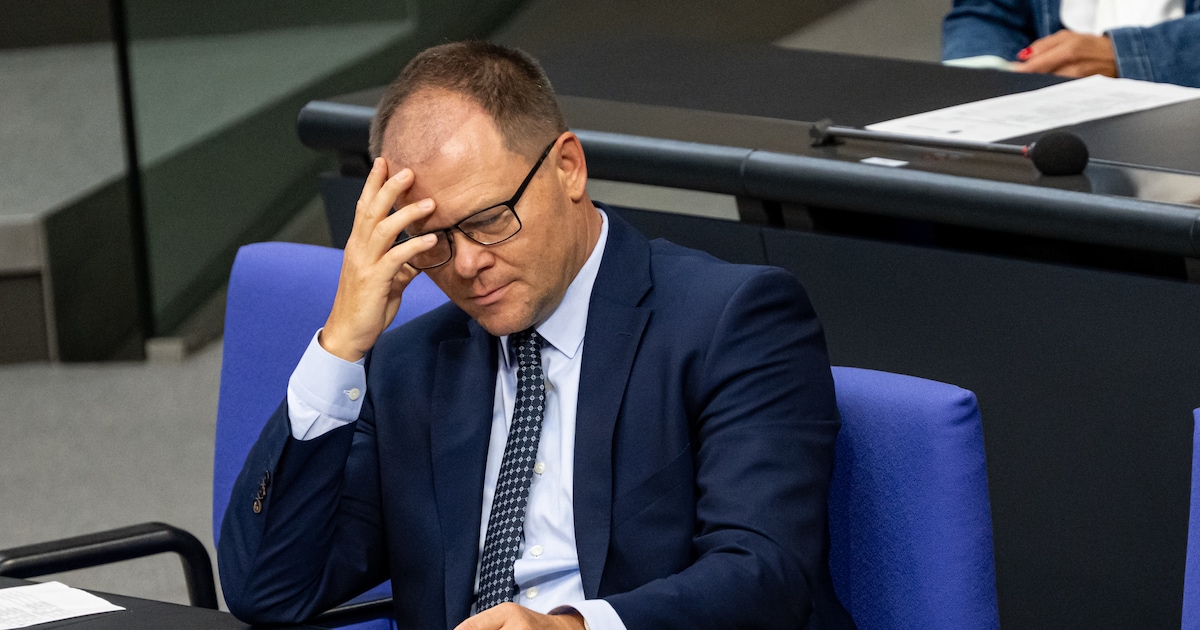
Climate protection in Germany has stalled – this is shown by the federal government’s new climate balance. In 2030 there is a risk of fines amounting to millions. The report does not want to deny that the federal government will worsen the problem with its new heating law.
German greenhouse gas emissions only fell marginally in 2025. Last year, the Federal Republic emitted a total of 649 million tons of so-called CO2 equivalents – a decrease of 0.1 percent compared to the previous year. This emerges from the federal government’s official climate balance, which the Federal Environment Agency (UBA) and the Environment Ministry presented on Saturday in Berlin. The data was available to FOCUS online Earth in advance.
Buffer exhausted
The German Climate Protection Act requires the government to publish the emissions data for the past year by March 15th at the latest. The data is intended to show whether Germany is on track to meet its climate targets: By 2030, the Federal Republic wants to have reduced its CO2 emissions by 65 percent compared to 1990, and by 2045 Germany should be completely climate neutral.
As things currently stand, the 2030 target will be narrowly missed, the report says. With the current measures, CO2 savings will only be 62.5 percent by then. The annual requirements of the Climate Protection Act, on the other hand, are still just being met, but the buffer of 81 million tons of CO2 developed in recent years has almost been used up.
Hoping for trees and electric cars
Emissions continue to fall in the energy and industrial sectors, although this is also due to declining production in the economy. There are also positive things to report from the German forest, which has been able to recover somewhat from the previous years of drought: Now the forest is once again a CO2 store and no longer a source of CO2.
The fact that climate protection has stalled in Germany is primarily due to two areas: the transport sector and the building sector. In the Transport sector Emissions have increased by 1.5 percent to currently 146.3 million tons of CO2. The lion’s share of these emissions comes from individual road traffic, where sales of fossil fuels such as gasoline and diesel increased again last year. However, the “positive developments in electromobility” could soon reverse the trend, the report says.
Law with consequences
The situation is particularly difficult Building sectorwhere the main focus is on heating. Emissions there have even increased by 3.4 percent to 103.4 million tons of CO2. The reason was the comparatively cold winter months, which increased gas consumption in German boiler rooms.
Spicy: In the documents, the UBA and the Ministry of the Environment point out that the calculations were still based on the old Building Energy Act (GEG). Among other things, this stipulated a quota of 65 percent renewable energy for new heating systems. However, the federal government made up of the Union and the SPD wants to abolish the 65 percent rule and continue to allow the installation of fossil gas and oil heating systems. The share of fossil heating systems should increase every year of “green” gas and oil be mixed in.
However, especially in the short and medium term, the reform would significantly increase CO2 emissions in the building sector. At the beginning of March, a study by the Freiburg Öko-Institut came to the conclusion that the plans would result in additional emissions of five to eight million tons of CO2 by 2030. A more precise estimate is currently not possible, among other things because the federal government wants to pass the new heating law without first setting the quotas for adding green gas. These should only be submitted later.
The 255 million gap
The climate goals would then hardly be achievable without compensatory measures. The result would not only be a climate problem, critics warn, but also a problem for the state treasury. Because at the European level, Germany is also obliged to protect the climate. As part of the EU’s so-called “Effort Sharing Regulation”, Germany still has to achieve an additional goal: a reduction of 50 percent of CO2 emissions by 2030 compared to 2005.
In contrast to the national climate target, Germany is preparing to significantly miss this European target. There is now a gap of 255 million tons of CO2, according to the report, and the possible effects of the new heating law are not yet taken into account. Germany would then have to buy certificates from other EU states that have exceeded their requirements – in 2022, according to the Ministry of Economic Affairs, this cost millions.
Praise for the heat pump
So can the new heating law at least increase the likelihood that Germany will have to pay expensive penalties? Apparently even the federal government is assuming this. “Investments that free buildings and transport in Germany from dependence on fossil energy are particularly urgent in order to purchase certificates from other sources
EU member states should be avoided if possible,” says the communication from the UBA and the Ministry of the Environment. The communication repeatedly emphasizes the central role of the heat pump in achieving climate goals – in contradiction to the planned reform of the heating law.
In fact, the Ministry of the Environment was not involved in the agreement on the heating law reform. The key points were agreed upon by the coalition leaders, the leading Ministry of Economic Affairs and the CDU and SPD factions after months of negotiations, without the participation of Environment Minister Carsten Schneider (SPD).
“I’m relying on common sense”
Schneider had so far avoided publicly taking a position on the planned law. Schneider only said he respected the parliamentary groups’ decision during a questioning in the Bundestag at the beginning of March. He hopes that people will choose climate-friendly heating solutions even without government regulations: “I’m relying on common sense.”
The next important date for Schneider is at the end of the month. Then he has to present the federal government’s climate protection program – a detailed planHow Germany intends to achieve its climate goals. Heating law or not.