whizzy1919@gmail.com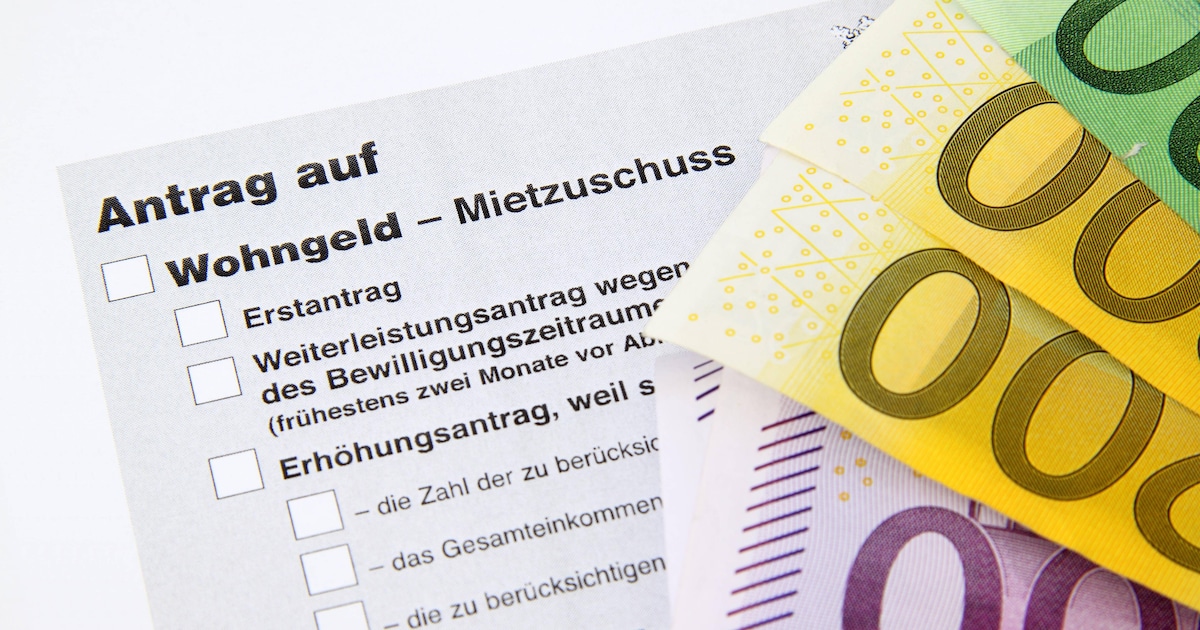
The number of pensioners receiving housing benefit in Germany more than doubled from 2020 to 2024. Who is entitled and how much money is available.
While a good 300,000 pensioners were still receiving housing benefit in 2020, four years later there were already almost 700,000. This emerges from a response from the federal government to a request from the AfD, which was available to the AFP news agency on Friday. This development is reflected in a significant increase in housing benefit spending – which was also due to a change in the law that came into force in 2023. At that time, the average housing benefit doubled of an existing housing benefit household by around 190 euros to a total of around 370 euros per month.
Who gets housing benefit
Pensioners who cover their housing costs receive housing benefit can no longer afford alonebut do not claim basic security, regardless of whether they live in a rented home or in their own home. Anyone who lives in a nursing home can also receive the subsidy.
How high it is depends on the individual. He depends on
- their household income
- their rent
- the price level of rents in your community
- how many other members your household has
There is no specific income threshold that applies throughout Germany. Those who receive little pension and live in an expensive city usually receive the highest subsidy.
Calculation example: 120 euros housing benefit with 445 euros rent
A calculation example shows that an application can quickly pay off, even with low rents or a medium pension: Let’s assume a single pensioner from Jüteborg in Brandenburg receives a gross pension of 1,300 euros and pays 445 euros in rent. According to the Federal Building Ministry, she could receive 110 euros in housing benefit.
The Federal Ministry of Construction has also published a calculator that you can use to calculate your entitlement online. You will find these here.
The Application for housing benefit ask at your local authority’s housing benefit office. If approved, you will initially receive housing benefit for 12 months. It can be extended to 24 months, then a new application is required.
Big differences between East and West
As can be seen from the response from the Federal Ministry of Construction, 500,000 pensioners in western and around 200,000 in eastern Germany will receive housing benefit in 2024. In 2020 there were around 223,000 and around 77,000 respectively.
In West Germany, 2.58 percent of all pensioners received housing benefit (2020: 1.16 percent), in East Germany it was 4.02 percent (2020: 1.61 percent).
Expenditure on housing benefit quadrupled
According to the information, monthly spending on housing benefit quadrupled from 35.2 million euros in 2020 to 143.5 million in 2024.
According to the information, the share of housing benefit expenditure for pensioners in total housing benefit expenditure increased from 33.5 percent in 2020 to 41.1 percent in 2024. In East Germany, housing benefit payments for pensioners account for more than half of housing benefit payments, accounting for 57.4 percent.