whizzy1919@gmail.com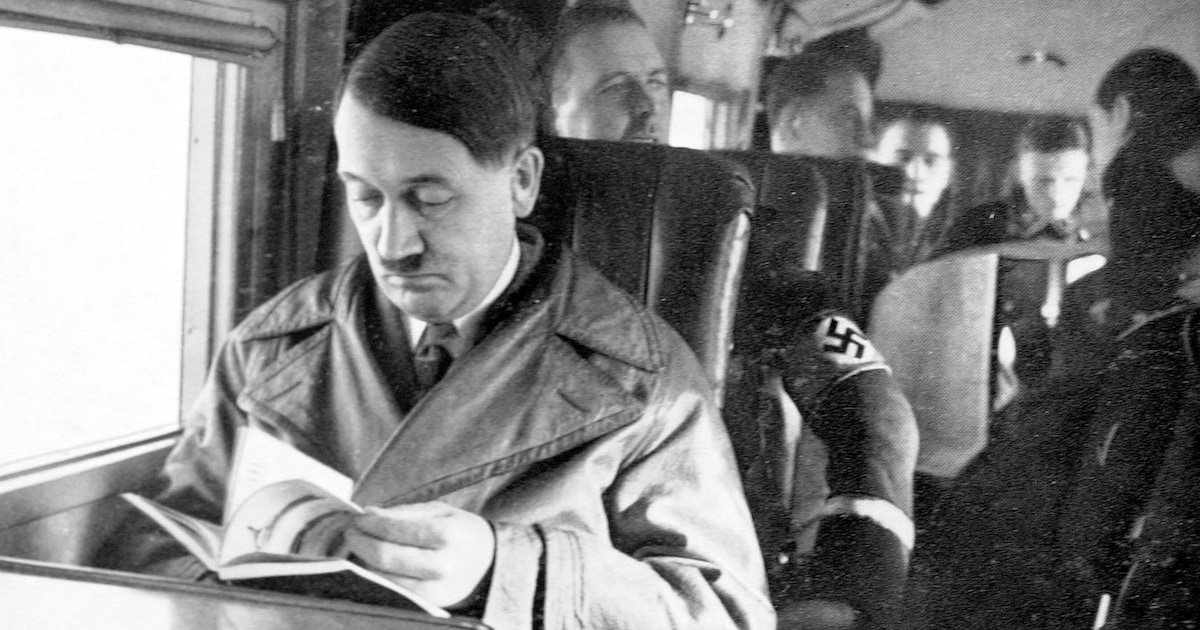
90 years ago, Wehrmacht troops marched into the demilitarized Rhineland. The German dictator feared a military reaction from France and England – but they missed the chance to put him in his place.
Meet on February 27, 1936 Adolf Hitler, Propaganda Minister Joseph Goebbels and Hermann Göring, head of the Luftwaffe and de facto second man in the Third Reich, have lunch with the “Führer” in the Reich Chancellery.
The conversation revolves around a plan that Hitler had in mind: the remilitarization of the Rhineland. Goebbels summarizes the result of the consultation in his diary with the words “Still a little premature”.
Hitler’s plan to let the Wehrmacht invade the Rhineland, which has been demilitarized since the Treaty of Versailles, would be a blatant violation of the treaty, which most Germans hate as a “disgraceful dictate.”
Hitler is undecided
This is clear to those involved. The crucial question is: How would the two Western powers France and England react to this? Would they respond with military countermeasures?
Or would they let Hitler have his way, as with the forbidden reintroduction of conscription a year earlier? And if the existence of a German air force, which was also banned, became known?
Hitler is by no means as determined as the propaganda and his self-portrayal suggest. On the contrary. When Goebbels accompanied him on the train to Munich the next day and discussed the question with him again, he hesitated. “The Führer is still undecided,” Goebbels noted.
On the other hand, Hitler knows that if the Wehrmacht invades the Rhineland, he could rally most of the Germans behind him. There has been great outrage over the ban on stationing soldiers there since 1919. Many Germans feel humiliated and their country has been neglected.
Hitler under pressure
Hitler ran successful election campaigns from 1930 to 1933 with his radical fight against the “shameful Dictate of Versailles” and his promise to eliminate it. The issue mobilized his followers more than the openly propagated hatred of Jews. But now he has to deliver.
He actually didn’t plan to move to the Rhineland until 1937, because the Summer Olympics were taking place in Berlin in 1936. An important event for propaganda because it offers Nazi Germany the opportunity to show how peace-loving it supposedly is. An international crisis could massively cloud the beautiful picture.
But at the beginning of the Olympic year there is suddenly a favorable situation to bring this step forward. First, the Italian fascist leader Benito Mussolini gets involved in a war against Abyssinia that doesn’t turn out at all the way he imagined.
At this time, Italy is allied with France and England and is critical of Germany. The war causes a massive deterioration in the conditions of the governments of Rome, London and Paris.
In this situation, France seeks support from the class enemy in Moscow and negotiates a pact with the Bolshevik Soviet Union. In Paris, people fear a strong Germany so much that the taboo of a treaty with Moscow has been lifted.
France’s own goal
A penalty for Hitler: The French government’s actions offer him the opportunity to accuse his neighbor to the west of violating the Locarno Treaty concluded in 1925. For France the advance becomes an own goal.
Both in Paris and London people expect that Hitler will soon have his troops march into the Rhineland. There is no counter-strategy. Many in France believe that this step could not be prevented anyway.
There is a widespread opinion in England that Hitler had the right to march into his own “front yard.” In both countries, the warning voices who want to show the German dictator his limits are in the minority.
However: Hitler is by no means sure that the two governments would actually remain inactive. He is aware that the Wehrmacht would have no chance against the French and English in the spring of 1936. Because it is far inferior in terms of material and personnel. The leading military officials are therefore warning against taking a premature step.
The end of Hitler’s power?
If the German soldiers were forced back from the Rhineland, it would be a terrible loss of prestige. This applies not only to foreign policy, but also to Hitler’s position in Germany. In the worst case scenario, a defeat could even cost him his power.
But Hitler comes to the conclusion that the situation will not get any better for him in the foreseeable future. So he decides to strike on the night of February 29th to March 1st.
He teaches Goebbels in a good mood. His propaganda chief is infected by the “leader’s” optimism. “It’s another critical moment,” Goebbels wrote in his diary, “but now action must be taken. The world belongs to the courageous! Whoever dares nothing, gains nothing.”
Hitler plans the step very carefully. The announcement is scheduled to take place on March 7th, a Saturday, at noon in the Berlin Kroll Opera, where the Reichstag meets. On this day, the MPs are officially invited to a beer evening in Berlin. Nothing should leak out beforehand.
Hitler wants to take the other governments by surprise. The announcement becomes a bizarre propaganda show in a “parliament” whose members have no say, are not freely elected and are fanatically loyal to the “leader” instead of controlling him.
Big cheers in the Kroll Opera
When he explained in his speech that German soldiers were marching into the Rhineland at the same moment and that “as of today, the German Reich government is restoring the full and unrestricted sovereignty of the Reich in the demilitarized zone of the Rhineland,” unbridled cheers broke out among the MPs.
The American journalist William Shirer, who witnessed the speech, writes that “small people with large bodies, thick necks, close-cropped hair, big bellies, brown uniforms and heavy boots” “jumped up like automatons,” raised their right hands in the Nazi salute, and shouted “Heil.”
In order to package the remilitarization of the Rhineland as propaganda, Hitler proposes diplomatic steps that he knows that London and Paris could never accept. Finally he comes to the climax of his speech.
“They jump up, cheering and screaming.”
“Men, members of the German Reichstag! In this historical hour, when German troops are just moving into their future peace garrisons in the western provinces of the Reich, we all unite in two holy inner confessions.”
Deafening cheers erupt again. The US journalist Shirer: “They jump up, cheering and screaming. In the guest gallery the same picture, with the exception of a few diplomats and about fifty of us correspondents. Their hands are held up in a slavish salute, their faces marked by hysteria, their mouths wide open and screaming, their eyes burning with fanaticism fixed on the new God, the Messiah. The Messiah plays his role superbly.”
Hitler waits until the cheering dies down, then he makes the announced confessions. First, never to give in to violence when the honor of the people is at stake. Secondly, to strive for a better relationship with Germany’s European neighbors.
He repeats a promise that he made in his “peace speech” last year – that Germany does not have to assert any territorial claims in Europe.
Thousands welcome the soldiers in Cologne
At the same time, around 1 p.m., the first German troops approached the Hohenzollern Bridge in Cologne. Thousands of people line the banks of the Rhine and cheerfully welcome the soldiers. But Hitler is still not sure whether things will end well for him.
Will London and Paris pull together at the last moment and prevent the invasion? The Wehrmacht troops number barely more than 30,000 soldiers and only 3,000 are expected to advance far into the zone. It would be easy for the British and French armies to simply drive them away. It is a daring game that Hitler is playing.
“If the French had moved into the Rhineland at that time, we would have had to retreat with disgrace and disgrace, because the military forces we had at our disposal would by no means have been sufficient for even moderate resistance,” he later told confidants. But other than a few minor diplomatic moves, Western governments are taking no action. It is a victory for Hitler across the board.
Hitler’s popularity at a record high
The step is also paying off for him domestically. Even if the result of 98.8 percent for Hitler in the Reichstag election, which was scheduled at short notice three weeks later, is completely unrealistic because the election has nothing to do with free democratic elections, the popularity of the “Führer” is undoubtedly rising to a record high.
Six months later, the government secretly approved the four-year plan to prepare for war, which Hitler then launched on September 1, 1939. Until then, Western governments are still missing a few opportunities to put him in his place. March 7, 1936 is one of the first of these missed opportunities.