whizzy1919@gmail.com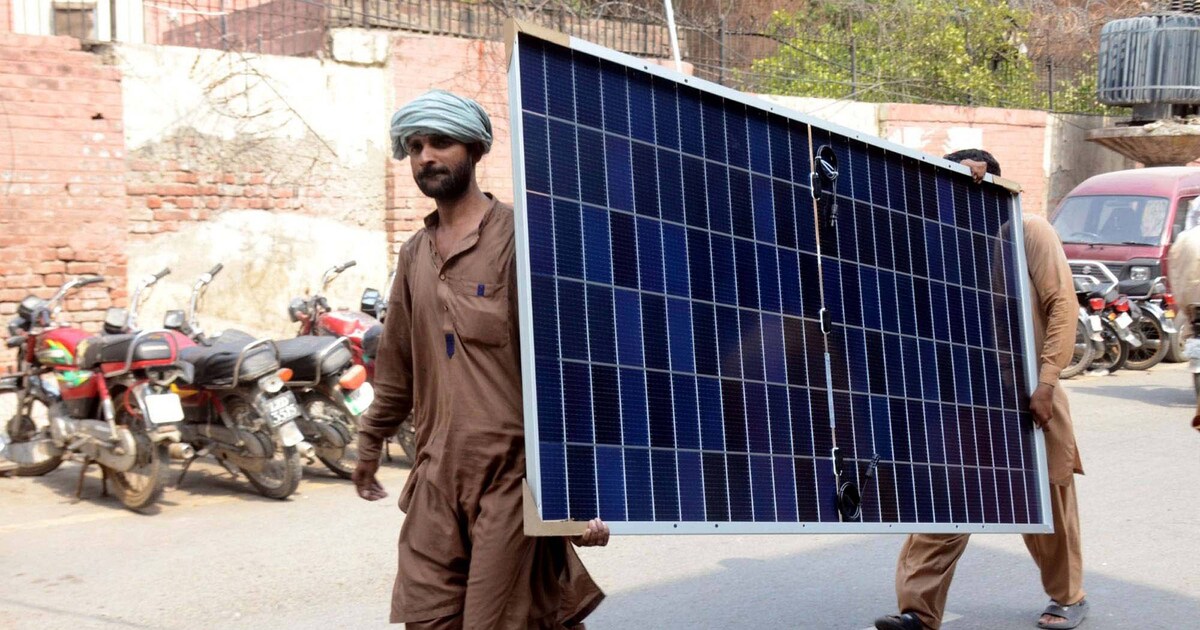
Pakistan’s rooftop solar boom is cutting electricity costs and saving billions in oil and gas imports. Decentrally generated solar power is becoming a silent shield against energy crises caused by the Iran war.
What Hussain decided for his family, millions of Pakistanis also decided for themselves. The result is one of the world’s most remarkable solar booms. Now it turns out to be an insurance policy against them geopolitical energy shocks from the Middle East.
Because the Strait of Hormuz, one of the most important trade routes for oil and gas exports, has been almost blocked since the beginning of the recent conflicts. Geopolitics experts like Klemens Fischer warn: The blockade could last for a long time, which will keep oil and gas prices high worldwide. Pakistan was prepared for exactly this case – not with government programs, but through a massive expansion of private solar systems that make the country resilient to supply bottlenecks.
Pakistan is becoming less dependent on gas imports
Pakistan’s solar boom is paying off right now. This is what new data from the Center for Research on Energy and Clean Air (CREA) and the analysis company Renewables First show: By February 2026, Pakistan has avoided more than twelve billion US dollars in oil and gas imports that would otherwise have been necessary without the solar boom. By the end of 2026, higher energy prices could add another $6.3 billion in savings.
As of 2024, Pakistan was one of the countries most dependent on Hormuz transport: the country ranked third globally in the share of LNG imports transported through the Strait of Hormuz and fifth in oil.
A revolution from below
What makes Pakistan’s rapid energy transition so unusual: The boom was not caused by government planning, but by market forces. The Pakistani power grid is chronically unreliable, characterized by poor infrastructure and outages that last for hours, so-called “load shedding”.
In the report “The Great Solar Rush in Pakistan” from Renewables, Pakistani solar expert Muhammad Mustafa Amjad also explains that electricity prices have risen by around 155 percent in recent years – many households are paying more for electricity than for their rent.
Zero taxes, cheap solar panels
So how did the turning point come about? From 2013 to mid-2025, Pakistan had zero percent taxes on imported solar modules. When Chinese solar modules became so cheap that an investment was paid off within a few years, the breakthrough was unstoppable.
Data from “Renewables First” show: From less than a gigawatt of imported solar capacity in 2018, the number rose to over 51 gigawatts by November 2025. In 2024 alone, Pakistan increased its solar capacity by an estimated 17 gigawatts. Dave Jones of the London-based energy analysis institute Ember described this expansion as “probably the most extreme that has ever taken place in any country at this pace.”
Given the escalation around the Strait of Hormuz, these panels are now proving to be one of the most effective energy security strategies the country has ever had.
,regionOfInterest=(1333,1681)&hash=0f609c8f9525f03f36d56879717d6777a7a3bdbbeef2a3a2d5ed4fd17c5fbc5d)
If batteries in Pakistan were as cheaply available as solar modules are today, the country’s energy independence and geopolitical resilience would be significantly greater.