whizzy1919@gmail.com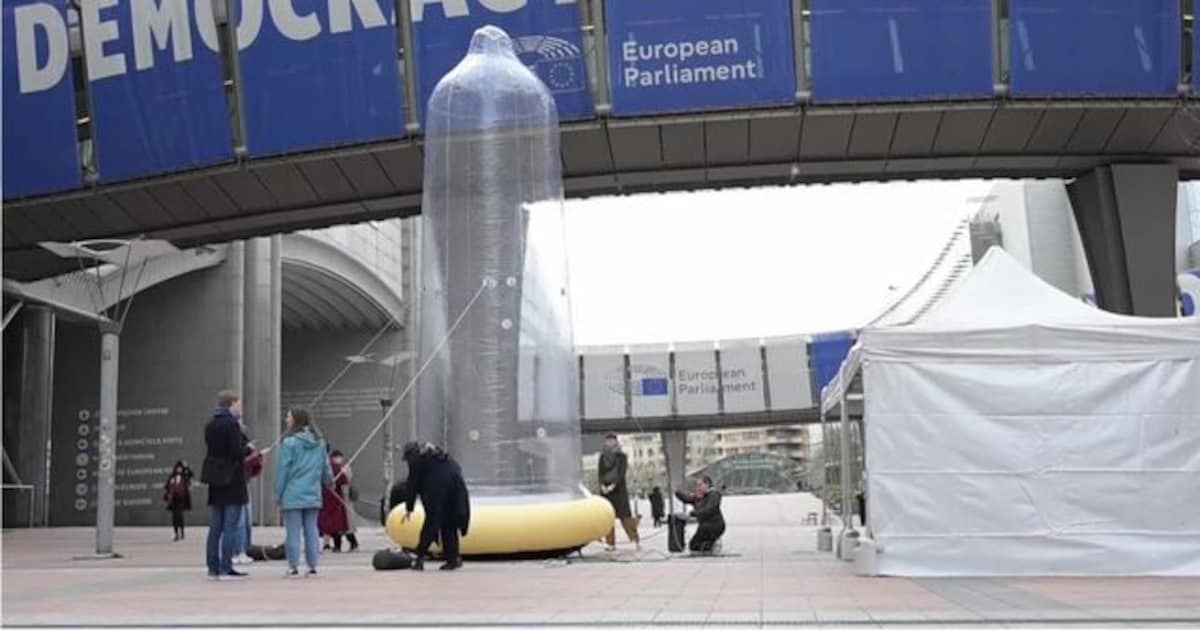
An unusual sight emerged on Tuesday in front of the European Parliament in Brussels: a seven-meter-high inflatable condom suddenly stood in front of the building.
But behind the attention-grabbing action is a serious concern: the development of male contraceptives. The campaign was accompanied by the head of the Brussels office of the German Foundation for World Population (DSW). In an interview with the German Press Agency, Lisa Görlitz explains the background: “We would like to see more attention given to the topic by members of the European Parliament.”
“First time we are conducting in front of the European Parliament”
Currently, the choice for contraception is essentially limited to two options: the condom as a short-term (“on demand”) method and the vasectomy as a permanent solution. From DSW’s point of view, this is not enough. Görlitz: “We think that it is time to better share reproductive responsibility so that couples make decisions together and support each other.”
The aim is expressly not to replace existing methods for women, but rather to expand the selection overall. The DSW head emphasizes that she knows “only a few women who are 100 percent satisfied with the current contraceptive method”.
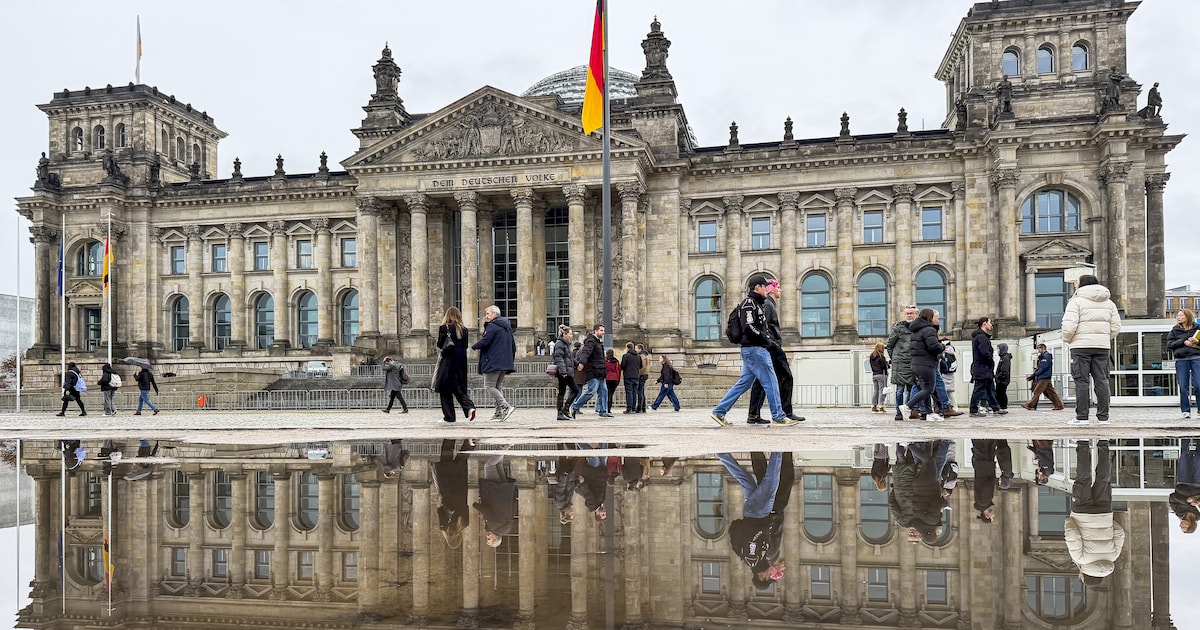
The oversized condom is not a one-time action. It has already been used on previous occasions, for example at the Brandenburg Gate. In some cases it was used in combination with other risers in the form of a coil as a female contraceptive method. The appearance in Brussels, on the other hand, represents a premiere. “It is the first time that we are conducting it here today in front of the European Parliament,” said Görlitz.
New EU Gender Equality Strategy
The specific reason for the action is the recently published new Gender Equality Strategy of the European Union. For the first time, this explicitly recognizes that male contraception has not been researched enough to date.
The strategy is part of the EU’s long-term equality policy and focuses, among other things, on equal rights and opportunities for all genders, better health care and greater consideration of gender-specific differences in research and policy. What is new is the explicit inclusion of reproductive health and the recognition that responsibility has so far been unequally distributed.
However, for the DSW, acknowledgment of the problem is not enough. “Action must now follow.” The focus is on the EU’s upcoming multiannual financial framework, which also determines the funds for research and innovation.
“And we must see investments in women’s health, for new connecting devices and for all genders, including male contraceptives, in this research framework program,” explains Görlitz.
“We want to get a better sense of what people think”
In addition to political pressure, the DSW also relies on the participation of the population. An accompanying survey will show how people support male contraceptionwhat expectations there are and where possible concerns lie. “We want to get a better sense of what people think,” says Görlitz.
The topic extends far beyond Europe. According to DSW, over 250 million women worldwide do not have access to contraceptives, and more than 120 million unwanted pregnancies occur every year. A greater selection of safe, affordable and low-side-effect methods could help reduce these numbers.