whizzy1919@gmail.com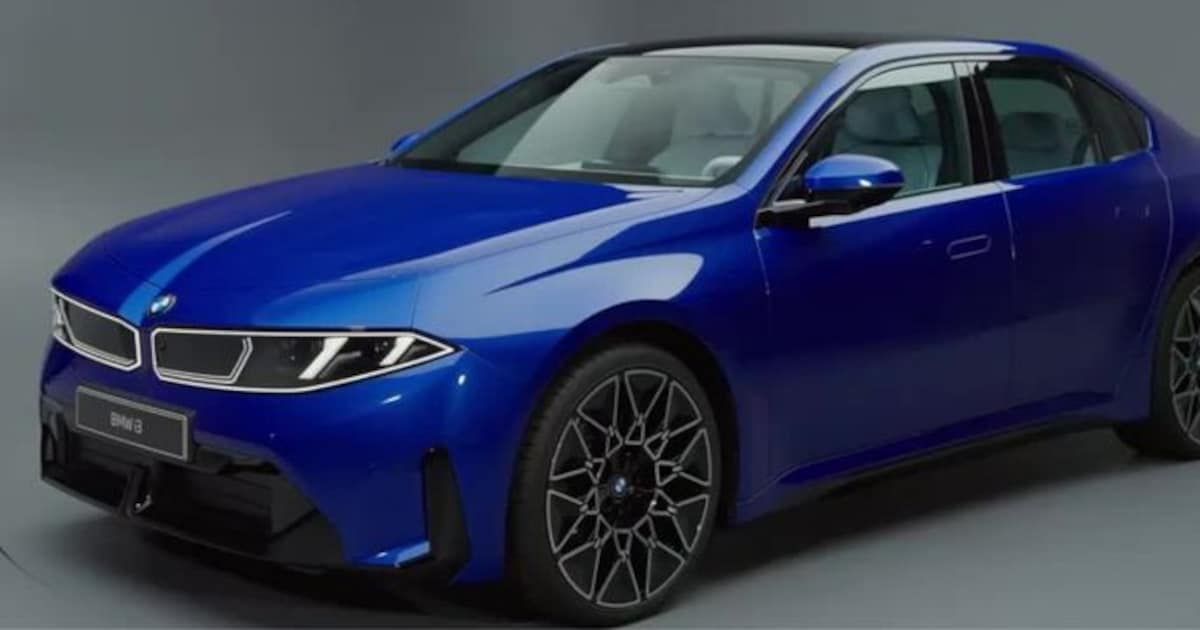
The new model comes 13 years after the first BMW i3 – exactly in line with the electric purchase bonus and the oil crisis. FOCUS online took a close look at the car.
BMW i3 could become more important than the 3 Series
Even if BMW successfully pursues a course of technological openness and continues to build combustion engines, the i3 will be more important in some markets, especially in the EU, than the normal 3 Series with gasoline and diesel engines. FOCUS online took a close look at the car.
Body and interior
The people in Munich weren’t quite as brave as they were with the first limousine studies for the New Class. You can only imagine the four-eyed face of the old 3 Series; the kidney grille of the 4.7 meter long car grew in width, but fortunately not in height. In the cockpit, the car largely corresponds to the iX3, and that means: No longer a normal “iDrive” with turn-push control on the center console, but touchscreen operation and a central 17.9-inch display. There is also the “Panoramic iDrive”. In the cockpit you can choose between four “interior worlds” (Essential, Contemporary, M and Individual). By the way, the vehicle key can be left at home because all you need for the journey is an appropriately prepared smartphone. Practical: if you want to give your i3 to friends or acquaintances, you can forward the digital key using the send function.
Drive, range and charging
The i3 has the sixth generation of BMW eDrive with 800 volt architecture on board. The provisional top model is the i3 50 xDrive with two engines and 345 kW / 469 hp and 645 Newton meters of torque. Further variants including an iM3 will follow. Not only the shock absorbers and multi-link axle are responsible for the driving dynamics, but also the computer hardware in the form of a new central computer, which BMW calls the “Heart of Joy”. An adaptive M suspension is available for an additional charge.
While a current-excited synchronous machine works on the rear axle, the front axle is supplied with energy by an asynchronous motor that can be completely decoupled, thus reducing real consumption. Thanks to the almost 109 kWh battery pack, the maximum range is 900 kilometers before the Bavarian has to go back to the charging station, where it can be recharged with up to 400 kW. The AC charger has up to 22 kW. With this range, only the economical diesel versions such as a BMW 320d can keep up. This would also make the BMW the Mercedes CLA, which also has a long range with its standard value of 792 km.
Prices and market launch
Unfortunately, you have to pay extra for bidirectional charging with the electric three-wheeler. This means that the car can serve as a mobile power storage device and power electrical devices using an output cable. BMW also offers a shared electricity tariff with E.ON. With this V2G (“Vehicle to Grid”) charging, the car then becomes part of the power grid and, ideally, the absurdly high electricity costs in Germany due to the energy transition can be significantly reduced. BMW speaks of 720 euros per year; Since there is currently no experience with V2G operation in practice, this information cannot yet be evaluated.
The prices of the car are not yet known. The current BMW 3 Series with a basic petrol engine costs 47,000 euros, the i3, as the iX 50, should start at around 65,000 euros. Further engine variants will follow, which could bring the starting price for the rear-wheel drive BMW i3 at or below the 60,000 euro mark.
Sign up for the car newsletter here!
Don’t want to miss any articles from our car experts? Then register now for the FOCUS car newsletter online.