whizzy1919@gmail.com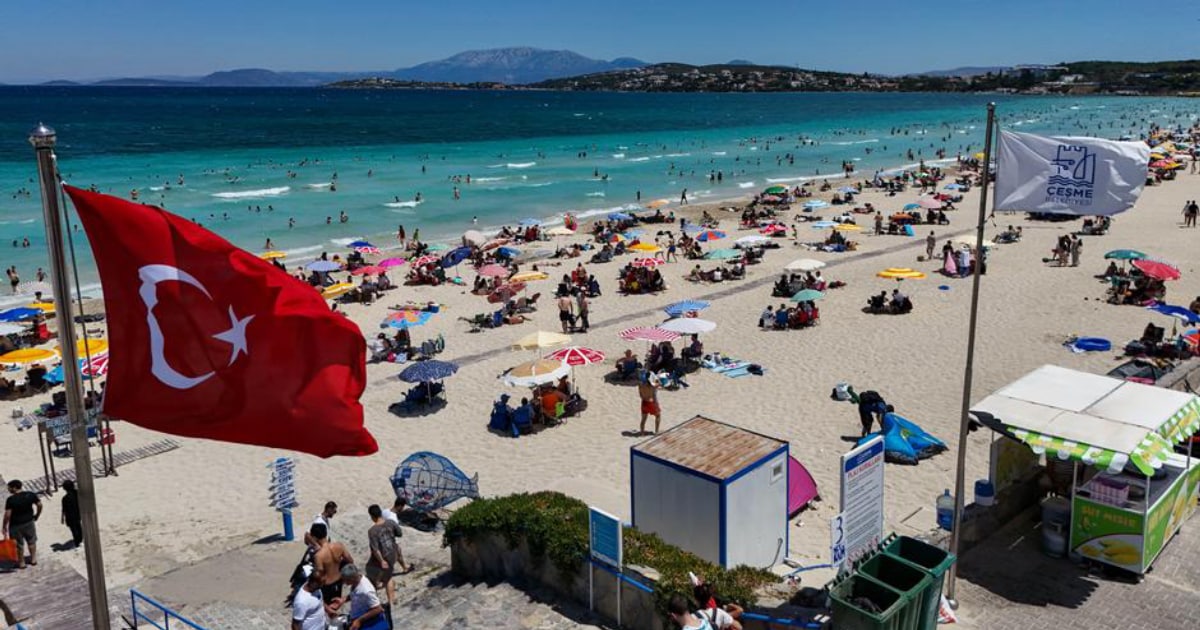
Turkey is one of the most popular holiday destinations in the world, taking fourth place in the global ranking in 2024. But the ongoing Iran war is currently causing a massive headache for their tourism industry.
Turkey is best known in the west for its long sandy beaches in the Mediterranean region. The country has been offering much more for many years: cultural trips to eastern Anatolian cities with impressive historical sights, diving, mountaineering and hiking in provinces in the border regions that were inaccessible for decades because of the Kurdish conflict. In addition to the well-known destinations, these destinations are now equally popular with domestic and foreign tourists.
Turkish tourism industry worried about massive wave of cancellations
According to official data, Turkey hosted around 64 million tourists in 2025, generating the equivalent of around 56 billion euros. The country had already overtaken Italy the previous year and climbed to fourth place worldwide behind France, Spain and the USA.
Since the Corona pandemic, the industry has invested heavily in comfort and safety. It was hoped to break the 65 million visitor mark this year and generate sales of around 59 billion euros. But the Iran war suddenly disrupted these plans.
Trips and overnight stays have been canceled in all eastern and southeastern cities, the sector reports with concern. Normally, it was usual for many tourists from Iran to come in the third week of March to spend the Newrouz New Year and Spring Festival holidays in the popular hotels close to the border, shop and meet their relatives living in exile in Turkey. This year there was no electricity.
Hundred percent cancellations in the border provinces
According to the Turkish statistics office TÜİK, an average of 3.3 million visitors came from Iran annually in recent years. This puts the neighboring country in fifth place among the most important countries of origin after Russia, Germany, Great Britain and Bulgaria.
“Since the beginning of the Iran war, travel from the eastern and southeastern neighboring countries has completely collapsed. There has also been a complete standstill in the opposite direction,” reports Onur Tuncdemir, head of sales and marketing at Ayanis Tour. The company has been offering trips to Iran and Iraq since 1997, especially to the neighboring Kurdish areas. “In the last few weeks we have only been busy with cancellations and refunds of deposits that have already been accepted,” says Tuncdemir.
The war also had direct consequences for the domestic economy in the border regions. According to him, the industry has already been suffering from massive losses since the anti-regime protests at the end of 2025 and beginning of 2026. Since February 28th, however, there has been an absolute standstill – just now, when the festival of breaking the fast and the New Year’s festival of Newrouz coincided.
Consequences for the European market?
“Conflicts like the current escalation in the Middle East have a direct impact on the travel industry,” said the German Travel Association (DRV) when asked by DW. DRV President Albin Loidl puts it in more detail: “Higher kerosene prices, longer flight routes due to airspace closures and possible capacity bottlenecks can occur in the medium term reflected in rising flight prices.” At the same time, holiday wishes are shifting towards other destinations, currently heading west such as Spain. This could also be reflected in rising travel prices because supply and demand change. Regardless of the destination, the association observed a rather cautious mood in new bookings immediately after the outbreak of war.
Nevertheless, the association reminds that the majority of trips have already been booked for the summer and in some cases for the fall. “Many Germans have booked their vacation earlier than ever before. As of the end of January, the most popular summer travel destination between May and October 2026 was Turkey – both in terms of sales and the number of bookings,” the DRV continued, closely followed by Spain and Greece.
No danger to popular travel destinations
Kaan Kavaloglu, chairman of the Association of Hoteliers and Operators of Tourism Businesses in the Mediterranean (AKTOB), emphasizes that there is no danger to holidaymakers in popular places such as Istanbul, Bodrum and Antalya and that there have therefore been no massive cancellations there so far. Nevertheless, AKTOB has also noticed a certain reluctance, especially when it comes to bookings from Great Britain. According to Kaan Kavaloglu, reservations from Russia and Germany remained stable at the desired level.
In a recent analysis, the international consulting firm Oxford Economics predicts that tourism in the Middle East could see between 11 and 27 percent fewer visitors in 2026. Since the airports in the Gulf states are also important hubs for global travel and account for 14 percent of flights, it is estimated that this could potentially trigger a domino effect.
However, analysts are currently very cautious with their estimates because the negative consequences depend on many factors – from the duration of the war to the situation afterwards. Mehmet Isler, Chairman of the Association of Tourism and Accommodation Companies in the Aegean (ETIK), is confident: “The Turkish travel industry is very resilient. We have survived crises such as the pandemic, the Ukraine war and the Armenia-Azerbaijan conflict. We are now very experienced in dealing with them.” He confirms the massive cancellations from Iran and the Arab region, but assumes that tourism flows could shift from crisis regions to the safer Mediterranean and thus also hopes for Turkey. Nevertheless, he adds: “The next four to six weeks will be crucial. We are of course taking short-term losses into account.”
In Europe, shortly before the Easter holidays, vacationers are concerned with the question of which regions are safe and not affected by the consequences of the war. On March 11, the German Foreign Office tightened its advice on Türkiye. Non-essential travel to Turkey’s border area with Iran, Iraq and Syria, in the provinces of Agri, Igdir, Van, Sanliurfa, Mardin, Sirnak and Hakkari is not recommended.
By Elmas Topcu, Aram Ekin Duran