whizzy1919@gmail.com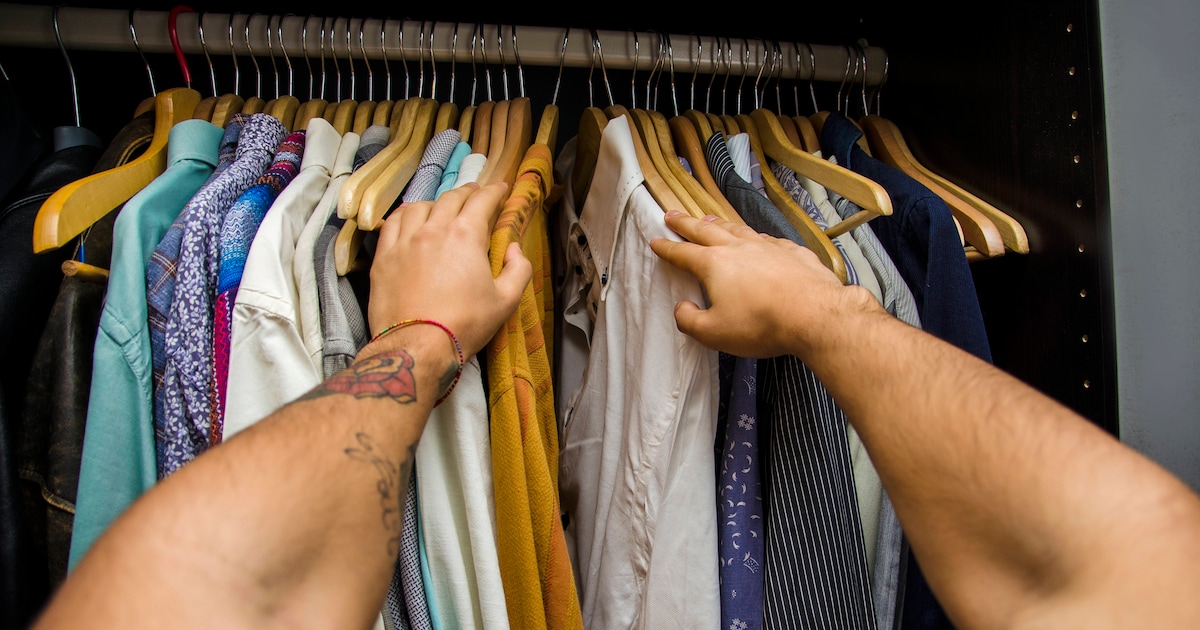
Fast fashion is booming despite the climate crisis and exploitation. If you want to dress in sustainable, fair fashion instead, you have to dig deep into your pockets. A self-experiment: How big is the price difference actually? And who should pay for that?
Many people value living as ecologically as possible a life. They avoid meat or even eat a completely plant-based diet. They avoid flying, drive less and pay attention to sustainable and regional food. When it comes to clothes, most people still choose cheap clothing, produced quickly and designed to follow short-lived fashions.
Fast fashion producers some bring new collections onto the market every week. Such clothing is often produced in countries like Bangladesh and Malaysia under disastrous conditions for both people and the environment, only to be worn a few times and then thrown away in the worst case scenario. Manufacturers such as Zara, Shein and Temu have been on the rise for years, and Shein is now the third largest fashion retailer in the world.
Ecological footprint of food and clothing
When it comes to food, I also find it easy to look for organic alternatives. Although they are often significantly more expensive, the price differences are limited to a few euros or cents. Things are completely different when it comes to clothes. If I paid attention to sustainable materials, fair pay for employees along the supply chain and the lowest possible ecological footprint, my conscience would be much easier, but so would my wallet.
A T-shirt that doesn’t have any of this costs around 8 euros in normal stores. For a sustainable shirt, however, you have to shell out almost 30 euros. That’s why my wardrobe unfortunately mainly contains products from S-Oliver, HM or Tom Tailor. These aren’t the worst fast fashion labels. Nevertheless, I cannot speak of fair clothing when it comes to my wardrobe.
New purchase value of 2000 euros
How big would the price difference be if my entire wardrobe were sustainable? So to find out, I took inventory and pulled out the calculator.
Of course I don’t have the receipt for every sock lying around. So I researched what I would have to pay for the pieces in my closet today from well-known brands like H&M, S.Oliver, Tom Tailor and Co.
The result of this calculation: Overall, my wardrobe has a new purchase value of almost 2000 euros. What is particularly striking is that this sum is mainly due to the number of items of clothing. Individually, most of the pieces are priced well under 50 euros. Jeans, for example, cost 40 euros each, sweaters 20 euros. Only my thick winter coat would cost more than 100 euros as a single item today.
Sustainable hat for 40 euros
On the other hand, let’s assume that I don’t primarily pay attention to the price when making a purchase. For a pair of jeans, for example from the sustainable label Armedangels, I would have to pay 130 euros. The price of a hat jumps from around 13 to 40 euros. The price for shorts is twice as high and that for underpants is more than four times as high. My winter coat would be almost 100 euros more expensive if produced sustainably. Interestingly, the biggest price difference is for the smallest items of clothing: a pair of socks from sweatshops costs around 2 euros. The same product produced sustainably is seven times as expensive at 14 euros.
If I filled my entire wardrobe with sustainable clothing, it would cost me more than 7,000 euros. Of course, these figures only come from a sample and are based on the prices in online shops of various brands. So my little thought experiment is by no means representative. But it shows that we have become accustomed to the lowest standards when it comes to clothing.
,regionOfInterest=(1401,1012)&hash=bab3dbe971f7ee9eebdb99132586d8d3748babbfa1e618aed651c2eb0b7133bf)
Fast fashion is now the norm
Why is that? I ask Moritz Jäger-Roschko, an expert in resource protection at Greenpeace and primarily focused on the textile industry. He finds it “significant” that many people now see fast fashion from Zara, Primark and Co. as the norm when it comes to clothing.
Jäger-Roschko says: The comparatively high prices for fairly traded clothing reflect the real costs, only in this case they are borne by the customer and not by people and the environment in the production countries. Employees in production and along the supply chains are paid fairly. Harmful substances that arise during dyeing, for example, are disposed of professionally and are not dumped into the nearest river.
,regionOfInterest=(400,300)&hash=e0cc8ef2a2e1e7dec1a382f9acebb5de42b085c5c5392a003b488bd8f599d52e)
“Extend the lifespan of the individual pieces”
In addition, clothing only becomes truly sustainable if you wear it for a long time. “The most important goal should be to extend the lifespan of the individual pieces,” says Jäger-Roschko. High-quality materials and clean workmanship may initially result in higher purchase costs – but in the long run it pays off.
If you look at so-called cost-per-wear calculations, it becomes very clear: a long-lasting item of clothing is not only ecologically sensible, but also economically the better choice. The longer a jacket, trousers or blouse is worn, the lower the price per use and the smaller the ecological footprint.
“Really good clothing can be used for many years or even decades,” says Jäger-Roschko. He also assumes that higher production volumes and more efficient logistics could reduce the price of sustainable clothing.
I’ve decided to pay more attention to how long my clothes actually last from now on. Instead of buying a lot of cheap pieces, I want to invest specifically in pieces that will last for years – even if they are more expensive when purchased. Because in the end, I prefer a small but long-lasting wardrobe to one that constantly has to be sorted out.