whizzy1919@gmail.com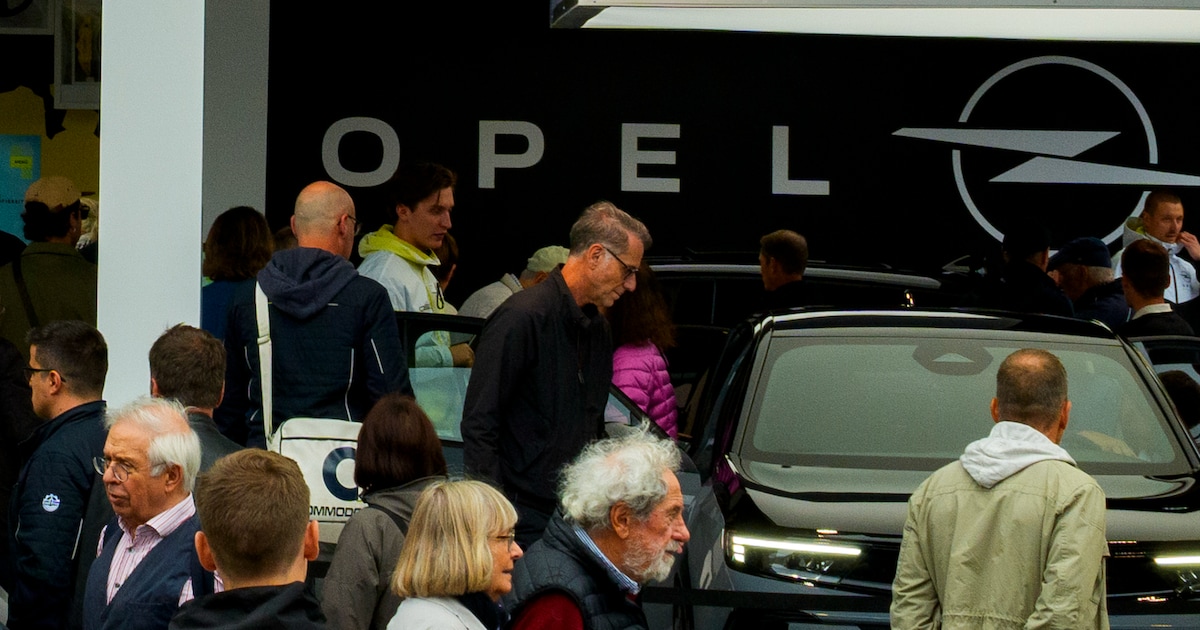
The crisis facing German car manufacturers is obvious: sales are stagnating and profits are collapsing. When will things get better again?
2025 was a negative record year for German car manufacturers. In addition to the tariffs imposed by US President Donald Trump, there were billions in costs for strategic realignments. The consequences for Porsche’s balance sheet were particularly scary: Instead of relying exclusively on purely electric models, which did not sell as well as expected, the sports car manufacturer will again develop new models with combustion engines in the future. The burden of around 3.9 billion euros due to strategy changes and tariffs almost completely ate up Porsche’s profits.
Sales at other manufacturers such as VW and Mercedes also stagnated in 2025, while profits collapsed. BMW was a positive exception: While profits at Volkswagen and Mercedes were almost halved, BMW got off much easier with a net return loss of around three percent.
“A Porsche customer sticks to his car, an Opel customer buys a Chinese car”
But not all manufacturers face the same challenges. Frank Schwope, automotive consultant and lecturer at the FHM Cologne, is optimistic about Porsche, for example: “A luxury manufacturer like Porsche will certainly come out of the crisis quicker than a mass manufacturer like Renault or Fiat.”
In addition, customer loyalty is higher: “A Porsche customer sticks to his car, an Opel customer buys a Chinese one.”
“If you don’t complain, you get nothing”
Overall, the German car companies earned almost 44 percent less money last year than in 2024. According to calculations by the Handelsblatt, BMW, Mercedes and the Volkswagen Group only achieved earnings before interest and taxes (EBIT) of 24.9 billion euros in 2025, which was the lowest level since 2020.
The mood is accordingly dark. But German car manufacturers are still a long way from a doomsday scenario, Schwope emphasized in an interview with Deutsche Welle.
“If you don’t complain, you get nothing. Everyone is still making profits. Dividends are also being paid out. German manufacturers were spoiled by the Corona years 2021 to 2023 and posted exorbitantly high profits.” Comparisons with the profit figures from 2019 and earlier are therefore more appropriate.
In 2018, the three major German car manufacturers Volkswagen, BMW and Daimler, as Mercedes-Benz was officially called at the time, achieved a combined net profit of almost 30 billion euros.
The first Corona year of 2020 marked a low point, when the three industry giants together only achieved a net profit of around 16.6 billion euros. Despite weeks of factory closures and a massive drop in sales in the spring, the results were significantly better than experts had feared at the beginning of the crisis.
But then an extreme record year followed in 2021, in which the profits of the Big Three literally exploded to over 40 billion euros. The reasons: car prices rose massively due to supply chain problems and tight production numbers. And because chips and components in particular were in short supply, manufacturers preferred to build expensive models from which they earned significantly more per car.
VW’s market share in China is under massive pressure
The numbers make it clear how volatile the car business has always been. Auto analyst Jürgen Pieper from Deutsche Welle sums up the current problems: “First and foremost, I see the technological restructuring with its costs, then structural problems such as decision-making processes that are too long and, thirdly, the weakness of the Chinese market.”
A look at Volkswagen shows the consequences of the growing competition from domestic manufacturers on the world’s largest car market, China. “VW used to have a market share of up to 40 percent in China,” writes industry expert Philipp Raasch, who worked at Mercedes for ten years, in his newsletter “Der Autopreneur”.
Today, the Wolfsburg-based company’s market share is under massive pressure. But at the beginning of 2026, a surprising turnaround emerged: According to data from the Chinese Passenger Car Association, reported by Reuters, VW regained market leadership in the first two months of the year. With a market share of 13.9 percent (together with its partners SAIC and FAW), VW moved back to the top.
This was followed by Geely (13.8 percent) and Toyota (7.8 percent). The previous top dog BYD, however, fell to 7.1 percent. The reason for this market tremor: Falling government subsidies for electric cars were causing problems for purely electric providers such as BYD, while demand for the classic combustion engine models from VW and Toyota remained stable.
“A broad rollout of autonomous driving is also expected from 2030.”
But no matter how things go for German automobile companies in the key markets of China and the USA, the pressure to adapt with job cuts and plant closures remains high.
Expert Frank Schwope is convinced of this: “Automotive manufacturers remain permanent construction sites and will have to review their structures every year. The geopolitical situation, the punitive tariffs and the new Chinese competitors do not make life any easier. A broad rollout of autonomous driving is also expected from 2030,” says the lecturer at the Cologne University of Applied Sciences.
Auto analyst Pieper believes BMW is particularly well positioned. “The much-cited openness to technology paid off for BMW in 2025. No major special expenditure was necessary.”
“There are actually signs of hope because the products are getting better”
The Munich-based company benefits from the fact that it has not only relied on electric cars, has already largely covered the development costs for new models and was able to avoid some of the US customs costs by ramping up production at the Spartanburg plant in the USA.
If you believe the naysayers, the days for VW and Co., which have missed the boat when it comes to software and batteries, are numbered. Frank Schwope sees it differently: “The swansong is premature. A few years ago Tesla was predicted to have an unassailable lead, then the Chinese manufacturers suddenly caught up. In addition, the solid state battery (SSB or solid-state battery, ed.) can once again become a game changer in electromobility.”
And manufacturers around the world are already working hard on this: According to their own information, BMW plans to mass produce electric cars with solid-state batteries from 2030 and Mercedes by 2030. At BYD, cars with SSD cells and ranges of over 1,000 kilometers are expected to roll off the assembly line from 2030. Toyota is planning this from 2027, VW from 2028 – if everything goes according to plan.
Jürgen Pieper is also not as negative about the future as many headlines have been conveying for some time: “There are actually signs of hope, especially because the products are getting better,” says the auto analyst.
“There is no sign of a take-off yet, rather slow improvements typical of Germany. On the other hand, there are also sustainable improvements, so that a gradual change for the better is taking place.”