whizzy1919@gmail.com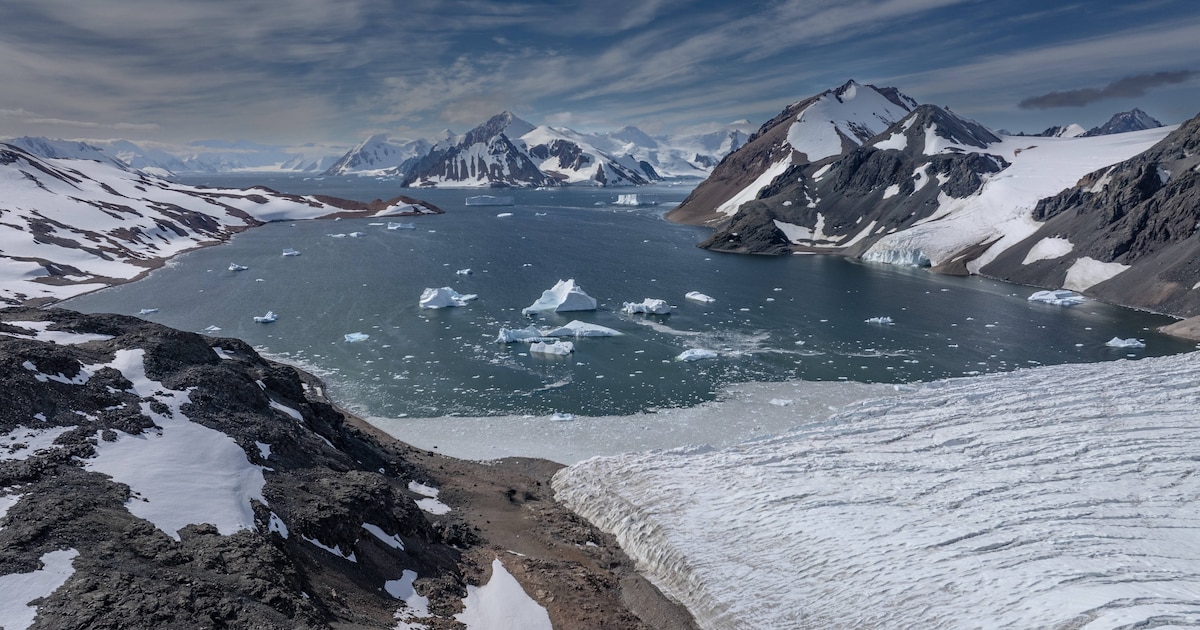
Starting in 2015, warm deep water reached the Antarctic sea ice because a protective layer of cold water weakened.
Antarctic sea ice has long been considered an exception. While the ice surface in the Arctic has been shrinking for years, it has even increased in the south for decades. The surprise was even greater when the Antarctic sea ice collapsed abruptly from 2015 onwards. Since then, the values have remained noticeably low. This is an important signal for climate research. This is because sea ice reflects sunlight and influences how much heat is exchanged between the ocean and the atmosphere.
For years there was a layer of cold water beneath the ice cover, which kept warmer deep water away from the ice. A study by the University of Gothenburg in Nature Climate Change describes how this natural barrier became increasingly thin. When strong winds further mixed the sea, heat was able to rise. The Antarctic sea ice lost its protection from below.
Antarctic sea ice collapsed abruptly in 2015
In the Arctic, sea ice has been shrinking for a long time since satellite measurements began. In Antarctica, developments were different. The ice surface there slowly grew over decades before rapidly collapsing at the end of 2015. Since then it has fluctuated greatly from year to year. This break remained unexplained for a long time. Because common explanations were apparently not enough.
,regionOfInterest=(512,329)&hash=3521a8e68cc5ed84801d3fd0ec1d5e9251158d5105d53bbdbfbd791d9ad70cf8)
The protective layer became thinner over the years
However, this barrier gradually lost strength. The study is based on more than 109,000 measurement profiles from the seasonally icy Southern Ocean. Between 2005 and 2015, the cold protective layer became thinner by an average of 1.7 meters per year. Overall, she lost around 20 percent of her thickness. At the same time, the warmer deep water moved closer to the surface. Its maximum temperature rose by an average of 3.6 meters per year.
Theo Spira, lead author of the work, describes the previous situation as follows: There was “a protective layer of cold water” under the Antarctic sea ice. It prevented warmer deep water from rising and the ice from below melting. This natural protective function even helped the ice grow for a long time. But beneath the surface, the system was becoming increasingly vulnerable.
,regionOfInterest=(512,342)&hash=fe02c5c3ba8c10457c8fb1f0f760f8c767fcffb19e50db610fcbb00255452188)
In 2015, strong storms provided the decisive blow
Then the situation changed. “The storms in 2015 churned the sea and warmer water mixed with the cold water layer. The protection disappeared and the ice melted at record speeds,” said Spira. The stable stratification was weakened. The ice suddenly came into contact with additional heat.
The decline from 2015 was therefore not purely a weather effect. The ocean had been preparing this moment for years.
Robots and elephant seals also provided data
The Southern Ocean is one of the most difficult to access research areas on earth. To measure temperature and salinity there, not only autonomous measuring robots were used. The team also used elephant seals. Sensors attached to their bodies accompanied the animals on their dives to depths of several hundred meters. After around ten months the devices came loose again.
,regionOfInterest=(512,340)&hash=f00dcc88e48e30a9f71d7f098f2c216d85ea495e1f939a7063979d595d4e043d)
This data was enormously valuable because the animals move in and around the edge of the sea ice. This made it possible to record the stratification of the water directly in those areas that are important for ice loss. Spira therefore calls the Winter Water a “gatekeeper” for the heat exchange between the deep ocean and the surface. If this barrier is lost, heat rises more easily.
Climate models underestimate heat beneath the ice
The finding is also important for climate models. According to the study, winter water describes a process that is sometimes missing or only roughly captured in today’s models.
Briefly summarized:
- Antarctic sea ice began shrinking in 2015 not only because of air temperature but also because of changes in the ocean beneath the ice.
- A cold layer of water protected the ice from warmer deep water for a long time, but between 2005 and 2015 it became thinner by around 20 percent.
- In 2015, strong winds swirled additional warm water upwards, destroying the protective layer and triggering the rapid loss of ice.
By Eva Schmitt