whizzy1919@gmail.com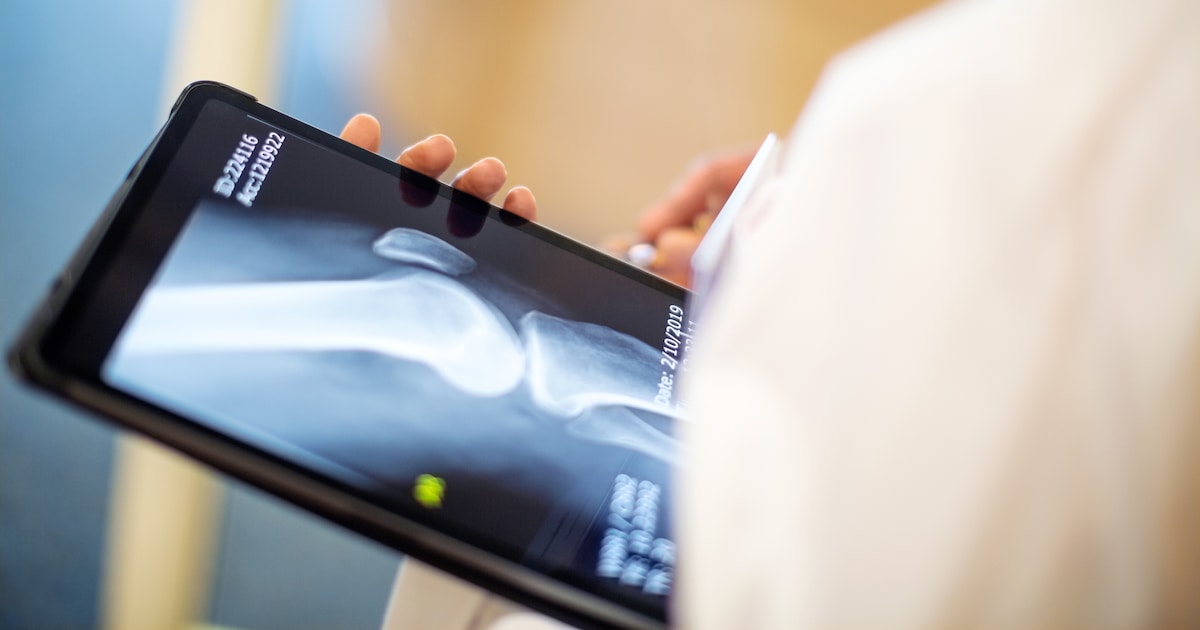
In Germany, a bone in the human body breaks every 38 seconds, many of them due to osteoporosis. Instead of living in constant fear of it, experts advise taking precautions.
Osteoporosis affects around five million people in Germany alone, around 80 percent of them women. The bones lose stability, become more porous and therefore break more easily. The German Association of Orthopedists and Trauma Surgeons (DOUV) assumes that there are over 830,000 new osteoporosis-related fractures per year – if the osteoporosis remains untreated, around a third of patients will even suffer a second fracture within the first year.
An osteoporosis In the beginning it is usually symptom-free and is often only noticed when if a fracture is already causing problems or pain. Even then, the cause often goes unnoticed. The bone density and therefore the risk can be easily tested – and the osteoporosis can then be treated accordingly, even before it breaks.
The test only takes about three minutes
The measurement is usually carried out using a so-called “DXA scan”:
- You lie on your back on a lounger. They remain fully clothed.
- A laser passes over you and “scans” your bones.
- The bone density result is available after about three minutes.
“It doesn’t hurt, you don’t have to take off your clothes, it’s really easy,” summarizes Eichhorn.
Even if it involves X-ray technology, the radiation is negligible: “When you’re out and about, you get more radiation from space,” jokes the doctor.
Osteoporosis can be easily treated
If the test detects reduced bone density, it can usually be easily treated, reports Eichhorn. Below a certain risk threshold and for prevention, doctors primarily recommend it
- Strength training
- and taking vitamin D and calcium,
to increase bone density. Above the so-called therapy threshold, additional medication should be given.
These signs could indicate osteoporosis
- A fracture in the hip, wrist, or spine after a small bump or fall is a relatively clear sign of osteoporosis.
- A loss of five to eight centimeters in height within a relatively short period of time is also a warning sign of osteoporosis. It’s completely normal for people to become smaller as they get older; according to experts, up to 3.8 centimeters is normal. If there are significantly more, osteoporosis may be behind it.
- A hunched posture or a rounded back can also be a sign that the bones in your spine are weakening and losing density.
- Behind persistent back pain There is often another cause, but they can also be a sign of osteoporosis.
At the latest when you notice one of these changes, you should contact your family doctor or orthopedist about having your bone density measured. If osteoporosis is suspected, this is a health insurance benefit.
On the DOUV page You can assess your risk of osteoporosis with a self-test. You can use the expert search to enter your zip code and find treating osteologists in your area.
Bone density measurement shows severe osteoporosis
How important appropriate treatment isfor example, the case of Sabine Thelen shows. The now 57-year-old patient was diagnosed in 2016. At that time, she went to the doctor because of back pain, which she attributed to her office job. However, the doctor discovered that three vertebrae had collapsed and immediately ordered a bone density measurement. “That’s exactly when it turned out that I had severe osteoporosis well before I was 60,” remembers Thelen.
Although she was advised to take medication, she initially decided against it and wanted to try vitamin D, calcium and weight training. “I tried that for a few years until last year in January – without falling – I broke the neck of my right femur.” She compares the sound to a small branch breaking: “I will never forget that.”
,regionOfInterest=(969,767)&hash=244ae1345b38129294fcadc0b6c9e25889993c623653e6b267585187210c64bb)
Four out of ten patients could no longer walk independently after such a hip fracture – they had to rely on a cane, a walker or a wheelchair. Especially in older, often weakened people, long periods of bed rest can lead to serious complications such as pulmonary embolism or pneumonia. “20 percent of patients die within the first year after the fall,” reports Eichhorn.
“Difficult road back to normal life”
Such consequences could be prevented if osteoporosis was recognized early enough in advance and treated accordingly, warns Eichhorn: “It is a mistake to believe that a fracture of the femoral neck is ‘normal’ from the age of 75.”
For Sabine Thelen, who was much younger compared to many of the other patients, the fracture was like a wake-up call. She was immediately taken to hospital where surgery was quickly performed to repair the fracture. “I was 56 in January last year – it was a difficult road back to my normal life,” she reports.
“When I was able to walk again with two crutches, my first appointment was with Doctor Eichhorn, where I said, ‘OK, now I’m convinced of drug treatment’.” She was doing much better now. She just doesn’t dare go skiing or ice skating again “yet”.