whizzy1919@gmail.com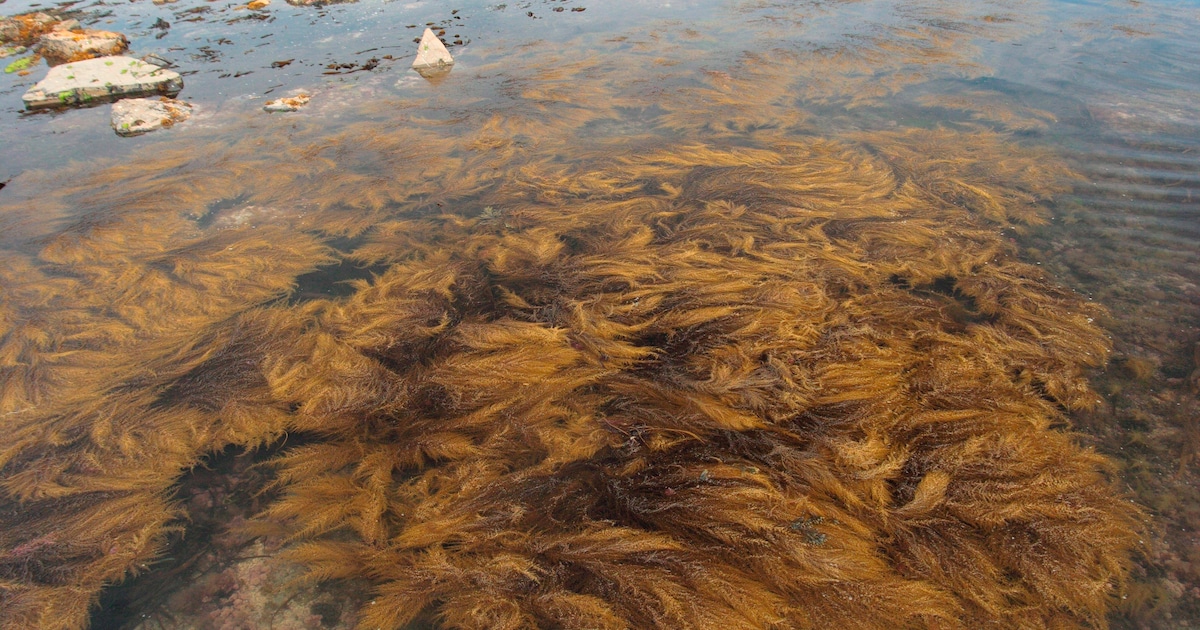
The Sargasso Sea is the only sea in the world without a coastline – and an early warning system for climate change. Rising temperatures threaten animal species and lead to exploding algae growth.
No line marks its borders, no state lays claim to it: The Sargasso Sea is the only sea in the world without a coast – in the middle of the North Atlantic, around 950 kilometers east of Florida. The Gulf Stream, the North Atlantic Current, the Canary Current and the North Equatorial Current together form a huge vortex that encloses this body of water like an invisible wall.
At the center of this vortex, the water is almost completely calm. Waves are missing. But as inconspicuous as the calm waters of the Sargasso Sea seem, their role in the global climate is enormous.
Sargasso Sea is out of balance
The Sargasso Sea lies at the center of one of the most important current systems on earth: the Atlantic Meridional Overturning Circulation, Amoc for short. This gigantic “conveyor belt” of the Atlantic transports warm surface water from the tropics to the north, where it releases its heat into the atmosphere – and thus ensures Europe’s mild climate.
But this delicate balance is coming under pressure due to climate change. Long-term measurements by the University of Arizona in the Sargasso Sea show that the surface temperature has risen by around 1 degree Celsius since the 1980s. Warmer water expands and becomes less dense. At the same time, increased rainfall and meltwater from Greenland mean more fresh water is reaching the North Atlantic. Both make it more difficult for the water to sink in the far north.
Researchers are already seeing signs of Amoc slowing. A further weakening or even a Overturning the system would have dramatic consequences: colder winters in Europe, changing precipitation patterns worldwide, accelerated sea level rise on the US East Coast and reduced absorption of CO2 by the ocean.
Sargassum as a “golden rainforest”
The heart of the Sargasso Sea is also its trademark: huge floating carpets of sargassum, a brown algae that floats freely on the surface of the water. But the sargassum, which gives it its name, could also become a threat due to climate change.
Scientists call the web of golden-brown seaweed the “Golden Rainforest of the Sea.” More than 100 invertebrate species live here. Among other things: newly hatched sea turtles hiding in the sargassum algae mats.
,regionOfInterest=(1777,1402)&hash=52316acc62ee38e144fd922dbf8b49db845236c5f4e47117503536d7f993a433)
Stinky pest
The rising temperatures cause the algae population to explode. Satellite analyzes and reports from the University of South Florida recorded a new record in May 2025: around 38 million tons of sargassum were measured in the Caribbean and neighboring areas.
One in the trade journal “Nature Geoscience” Published study identified another driver. The swelling of phosphorus-rich deep water masses in the tropical Atlantic – itself a result of changing sea temperatures – additionally fertilizes the algae and accelerates their growth even further.
A spatial shift is particularly worrying: While the Sargassum mass in the actual Sargasso Sea in the north has been declining since the mid-2010s, it is exploding in the tropical Atlantic.
Global warming and more frequent marine heat waves are changing ocean currents so much that the center of gravity of the entire Sargassum system is shifting towards the Caribbean. The consequence: beaches from Mexico to the Dominican Republic are plagued by a knee-high, foul-smelling carpet of algae. As the sargassum rots, it releases hydrogen sulfide and deprives coastal water of oxygen. In addition, greenhouse gases are produced.
,regionOfInterest=(1852,1177)&hash=1bf72cfb39e82011b630f3205d06467bae607871c656538d4bdfadd3a77c429e)
The no-man’s sea
The core of the problem is: The Sargasso Sea belongs to no one. Protective measures are difficult to enforce and international agreements are lengthy. The same ocean currents that shape the ecosystem also carry plastic waste, fishing nets and ship debris into the region. Studies speak of hundreds of thousands of pieces of plastic per square kilometer. Industrial fishing, shipping traffic and underwater noise do the rest.
After all, the “Sargasso Sea Commission” has been taking care of the preservation of the area since 2014. The commission was created with the Hamilton Declaration, which has so far been signed by ten countries and territories, including the United States, the United Kingdom, Bermuda, the Bahamas, Monaco and the Dominican Republic.
And: This happened this January UN High Seas Protection Agreement officially in force after more than 20 years of negotiations. It is the first globally binding set of rules for the protection of the high seas – i.e. the maritime areas outside national territorial waters. The first Conference of the Parties (“Ocean COP”) is not planned for summer 2026 at the earliest.
FOCUS online Earth is dedicated to the climate crisis and how to overcome it.
Fact-centered. Well-founded. Constructive. Every Friday as a newsletter.