whizzy1919@gmail.com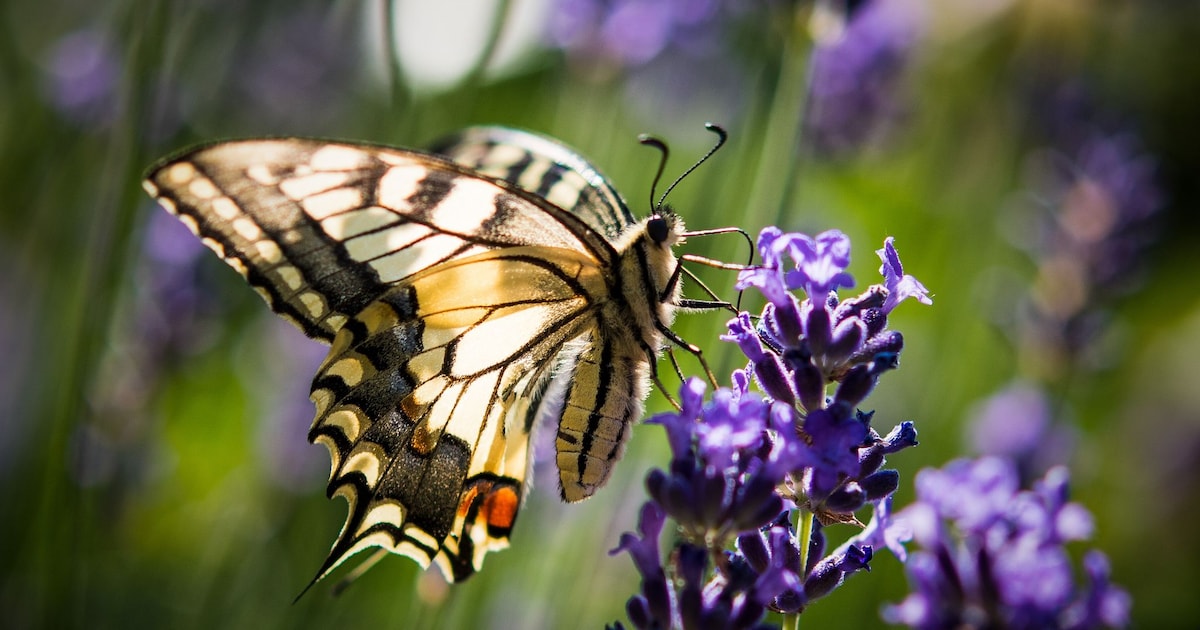
Many people are eagerly waiting for the butterflies – but they plant hydrangeas and forsythias in their gardens. Many hobby gardeners may not realize how precious little this does for insects.
Colorful butterflies at the first flowers, birdsong in the morning and fat bumblebee queens looking for nests: the typical spring feeling also comes from the little creatures around us.
In many gardens, however, you get the impression that the colorful fluttering butterflies and singers are not wanted there: as colorful as the beds may seem, they are a hostile desert for living beings. Cultivated ornamental perennials and exotic shrubs often provide little or no food for native insects, as Bettina de la Chevallerie, managing director of the German Horticultural Society 1822 (DGG 1822), explains.
Valuable fodder plants such as dandelion, clover, nettle and mugwort, however, would be destroyed as “weeds”. De la Chevallerie would find it helpful to call them wildflowers or companion plants in order to change their thinking. “In any case, the word weed should be deleted.” Many animal species depend on certain plants for their survival – but the derogatory word weed suggests dispensable, unimportant things, says Margarita Hartlieb from the University of Vienna.
,regionOfInterest=(1024,681)&hash=cf1fe577dfb1240675c1e92d37a8dce7a512310930461e3c8a4ac3080181c18a)
Without weeds, there are no colorful butterflies
Butterflies don’t suddenly appear; they hatch from pupae: solid shells in which the caterpillars hatched from eggs transform into a butterfly. The pupae of butterflies often cling to plant stems. Anyone who removes and disposes of dead flowers directly in autumn destroys the next spring generation. Wild bees and other insects also use withered plant stems as a place to overwinter.
Hydrangeas, forsythia, cherry laurel and many of the annual flowers from hardware stores and supermarkets have one thing in common: They may look pretty, but they are ecologically worthless because they provide little or no nectar and pollen. With the masses of such flowers and exotic shrubs that dominate many gardens, this means a real hunger problem for insects.
Wild plants such as nettles or clover are torn up from every spot in many gardens. Butterflies such as the peacock butterfly, small tortoiseshell, maplefish and admiral lay their eggs specifically on stinging nettles, as the caterpillars live exclusively on their leaves – without the “weeds” the colorful butterflies would not exist.
,regionOfInterest=(1024,646)&hash=8ed4b50478131287b164156e5c9713c2efe7f87eaee3e92153b09c5b60730d0f)
“Such areas are almost dead”
Many people spend a lot of money on winter food and stylish birdhouses – but according to experts, what is far more important is how the garden is designed: “It is important for songbirds that it is close to nature and insect-friendly,” emphasizes Sophie Lokatis, nature and species conservation expert at the German Wildlife Foundation. Some species depend on insects as food, while many others depend on insects for food, especially when raising chicks.
Accurately trimmed lawns are not close to nature – but for many people they are still the ideal of beauty. Some even pull individual dandelion roots out of the turf that has been trimmed to matchstick length. What remains is flowerless greenery that offers little nutrition. “Such areas are almost dead,” says Lokatis. And where nothing crawls, nothing flies: “The number and diversity of songbirds have declined in recent decades alongside the decline in insects,” says Lokatis.
If the perfect green is surrounded by a so-called mesh fence with woven plastic slats, birds will not find a place to build a nest. Unlike typical hedge shrubs such as privet or hornbeam, these structures, which are praised for being easy to care for, do not provide food for berries or insects. In addition, there are environmental toxins that can be washed out of the plastics.
,regionOfInterest=(1024,698)&hash=503e697ad1da41af4b30772cbc13da6c45a087a330c8126d3b02a4f5824d01cf)
Home for the “hedge pig”
As a result of intensified agriculture, hedgehogs are less common in the countryside, but are mainly found in residential areas with gardens and green spaces. In order for them to feel comfortable, they need more than a pile of leaves in winter. Like many songbirds, the stingers rely heavily on insects for food. And on bushes as a home – the English name “hedgehog” literally means “hedge pig”.
Lawn mowers harm hedgehogs in two ways. Every mowing process means death for insect larvae, caterpillars and grasshoppers. “After a mowing process, for example, around 80 percent of the grasshoppers are dead,” says Hartlieb. The insects are smashed or die trapped in the discarded piles of grass.
In addition to starvation, hedgehogs are also at risk of fatal injuries when robotic lawnmowers are used. If such a device steers towards a hedgehog, it often does what helps it with other enemies: curl up into a spiked ball and wait. According to experts, the number of injured hedgehogs has increased significantly with the number of robots. “The biggest threat to hedgehogs is humans,” says the wildlife foundation.
,regionOfInterest=(1024,681)&hash=1591f810531bf4ebd41c16467037b9f3c8c68dcbd74a772d49a4281335da4fdc)
Accidental pest wave
Many hobby gardeners are concerned that there are more insects in a natural garden that nibble on home-grown vegetables. In fact, according to experts, pests often multiply less explosively there because they are part of a complex food web: the right beneficial insects are immediately there.
This can be easily observed with aphids, for example. A wave of reproduction of the animals is quickly followed by a wave of ladybugs that eat them away.
,regionOfInterest=(1024,752)&hash=bfe0b1130d3a43181f52347627904c34bd6c166abfcbff0f3af0ecb9ea68d142)
Small garden, big impact
Experts repeatedly emphasize the great value of private gardens for biodiversity and climate adaptation. According to the Institute for Ecological Economic Research (IÖW), there are around 17 million private gardens in Germany – a huge number of small habitats with an enormous total area.
If only one in five gardens had a cornelian cherry instead of a forsythia, that would mean additional food for millions of insects flying early in the year. A meadow, on the other hand, can provide around ten times the amount of nectar of a lawn that is mown weekly after just a month without mowing, explains de la Chevallerie from the horticultural society.
Around 60,000 insects can live in a natural flower meadow the size of a basketball court, as green space expert Hartlieb says. The importance of gardens is also great because, as a result of intensified agriculture, urban spaces have become crucial refuges for many species. “Colorful and flowering meadows have almost disappeared from the cultural landscape,” says de la Chevallerie. “And a third of urban spaces are gardens.”
,regionOfInterest=(1024,683)&hash=d99741f1a9fc94bd09e58932a4584d0237435e5d886275e88a2afc9c9f44fc48)
Better to do nothing
In fact, spending money on the garden rarely makes something better, and often makes something worse. Lawn fertilizer, exotic ornamental trees and the often only annual, bred hybrid plants cost. Native perennials, on the other hand, can be passed on to neighbors, and wild shrubs can often be propagated using simple cuttings. And you can safely avoid expensive insect hotels if you leave withered stalks and bushes on the beds over the winter.
Hartlieb also advises against investing in artificial fertilizers and pesticides. “Generally, the lower the nutrients, the greater the plant diversity.” Gasoline for the lawn mower and water can also be saved: native species usually cope with drought much better than exotic ones and a lush flower meadow is better than short lawns.
“If a lawn is not watered every day in hot weather, it will look yellow and burnt,” says de la Chevallerie. “A flower meadow is still very pretty even when it’s dry.” The lesson, according to the expert: You just have to do less to make gardens more vibrant.
FOCUS online Earth is dedicated to the climate crisis and how to overcome it.
Fact-centered. Well-founded. Constructive. Every Friday as a newsletter.