whizzy1919@gmail.com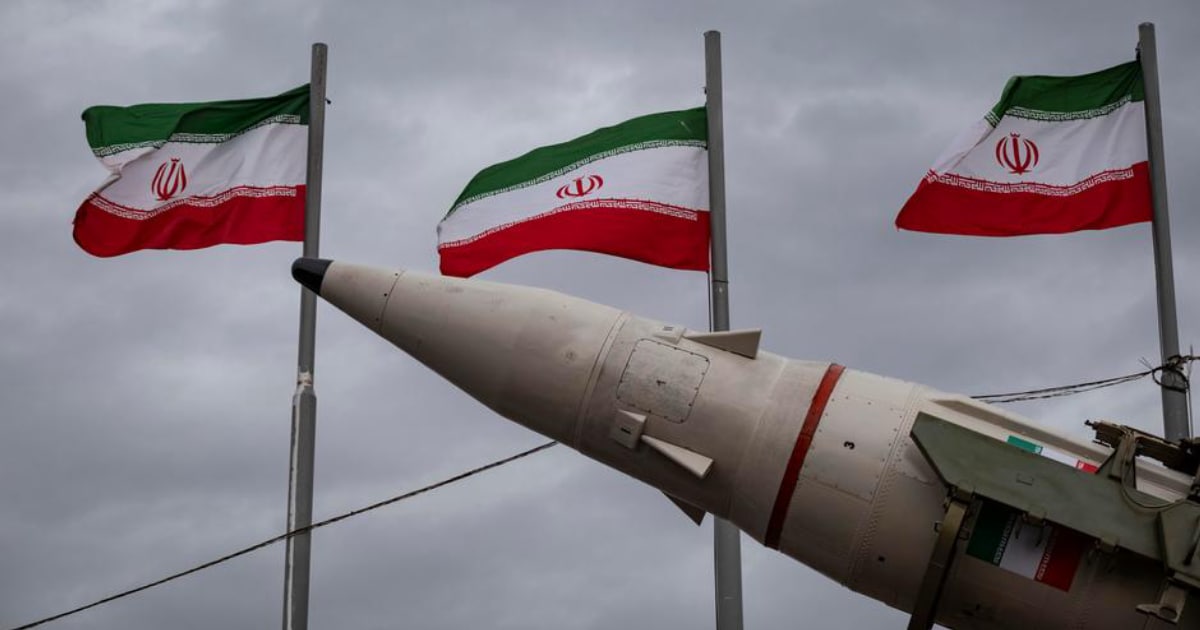
US President Trump declares Iran’s missile arsenal largely destroyed. But Tehran keeps attacking. How many missiles and drones does the regime still have? And how quickly can it replenish its arsenal?
In the fourth week of US-Israeli war against Iran Iranian missiles are still flying towards Israel and the Gulf states, although US President Donald Trump and Israeli Prime Minister Benjamin Netanyahu claim to have significantly depleted Iran’s missile stocks.
A White House social media post on March 14 said that Iran’s “ballistic missile capabilities” were “functionally destroyed.” But ten days later, Iran has demonstrated with a series of attacks that it still has enough missiles to target multiple targets in its neighborhood.
“The missile launch capacity has been weakened, but not completely eliminated. And that is significant,” Burcu Ozcelik, Middle East security analyst at the London-based Royal United Services Institute (RUSI), told Deutsche Welle.
Iran fired rockets en masse: hit rate less than five percent
Meanwhile, Kelly Grieco of the US Stimson Center wrote on
“In the first days of the war, Iran fired over 500 ballistic missiles and 2,000 drones. Hit rate: less than five percent. (…) Most of it was repelled,” wrote the security expert.
“Iran fired less but hit more often”
“Firing rates fell by more than 90 percent in the following two weeks. Something unexpected happened: the hit rate began to increase. Iran fired less, but hit more often.”
Like many other aspects of this war, the true extent of Iran’s remaining military strength remains difficult to assess. So what exactly do we know?
Experts estimate Iran’s missile reserves
Even before the war began, there were no official figures on Iran’s missile inventory because, as Burcu Ozcelik puts it, “Iran was not very open about its capabilities.” The Israeli military estimated the number of ballistic missiles before the war at around 2,500, while some independent experts put the number at up to 6,000.
Either way, before the war, Iran had the largest and most diverse arsenal in the Middle East, according to the director of U.S. intelligence.
The Center for Strategic and International Studies (CSIS) said these included Sedschil, Ghadr and Khorramshahr ballistic missiles with a range of 2,000 kilometers, as well as Emad (1,700 km), Shahab-3 (1,300 km) and Hoveyzeh (1,350 km) types.
Attacks by the USA and Israel on weapons production facilities have consequences
However, recent Iranian attempts to attack the British-American military base at Diego Garcia in the Indian Ocean, almost 4,000 kilometers away, suggest that the country has missiles with a longer range than previously thought.
Ballistic missiles are not only devastating weapons in their own right, but can also potentially serve as delivery systems for nuclear weapons, although Tehran denies any intention of building nuclear bombs.
How is the war affecting Iran’s missile inventory?
Of course, the firing of many of these missiles in recent weeks and even during the conflict with Israel in 2025 has reduced stocks. The attacks by the USA and Israel on weapons production facilities also have consequences. But no one outside Iran’s inner circle knows how big this decline actually is.
“We observe that the IRGC (Islamic Revolutionary Guard Corps) continues to launch attacks and has de facto closed the Strait of Hormuz, the Iranian regime’s main leverage point. It is unlikely that Iran’s ballistic missile program will be completely dismantled by the United States and Israel during this phase of the operation,” RUSI’s Burcu Ozcelik states.
“Estimates from the beginning of February were around 80,000 Shahed drones”
There is little verifiable information about how many weapons facilities the United States and Israel have damaged or destroyed, although Israeli Prime Minister Benjamin Netanyahu said last week that Iran’s missile and drone capabilities had been “massively weakened” by such attacks.
Matthew Powell, a British air force expert at the University of Portsmouth, told Deutsche Welle: “Estimates from the beginning of February were around 80,000 Shahed drones.” However, it is difficult to determine how many of them have already been used in the current war.
“Drones are extremely important to Iran’s military strength,” Powell said. “The comparatively low cost of these weapons allows Tehran to exert military power and greater political influence throughout the region. In particular, Shahed 136 drones allow Iran to attack critical infrastructure in adversary countries because they are harder to destroy than larger ballistic missiles.”
The US is spending about $1 billion a day on the war in Iran, and Powell notes that “the weapons systems required to destroy these drones are significantly more expensive than the drones themselves.”
Can Iran replenish its missile and drone stocks?
Another advantage of drone warfare for Iran is that these drones can be replaced relatively quickly – at least under normal circumstances.
“The estimated capacity is around 10,000 Shahed drones per month under peacetime conditions,” Powell said. However, the impact of the war on this number is currently unknown.
While drones are relatively easy to replace, missiles are much more complicated. Last week, General Ali Mohammad Naeini of the Islamic Revolutionary Guards told state news agency IRNA that the country was producing missiles “even under wartime conditions,” which was “astonishing.” There are “no particular problems with stockpiling”. Shortly after this statement, Naeini was reportedly killed in an airstrike.
Iran supplies? Only 40 new rockets a month
However, it remains questionable whether Iran can actually provide sufficient supplies quickly enough. Alex Plitsas, a former Pentagon official, told Canada’s CBC that Iran was able to build about 300 missiles a month at the start of the war. Now he’s assuming 40 per month.
The USA and Israel stated that they had hit above-ground targets relevant to rocket production. However, there are said to be at least five underground production facilities in various Iranian provinces, such as in Kermanshah and Semnan and near the Persian Gulf.
The US and Israel are primarily concerned with the long-term neutralization of the Iranian threat, says Burcu Ozcelik from RUSI: “Weakening the regime’s ability to rebuild and restructure its missile program after the end of the war – I think that is currently the goal, and it has been since the beginning of this war.”
Adapted from English by Thomas Latschan