whizzy1919@gmail.com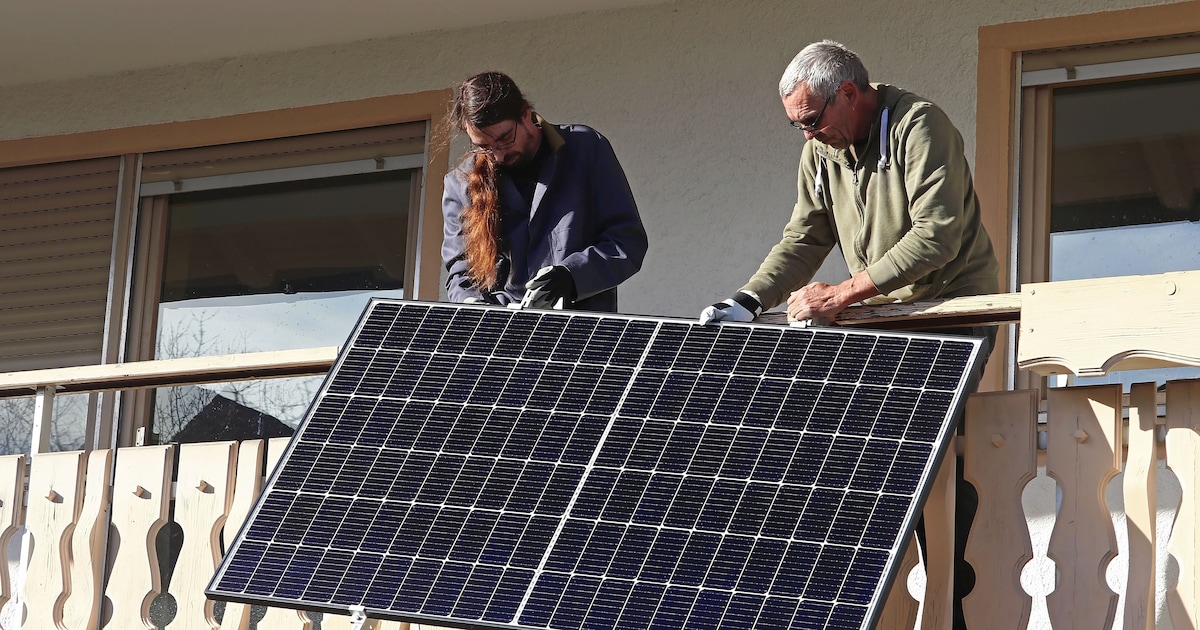
Balcony power plants are apparently becoming increasingly popular in Germany. The Iran crisis is accelerating demand. Some federal states and municipalities generously support small solar systems for balconies and terraces.
The solar boom on Germany’s balconies continues unabated: According to data from the market master data register, a million people had connected a balcony solar system to the socket on the balcony or terrace in 2025, and the number has doubled within a year. And the run could now increase again – because of the war in Iran, which is plunging the global energy markets into turbulence.
For many people who want to become at least a little more independent from the whims of geopolitics, balcony power plants are a logical purchase. The systems are considered easy to install and inexpensive to purchase. In contrast to large PV systems on roofs, they pay for themselves relatively quickly, usually between three and six years.
What is a balcony power plant?
Most balcony sets have two modules with a total area of around four square meters. Each module weighs between 18 and 22 kilograms. The solar power plant is usually connected via a normal Schuko socket. The system’s inverter converts the direct current from the modules into 230 volt alternating current. The standard system feeds a maximum of 800 watts into the house network, more is not permitted.
But that’s a lot for a one-person household that uses the solar modules to power its refrigerator, laptop or washing machine. On average, a single household consumes between 1,500 and 2,000 kilowatts per year; a standard power plant on the balcony covers between 20 and 40 percent of this.
But how much does such a balcony power plant cost? And are there subsidies from the state that can be tapped?
Grants: Often only for those in need and tenants
Many complete sets with solar modules, microinverters and connection cables are now available for less than 500 euros. One reason for this is indirect federal funding: since 2023, photovoltaic systems up to 30 kilowatts have been exempt from VAT.
In contrast to the PV modules on the roofs, there are no further federal subsidies for balcony systems. However, some federal states and municipalities promote mini solar systems through local programs. Only a few federal states have nationwide grant programs. Mecklenburg-Western Pomerania and Hamburg pay up to 500 euros, Saxony contributes 300 euros.
However, the subsidies are subject to conditions: In Saxony and Mecklenburg-Western Pomerania only tenants are eligible to apply, in Hamburg only recipients of housing benefit, citizens’ benefit, social assistance, basic security, housing benefit, asylum seeker benefits, child allowance, BAföG and households with income below the garnishment amount are eligible.

There has been great uncertainty since the outbreak of the Iran war
The circle of sponsors is larger in the municipalities: more than 300 cities and municipalities pay subsidies for balcony power plants. The funding amounts are between 50 and 500 euros. For example, these cities pay per system:
- Aachen: around 80 euros
- Dusseldorf: 400 to 600
- Munich: up to 320 euros
- Freiburg: around 200 flat rate
- Cologne: around 200 euros
But smaller municipalities have also occasionally set up funding for balcony solar systems – we recommend taking a look at the municipality’s website or making a short inquiry. At the beginning of the year the pots are usually fuller than towards the end of the year.
FOCUS online Earth is dedicated to the climate crisis and how to overcome it.
Fact-centered. Well-founded. Constructive. Every Friday as a newsletter.