whizzy1919@gmail.com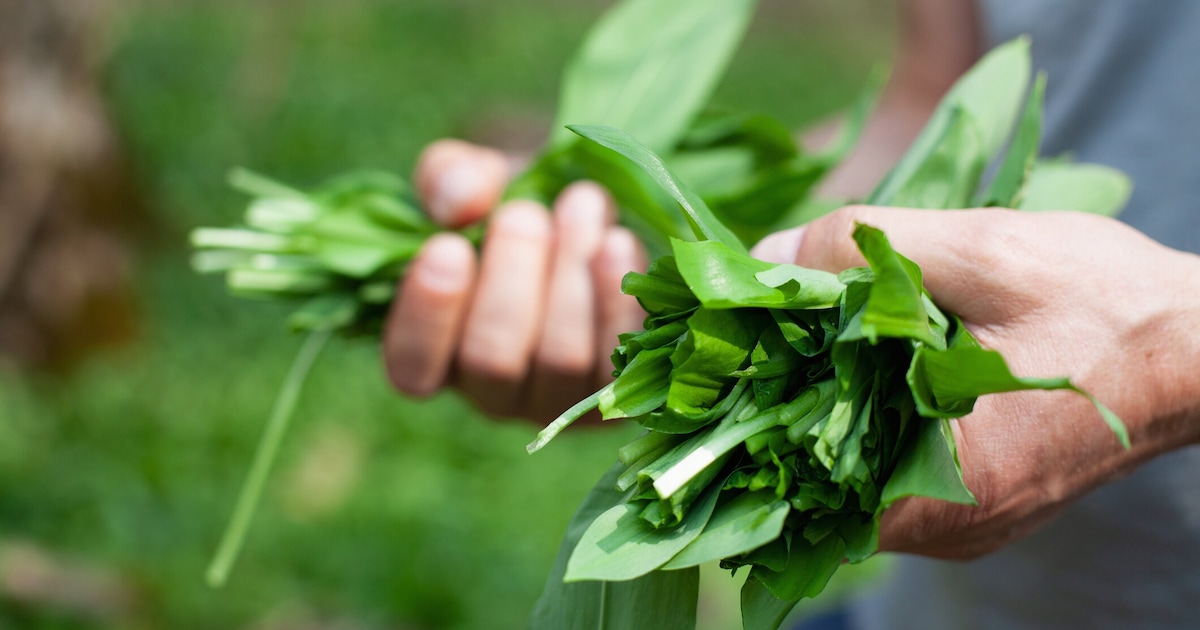
The wild garlic season begins in April at the latest. Many people collect it themselves. But you have to pay attention to a few things.
Although it can occasionally grow in early or mid-March, the main season for the popular wild garlic usually begins in April. It usually ends at the beginning of May with the flowering period, when the leaves lose a lot of their aroma.
Where can you collect wild garlic?
If you want to collect wild garlic yourself, you can usually find the plant with its 20 to 30 centimeter long green leaves in larger areas in shady places in mixed deciduous and beech forests. However, there are a few things you should keep in mind when collecting.
This is the hand bouquet rule
Basically, all forests in Germany have an owner, such as the state or private individuals. This landowner owns all parts of the forest – and therefore also the wild garlic plants that grow there. Therefore, they basically cannot be picked without the permission of the owner.
However, according to the so-called “hand bouquet regulation” of the Federal Nature Conservation Act (Section 39, Paragraph 3, BNatSchG), forest visitors are allowed to take small quantities of mushrooms, flowers, berries and wild garlic leaves for their own use.
Collected too much wild garlic? There is a risk of high fines
However, anyone who picks more than the permitted amount or for commercial use without the appropriate permits can be punished with high fines.
The amount of the fines depends on the respective federal states. In Saxony, for example, this can result in a fine of up to 10,000 euros.
Please also note: The hand ostrich regulation does not apply to places where entry is prohibited, for example in nature and bird protection areas or forest areas with fences or corresponding prohibition signs.
What is wild garlic?
Wild garlic belongs to the genus Allium and is related to chives, onions and garlic. This relationship is also reflected in the taste of the plant. The spicy, hot leaves resemble a mild taste of garlic, which makes them particularly suitable for spreads and pastes, for example.
Confusion with poisonous plants: Be careful of autumn crocus, lily of the valley and arum
Furthermore, collectors should be aware of the high risk of confusion with wild garlic, which the Federal Institute for Risk Assessment also warned against. Because: The leaves of wild garlic are often confused with the leaves of the lily of the valley, autumn crocus or arum plants that are poisonous to humans.
These dangerous lookalikes often grow in the immediate vicinity of wild garlic. While lily of the valley can cause nausea and vomiting, eating a leaf of autumn crocus or arum can be fatal.
Therefore, you should be particularly careful and careful when picking.
Worm infestation on wild garlic
As the Robert Koch Institute regularly warns, there is also a health risk when collecting wild garlic due to fox tapeworm infestation.
This parasite is found in the feces of infected foxes. It can be absorbed by humans through consumption of contaminated forest fruits and plants and cause the disease echinococcosis.
This is a reportable infectious disease with sometimes life-threatening consequences. Symptoms include abdominal and chest pain, jaundice and hives, and the formation of cysts in the liver and lungs.
Therefore, you should wash the wild garlic, but also other forest fruits that grow close to the ground, thoroughly before eating it and then clean your hands well. If you want to be on the safe side, you should only consume collected forest fruits and wild garlic in cooked form.