whizzy1919@gmail.com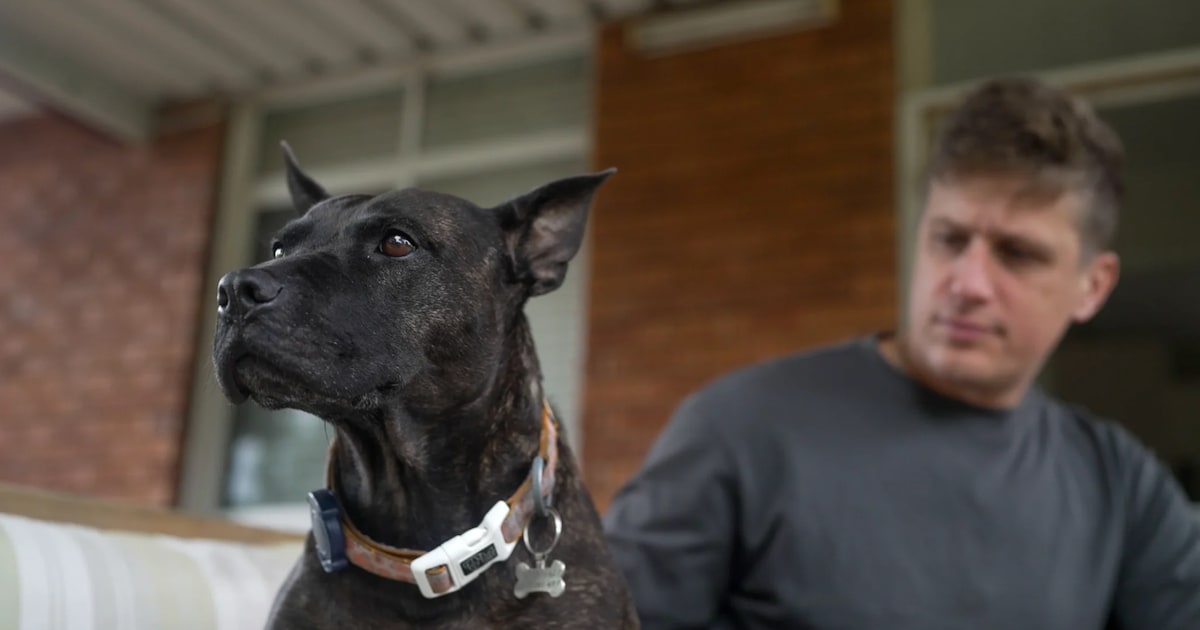
A seriously ill dog experiences a surprising turn of events after an AI evaluated her tumor data – and shows how tangible personalized cancer therapies already are.
Many cancer patients experience that therapies initially work – and then reach their limits. Tumors continue to grow despite multiple treatments being used. For such cases, oncologists are looking for new, more targeted approaches: A personalized cancer vaccine, developed from the genetic characteristics of a tumor and calculated using artificial intelligence, could be such an option.
A current case shows how concrete this development already is. In a dog with aggressive cancer, a large tumor will shrink significantly within a few weeks.
The dog Rosie only had a few months
He is behind the case Sydney entrepreneur Paul Conyngham. He adopted his dog Rosie from an animal shelter in 2019. The diagnosis follows in 2024: aggressive mast cell cancer. Veterinarians only give her a few months left.
Operations, medication and chemotherapy put a lot of strain on the dog, but do not bring about a breakthrough. The tumors continue to grow and sometimes break through the skin.
Genetic analysis makes the causes of cancer visible
The turning point begins with a detailed DNA analysis. Experts compare healthy genetic material from the blood with the genetic material of the tumor. This makes the mutations that drive growth visible. Associate Professor Martin Smith from the Ramaciotti Center for Genomics at the University of NSW explains: “DNA sequencing helps map the tumor and identify the mutations that drive the disease.”
The evaluation is complex. The data includes billions of genetic building blocks. Conyngham describes the process: “It’s like a puzzle with billions of pieces.”
- Healthy and diseased tissue are sequenced
- Conspicuous mutations are identified
- AI evaluates the data
- This creates possible points of attack for the immune system
Smith recalls: “We often get unusual requests, but this one stood out.”
Personalized cancer vaccine made from AI and genes
A specific therapy is developed from the genetic information. The aim is to target the immune system specifically to the cancer cells. This is where mRNA technology comes into play. It provides the cells with building instructions for proteins that are typical for the tumor. The body recognizes these proteins as foreign and begins to specifically attack the cancer cells.
Professor Pall Thordarson from the UNSW RNA Institute is implementing the idea. “This is the first time a personalized cancer vaccine has been developed for a dog.” He also points out its importance for medicine: “This technology can be implemented very quickly will also help people in the future.”
Particularly remarkable: The vaccine is not created over years of research, but within a few months.
Tumor shrinks visibly
Treatment begins over the Christmas period. Multiple injections are given directly near the tumors. The effect becomes apparent quickly. A tumor about the size of a tennis ball shrinks by around half. Other tumors also become smaller.
Veterinary Professor Rachel Allavena from the University of Queensland says: “It definitely works.” The difference is also visible in everyday life. The dog appears more alert and mobile. Conyngham reports: “She ran again, jumped and even chased a rabbit.” The dog was previously severely weakened. The tumors caused pain and sometimes bled. Now the energy is visibly returning.
Complex cancer therapies more accessible for the first time
A crucial factor is artificial intelligence. It helps to evaluate huge amounts of data and find suitable therapeutic approaches. Conyngham uses AI to identify so-called neoantigens. These are typical characteristics of tumor cells that can be targeted. In this case he finds seven particularly suitable targets.
“He used an algorithm to create the design of the mRNA. This changes the approach to this technology,” said Professor Thordarson. Developments show that such therapies could be developed faster and cheaper in the future.
,regionOfInterest=(512,288)&hash=f48cccfc80cd19f26f9a358e28fbbe2d886363c2ee0801300e5de34e9834619e)
mRNA brings new dynamics to cancer medicine
mRNA is already known from the corona vaccines. The technology is currently being intensively tested in cancer medicine. The advantage is speed. Classic medications often take many years. mRNA vaccines can be adapted in weeks or months. “It’s like a digital drug. You change the information, not the chemistry,” says Professor Thordarson.
Success is not a complete breakthrough. Some tumors respond well, others barely. Experts speak of a “partial reaction”. The owner also remains cautious: “It’s not a cure.” Nevertheless, Rosie and Paul can now hope again.
Briefly summarized:
- A personalized cancer vaccine can now be developed from genetic data by comparing healthy and diseased genetic material and specifically evaluating it using AI.
- The mRNA technology enables individual therapy that directs the immune system to the tumor – in the dog’s case, a large tumor shrank significantly within a few weeks.
- The approach remains experimental, but shows that personalized cancer therapies could become faster, more targeted and more widely available in the future.
By Eva Schmitt