whizzy1919@gmail.com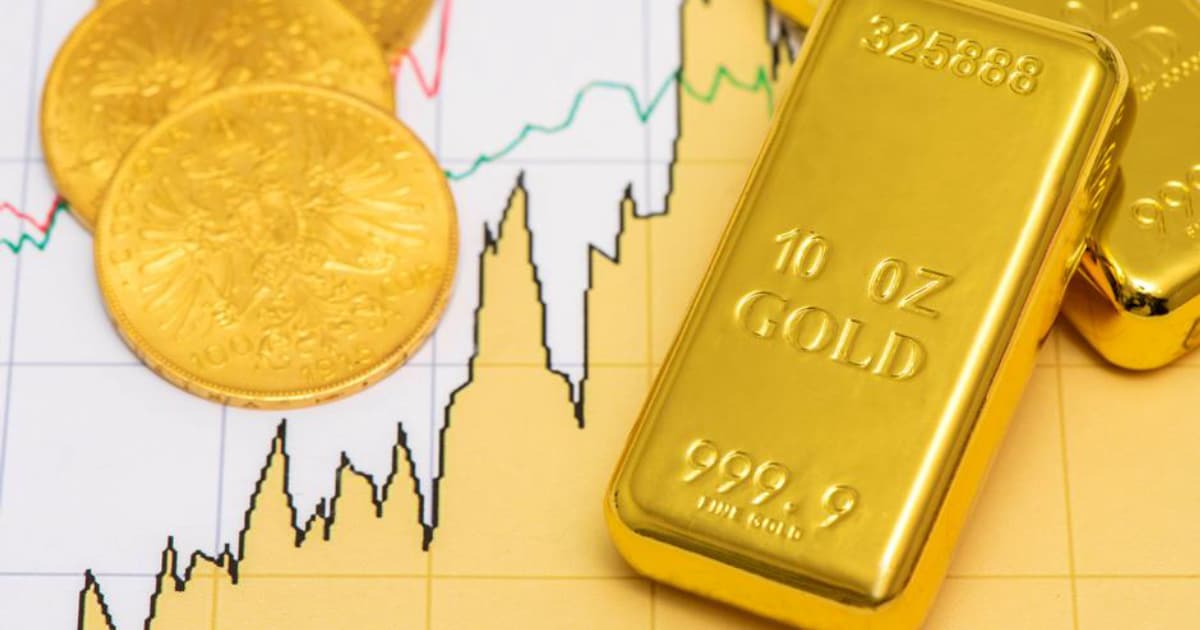
Gold, as the saying goes, is a safe haven in which you can keep your money safe. Especially in times of war and crisis. Now there is war in the Middle East – and the price of gold remains stable. What’s going on there?
One of the most famous stock market sayings is: “Buy when the guns are roaring!” In other words, when there is war and times become uncertain, you should invest.
Those who want to keep their money safe often invest in gold – even if gold is not cheap in uncertain times. Gold is particularly in demand in times of crisis, when a pandemic dominates life or a war breaks out. The price of gold then rises, as it did recently in the first few weeks of this year.
If the price continues to rise, the assets invested in this way can not only be secured, but with a bit of luck they could even increase.
So are these good times for speculators? Gold is not a speculative investment, but rather a security product. This is supported by the development of the gold price in the last few months, which has repeatedly reached new highs – in line with the tense global political situation. However, according to the comparison portal Gold.de, the precious metal recorded its “all-time high” on January 28, 2026 at $5,417.60 per troy ounce.
Experts analyze astonishing gold rate during wartime
However, in the wake of the Iran war, the price did not rise any further – despite increased uncertainty on the market. A week after the start of the war on February 28th, gold was briefly quoted at 5327.42 but has now settled between 5000 and 5200 US dollars.
This comes as no surprise to Michael Hsueh, head of Metals Research at Deutsche Bank. Although the price of gold is higher on average after a crisis event, “there are larger differences between individual cases than the average suggests.”
He told Deutsche Welle that Deutsche Bank observed this last year after Israel’s attacks on Iran.
“The price of gold is even lower than before the start of the war”
Carsten Fritsch, raw materials analyst at Commerzbank, also makes this observation when looking at the current conflict: “The price of gold was unable to benefit from the uncertainty surrounding the Iran war,” he told Deutsche Welle: “On the contrary, it is even trading lower than before the war began.”
He has two main explanations for this phenomenon: Gold is traded in dollars. As the US dollar appreciates, gold becomes more expensive for buyers from other currencies. They ask less, which tends to lower the price.
In addition, rising oil prices lead to higher prices. However, higher inflation makes it less likely that the US Federal Reserve will cut key interest rates. Investors’ expectation that interest rates will remain higher makes gold less attractive because gold does not earn interest, but other investments do.
Both the appreciation of the US dollar and the sharp rise in oil prices would have a negative impact on the price of gold, said Fritsch.
An overheated market
As managing director of Fragold GmbH, Wolfgang Wrzesniok-Roßbach is an advisor to private and institutional investors and is not surprised by the current sideways movement in the gold price. There is a calming down in the market here: “The increase in the price of gold and the prices of other precious metals in the last quarter and in January was disconnected from the actual fundamental data and was therefore completely exaggerated recently.”
In fact, the Fragold expert told Deutsche Welle that the strong price increase meant that “the demand for jewelry, which is important for the gold market, was by far the lowest in the last 15 years in the fourth quarter. The central banks also held back in view of the high price, the (still) 230 tons was the second weakest value for demand from the central banks in a fourth quarter of the last five years.”
He attributes the bull market in the gold market to price drivers: “purchases by investors and speculators who had bet on falling prices.” You would now have to stock up on gold at a higher price level to limit your losses. His conclusion: “The significant decline on January 30th and thereafter clearly demonstrated the previous exaggeration.”
That’s how Carsten Fritsch sees it: “The price increase in January was an exaggeration and could no longer be explained with conventional influencing factors. Greed and the fear of missing out on the price increase also played an important role.”
The demand for silver will decrease
Gold, which is coveted worldwide, is not the only thing that is currently booming. Silver is also in high demand and therefore expensive. But Wrzesniok-Roßbach does not see a price bubble for this precious metal: “As far as the price of silver is concerned, I actually see the price as fundamentally very well supported and in my opinion we have to be prepared for a long-term high price level and therefore a complete revaluation.”
Frank Schallenberger, raw materials expert at Landesbank Baden-Württemberg (LBBW), doesn’t see it that way. On the contrary, the demand for silver will even decrease: “In the coming months, the declining momentum in the solar industry, the weak global economy and a further decline in demand for jewelry are likely to weigh on the price of silver.”
“If the war ends, the US dollar and oil prices are likely to fall again”
Asked for a forecast, he drew a differentiated picture of the silver market: “It is questionable whether the silver market will show a supply deficit for the sixth year in a row in 2026 – if sales of silver ETCs continue over the remainder of the year, the market balance could well result in a supply surplus.”
Wolfgang Wrzesniok-Roßbach, on the other hand, sees the price of silver increasing and sees “the electrification of the world, especially photovoltaics” as the main driver. He “wouldn’t be surprised if the price of silver settled permanently at over $100/ounce in the foreseeable future.”
Frank Schallenberger urges caution when it comes to gold prices. “The already chronically weak demand for jewelry and the reluctance of central banks to increase their gold holdings are likely to slow down the dynamics of the gold bull market in the coming months. US policy remains a factor of uncertainty because it will probably continue to be good for one or two surprises on the financial markets.” He adds reassuringly: “Gold should therefore continue to be in demand as a safe haven.
“If the war comes to an end,” Carsten Fritsch from Commerzbank told us when looking into the hopefully near future, “the US dollar and the price of oil are likely to fall again, which would be positive for the price of gold and silver.” Whether prices would then rise again would “depend heavily on how the rise in oil prices affects inflation and how the central banks react to it.”