whizzy1919@gmail.com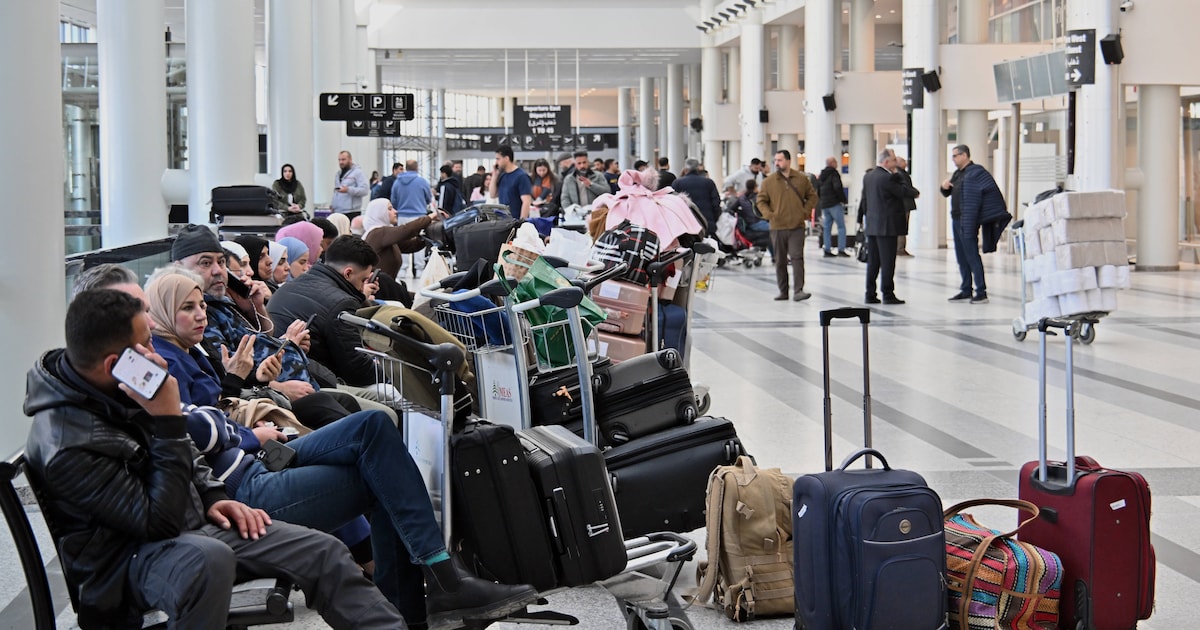
After the air strikes by the USA and Israel on Iran on Saturday, civil air traffic in the Middle East collapsed massively. Almost all major airlines have canceled or diverted flights to the Gulf region.
Through the US and Israeli military strikes on Iran and subsequent Iranian retaliatory attacks, several Middle Eastern countries have closed all or part of their airspace. Iran, Iraq, Israel, Jordan, Kuwait, Bahrain, Qatar and partly the United Arab Emirates and Oman are affected.
Over 1,800 flights were canceled over the weekend alone, and many more are still being diverted or severely delayed. Airlines such as Lufthansa, Turkish Airlines, Etihad and Qatar Airways have suspended connections – in some cases until March 7th. Travelers should urgently check the status with their airline as the situation can change hourly.
Affected regions and airports at a glance
Almost a quarter of all Middle East flights were canceled over the weekend. These regions are particularly badly affected:
Abu Dhabi (United Arab Emirates)
Zayed International Airport has suspended all departures until at least 2 p.m. local time on March 1, 2026, and many arrivals have been canceled. Etihad Airways has largely ceased operations. UAE airspace is partially closed. Travelers with connections via Abu Dhabi should expect complete cancellation, some flights will be rebooked to Dubai.
Amman (Jordan)
Jordanian airspace is closed or severely restricted. Airlines such as Lufthansa, Austrian Airlines and Turkish Airlines have canceled all flights to Amman until at least March 2nd and in some cases until March 7th. Many planes that normally fly via Jordan are being diverted – causing delays of several hours on Europe-Middle East routes. There is a state of emergency at Queen Alia Airport: Travelers with booked flights should contact the airline and expect complete cancellation.
Beirut (Lebanon)
Rafik Hariri Airport in Beirut is severely affected: Lufthansa, Air France, Aegean and Turkish Airlines have completely canceled flights until at least March 2nd. Many passengers are stuck and departures are canceled every hour. Lebanese airspace is considered a high-risk area. Travelers to or via Beirut should urgently consider alternative routes – the airport is open but with massive restrictions.
Damascus (Syria)
Syrian airspace is partially closed – particularly the southern corridors along the border with Israel. Turkish Airlines has canceled all flights to Syria until at least March 2, as have other airlines such as Aegean. Damascus Airport is affected, national flights (Syria Air) are completely suspended until further notice. Alternative routes via Turkey or Egypt are also currently heavily used.
Doha (Qatar)
Hamad International Airport in Doha is completely closed and Qatari airspace will remain closed until at least Monday morning (March 2). Qatar Airways has temporarily suspended all flights; many international carriers (e.g. British Airways, Lufthansa, Finnair) have canceled Doha connections until at least March 6th. The airport was a central hub for Asia-Europe routes – travelers with Qatar Airways or changing in Doha must expect total cancellation and consider rebooking via alternative hubs (e.g. Istanbul or Cairo). Thousands of passengers are stranded.
Dubai (United Arab Emirates)
Dubai International and Dubai World Central airports have suspended all departures and arrivals until at least 3 p.m. local time on March 2, 2026. Emirates has temporarily suspended all operations. UAE airspace is partially closed. Travelers with connections via Dubai must expect complete cancellations. Diversions from Abu Dhabi are currently not possible as both locations are affected at the same time.
Istanbul (Türkiye)
Istanbul Airport itself is not closed and is operating normally. However, Turkish Airlines has canceled all flights to Lebanon, Syria, Iraq, Iran and Jordan until March 2, as well as services to Qatar, Kuwait, Bahrain, UAE and Oman at the weekend. Many long-haul routes from Istanbul are being diverted or delayed. Travelers changing in Istanbul or continuing on to the region must expect significant changes – Turkish Airlines actively provides information via app.
Cairo (Egypt)
Egyptian airspace remains fully open and Cairo Airport is fully operational. However, EgyptAir has temporarily suspended all flights to destinations such as Dubai, Doha, Abu Dhabi, Beirut and Baghdad. Many international airlines use Cairo as an alternative destination for diverted aircraft from the region. Travelers with connections via Cairo or Egypt should expect slight delays, but do not expect widespread cancellations. The airport is prepared for emergency landings.
Kuwait City (Kuwait)
All Kuwaiti airspace is closed. Over a quarter of all planned flights have already been canceled and Kuwait International Airport is practically paralyzed. International airlines such as Turkish Airlines and regional companies have suspended connections. Flights that normally go via Kuwait are being diverted on a large scale (e.g. via Saudi Arabia). Travelers to or via Kuwait must expect total cancellations.
Larnaca and Paphos (Cyprus)
The Cypriot airports are not closed, but serve as an important alternative point. Numerous flights (e.g. from Israel routes or from Salzburg to Tel Aviv) are being diverted to Larnaca. Hermes Airports has partially canceled connections to Israel, Amman, Abu Dhabi and Dubai. There are delays and additional landings, but operations continue.
Manama (Bahrain)
Bahrain International Airport is massively restricted by the airspace closure; Arriving and departing flights are being diverted, canceled or postponed. Gulf Air reports severe disruption, British Airways has canceled Bahrain flights until March 3rd. Many passengers are stuck. Bahrain is a high-risk area – travelers should not book flights and should contact the airline immediately if they have existing bookings. The airport is open, but practically paralyzed.
Muscat (Oman)
Muscat International Airport has ceased operations and Omani airspace is severely restricted. Oman Air has canceled flights to Baghdad and Turkish Airlines has suspended all connections to Oman from February 28th. Long-haul flights that normally fly over Oman are being rerouted – with significant delays. Travelers to Muscat should check their booking and expect cancellations lasting several days.
Riyadh (Saudi Arabia)
Saudi Arabian airspace is open and is used intensively as a diversion route – flights from Europe to Asia or India are now largely routed via Saudi Arabia. King Khalid International Airport and Jeddah are operating normally, but are experiencing massive overload and delays. Airlines like Virgin Atlantic warn against longer flight times. Saudia and Flynas continue to fly, but many international connections (e.g. to Dubai/Doha) are affected. For travelers to Saudi Arabia or with transit there: Flights are running, but plan buffers – the airport is currently one of the few stable points in the region.
Tel Aviv (Israel)
Ben Gurion Airport remains closed and Israeli airspace remains closed. Airlines including Lufthansa, Air France, Aegean, United and British Airways have suspended Tel Aviv flights until at least March 6-7. For travelers to/from Israel: Expect a complete cancellation and check alternative routes via Cyprus or Egypt – but these are also affected.

Flights to Southeast Asia (Bangkok, Singapore, Kuala Lumpur)
Many routes from Europe to Southeast Asia or India to Southeast Asia typically pass through Iranian or Iraqi airspace. This is now closed, so flights are being diverted via Saudi Arabia or north. This increases the flight time by up to three to five hours and leads to delays. Airlines such as Air India have canceled Middle East routes, while European airlines (Lufthansa, Virgin Atlantic) are avoiding the entire area. Travelers connecting in Dubai, Doha or Abu Dhabi must expect chain delays or cancellations.