whizzy1919@gmail.com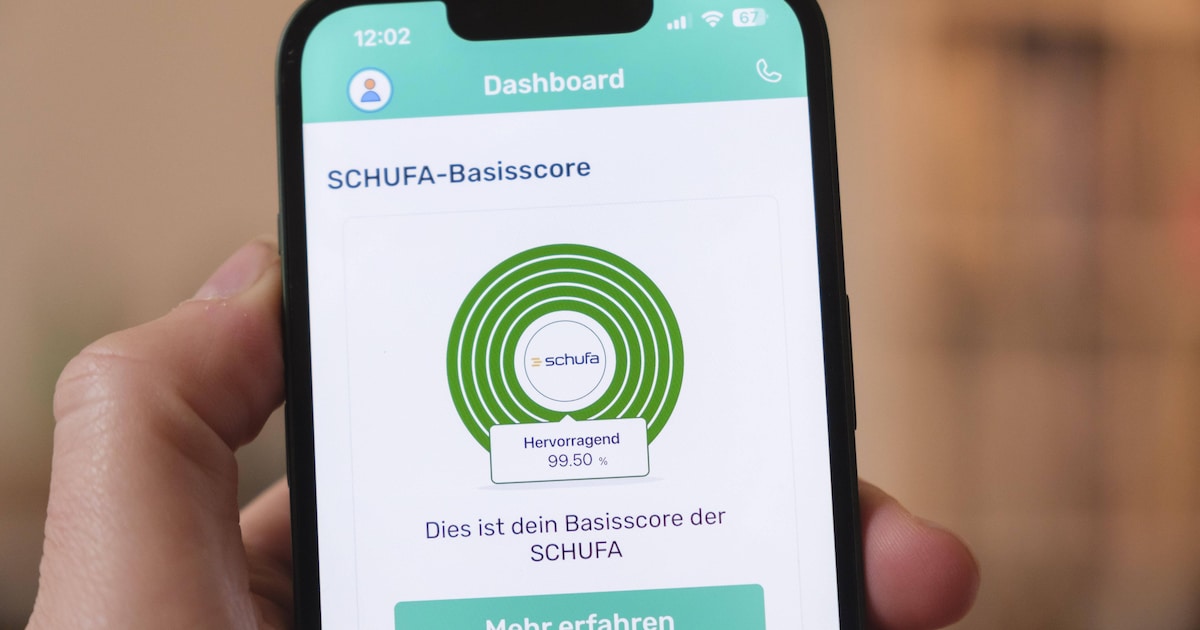
The new Schufa score will bring more transparency from Tuesday. Consumers can now check their data more easily and take a few measures to improve their credit rating in the long term. That’s how it works.
According to the comparison portal “Verivox”, the Schufa score cannot be manipulated at short notice. However, certain behaviors have a measurably positive effect on your creditworthiness. What consumers can do now to score points with Schufa.
First check: How good is your Schufa score anyway?
Many people don’t even know their Schufa score. It can make sense to check your own creditworthiness, for example before taking out a loan or looking for an apartment. The comparison portal “Verivox” gives two ways to do this:
- Free data copy according to Art. 15 GDPR: Schufa provides it, but only by post.
- Paid Schufa information: It provides quicker insight into the stored data.
An important step is checking your own entries. Incorrect or outdated data can lower the score.
If you discover an erroruse the Schufa query form. The error will then be checked according to Schufa and a correction will be made if it is actually an incorrect entry.
These criteria determine the new Schufa score
The Schufa score is created from various information about consumers’ payment behavior and existing contracts. Banks, mobile phone providers or retailers report relevant data to the credit agency. From this, Schufa calculates a credit rating.
The new Schufa score is on a scale of 100 to 999 points. Anyone who achieves the best possible rating in all twelve criteria will receive 999 points, the maximum credit rating in the system.
Which factors influence your Schufa score
Some factors have a particularly strong impact on the rating, while others play no role. According to “Verivox” the following are relevant:
- Checking accounts and credit cards
How long an account or credit card has existed can have a positive effect on your score. A long contractual relationship shows that someone will meet their financial obligations over the years.
At the same time, a large number of accounts or credit cards can worsen your score. The background is the statistical risk: Each additional account can contain an overdraft limit, several credit cards increase the possible credit limit. Banks see this as a potential risk of default.
Anyone who takes out a new installment loan initially puts a strain on their financial situation. This is why your score can drop in the short term after taking out a loan, especially if several loans are taken out within a short period of time.
In the long term, however, this can be reversed: If a loan is repaid reliably, the score often improves again. A loan that has been repaid in full and on time is an indication of responsible payment behavior.
Important: If you just compare loan offers and make a so-called conditions request, your score will not be affected.
An ongoing real estate loan can even have a positive effect on your score. The background is the extensive checks that banks carry out before granting such loans. The property also serves as security.
Statistically, borrowers with real estate financing are less likely to default on payments.
- Online purchases on account
When purchasing on account or purchasing in installments, retailers often check the creditworthiness, especially of new customers. In principle, every purchase on account works like a short-term loan.
If you buy on account very often, you may receive a slightly worse score. However, the effect is usually only temporary: after around twelve months, such inquiries become less important again.
Stability also plays a role in the Schufa score. Those who live at the same address for a long time receive a statistically better rating.
Frequent or very recent moves can worsen the score slightly in the short term. However, as time goes on, this factor becomes less important.
Payment defaults have the greatest impact. If there is a negative Schufa entry, the score drops significantly.
However, an entry is not created immediately: two reminders usually have to be sent first. Only then can a claim be reported to Schufa.
If the claim is paid, the score will improve again. However, the reference to the resolved payment problem remains stored for three years before it is deleted.
Which factors do not affect your Schufa score
However, some common assumptions about the Schufa score are not correct. Certain personal information is expressly not included in the evaluation. These include, among others:
- nationality or religion
- political attitude
- Social network data
- income or assets
- residential area
- Age, gender or marital status
Schufa therefore does not evaluate your personal life situation, but rather your previous payment behavior and existing contractual relationships.
Nine tips to improve your Schufa score
The experts at “Verivox” name several measures that can stabilize or improve the score in the long term. One part depends directly on one’s own financial behavior, the other concerns the control of the data stored by Schufa.
What you can do in everyday life to improve your score
1. Always pay bills and installments on time
Unpaid claims can lead to negative Schufa entries. On-time payments remain the most important factor for good credit.
2. Act early on financial problems
If you notice that an invoice cannot be paid, you should speak to the contractual partner early on. Deferred payments or installment plans can often be agreed upon before a negative entry occurs.
3. Don’t apply for too many new accounts or credit cards
New checking accounts or credit cards trigger creditworthiness inquiries. Multiple inquiries within a year can slightly lower the score.
4. Avoid new loans if possible
Every new installment loan taken out initially has a negative impact on the score. If you take out several loans at the same time, your rating will deteriorate more.
5. Be careful when purchasing in installments and purchasing on account
When shopping online, retailers often check your creditworthiness. Many such queries can also affect the score.
6. Pay off loans as quickly as possible
Particularly long loan terms put a strain on the score. Special repayments can help shorten the remaining term.
7. Pay attention to stable contractual relationships
Long-term bank connections or a long residential address tend to have a positive effect on the score. Frequent changes, on the other hand, can be viewed negatively.
What you should check directly with Schufa
8. Check your own Schufa data regularly
Consumers should have incorrect or long-completed entries corrected. This is one of the few cases where the score can improve relatively quickly.
9. Report identity abuse immediately
If fraudsters misuse personal data, unauthorized entries can be created. Those affected should report this to both the police and Schufa.
When the Schufa score improves
Even with the right measures, the score usually doesn’t improve immediately. Some factors only take effect over a longer period of time.
If a payment problem has been resolved, the score increases noticeably after about a year, according to “Verivox”. The entry is usually deleted after three years. Anyone planning larger financing – such as a real estate loan – should therefore ensure that their credit rating is stable two to three years in advance.
Why the Schufa score is important for consumers
- Crucial for loans: Banks use the Schufa score to assess the risk of non-payment.
- Better chances of being approved: A high score increases the likelihood that a loan will be approved at all.
- Influence on interest rates: The better the credit rating, the cheaper the loan conditions are usually.
- Risk with a low score: A weak rating can make loans significantly more expensive or even lead to rejection.
- Also relevant for other contracts: landlords, mobile phone providers or retailers often check the score before concluding contracts.