whizzy1919@gmail.com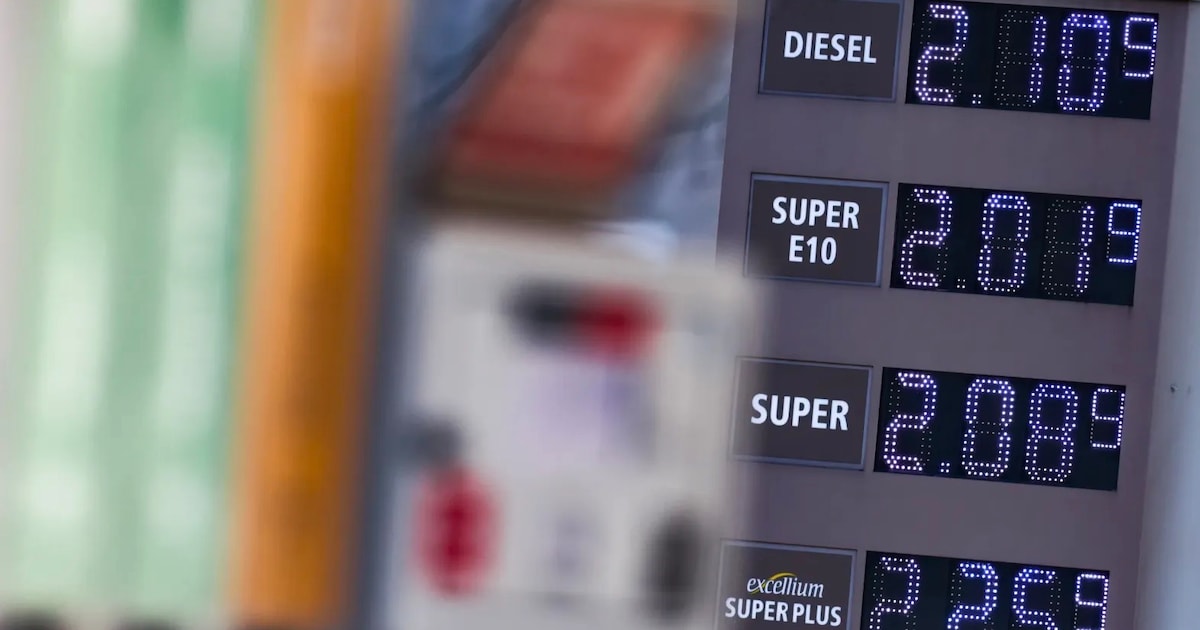
Since the war in Iran began, gasoline and diesel prices at German gas stations have skyrocketed. The state earns a lot here. A look abroad shows where tank tourism is now really worthwhile.
French gas pumps have been attracting fuel tourists across the border in recent days. Currently (March 6th) a liter of diesel there costs an average of 1.982 euros, while E10 costs an average of 1.82 euros. The journey is now only worth it for a few drivers.
One reason for the slightly lower prices is the different taxation of fuels. This means that fluctuations on the raw material exchanges have less of an impact on French prices. In addition, the French state intervenes more frequently, for example with temporary discounts or lower taxes. The profit margins of oil companies and gas stations are also being controlled more closely, which is intended to limit additional price markups in times of crisis.
Fuel prices in Poland
In the neighboring country to the east, fuel is significantly cheaper than in Germany. According to calculations by the “World“A liter of E10 currently costs an average of around 1.35 euros. The equivalent of around 1.42 euros is charged for diesel.
An important reason is significantly lower taxes and duties on fuel.
Fuel prices in the Czech Republic
Prices in the Czech Republic are also significantly below the German level. Currently (March 6th) a liter of petrol costs the equivalent of around 1.43 euros, diesel around 1.38 euros. If you live near the border, you can save significantly when filling up there.
Fuel prices in Austria
A detour to Austria can also be worthwhile, but usually only for drivers near the border. On March 5th, the average price for Super was around 1.71 euros per liter, diesel cost around 1.82 euros.
Fuel prices in Luxembourg
Luxembourg relies on state-set maximum prices at gas stations. These are calculated using an automatic formula that takes current stock market prices into account. As a result, rising crude oil prices are often only reflected at the pump after a few days’ delay.
In addition, the mineral oil tax is lower there than in Germany. On March 5th, a liter of Super cost at a gas station in the border town of Wasserbillig 1.51 euros, diesel around 1.69 euros. In border regions, stopping to refuel there is often still worthwhile, even if you take the journey into account.
Filling up in Germany costs over 2 euros per liter
The prices at German gas stations have increased significantly this week. On Friday, March 6th, one liter of diesel costs according to ADAC on average 2,109 euros. An average of 2,014 euros is charged for Super E10. The increase has moderated somewhat, diesel was two cents more expensive compared to the previous day, and E10 was around one cent cheaper. Nevertheless, the price level remains high.
This is what the fuel price in Germany is made up of
The Price at the pump consists of several components:
- Approximately a quarter falls on the Raw material oil and its processing in the refinery and downstream logistics.
- Taxes and duties do well the half of the price on the scoreboard. For example, the shares for energy and environmental tax, CO2 tax (at a higher level since the beginning of the year) and VAT flow into the state treasury.
- The Gas station profit margin and the petroleum industry is around five to twelve cents per liter. This income finances, among other things, transport, operating and energy costs and personnel.
Since part of the taxes are calculated as a percentage, the state’s revenue automatically increases with higher fuel prices. This is currently causing criticism. In politics, for example, there is discussion about a fuel price brake, similar to what was done after the start of the Ukraine war in 2022. Critics also repeatedly bring up a suspension of the CO₂ tax.
Criticism of oil companies
In addition to taxes, higher crude oil prices are also driving up costs at gas stations. However, the ADAC criticizes the possible deadweight effects of the oil companies.
A spokeswoman told the newspaper “Picture“that rising crude oil prices are often immediately passed on to consumers. The tank farms are often still filled with fuel that was purchased at lower prices. This means that companies can achieve higher profits in the short term.