whizzy1919@gmail.com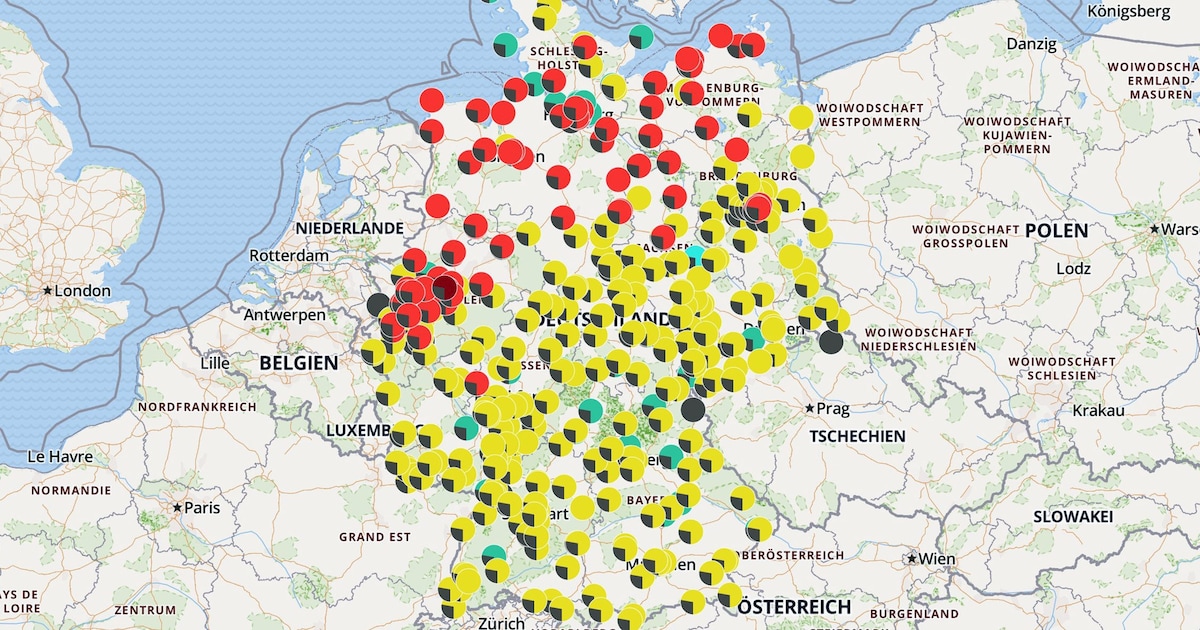
The air quality in Germany is currently restricted in many places. Elevated fine dust levels are currently being measured, particularly in the north and along the Rhine.
In addition to classic sources of pollutants, natural factors also contribute: There are numerous birch trees in these regions, whose pollen levels further increase the pollution.
Which pollutants pollute the air?
Fine dust consists of tiny particles that penetrate deep into the Respiratory system can reach. These are made up of various components: soot from traffic and industry, tire and brake abrasion, swirled dust and secondary particles that only form in the atmosphere from gases such as nitrogen oxides or ammonia. Natural components such as pollen or Sahara dust also increase the concentration of fine dust.
Inversion weather conditions make the situation worse
Currently, an inversion weather situation is causing pollutants to collect near the ground. A layer of warmer air lies above colder air on the ground and prevents vertical exchange. The pollutants cannot rise and remain trapped in the lower layer of air.
Cold front washes fine dust particles from the air
From Wednesday a cold front will reach Germany from northwest. With it, cooler air flows in, accompanied by a freshening wind and sometimes heavy rainfall.
The change in weather has a positive effect on air quality: rain washes fine dust particles and pollen out of the air, the wind ensures better mixing of the air layers, and the inversion dissolves so that pollutants can be transported away. After the cold front, colder but significantly cleaner air dominates. Polar air is generally very pure.
From Wednesday there will be a noticeable improvement in large parts of Germany Air quality expected, which is expected to last until next week. So the drop in temperature and the subsequent frost have something positive.