whizzy1919@gmail.com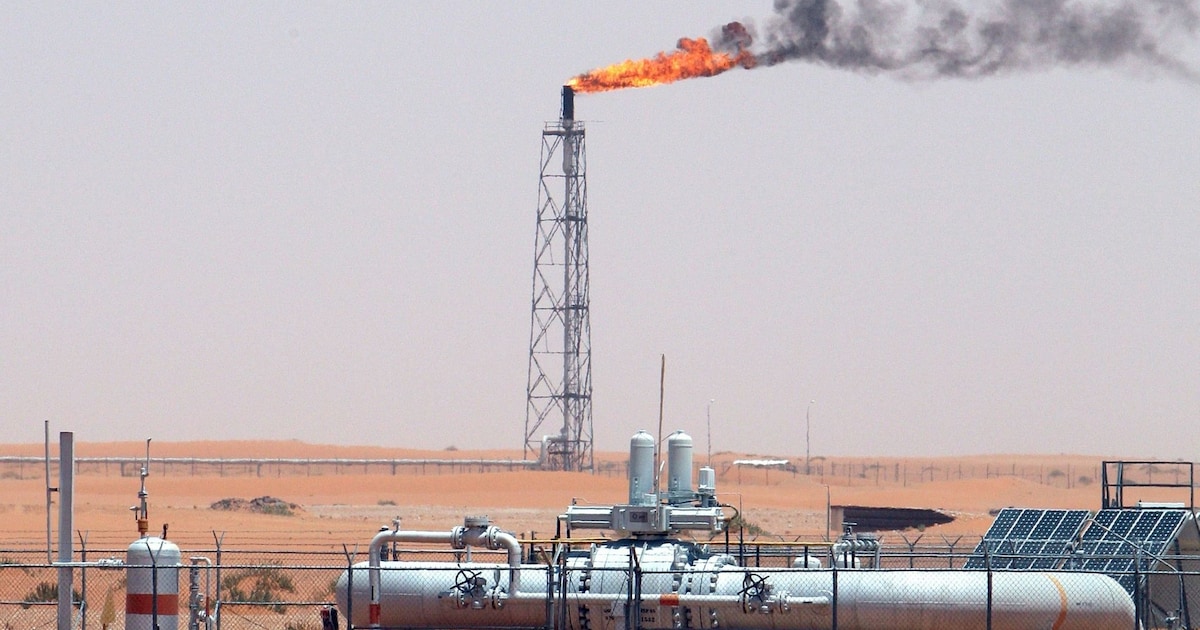
US and Israeli attacks on Iran continue, with Tehran responding with missiles and drones. In the live ticker you can find out more about the effects on the stock market and the global economy as well as reactions and expert assessments.
US futures fall, oil near $80
9:46 a.m.: At the beginning of the week, US stock futures are trending significantly weaker: futures on the S&P 500 were at times around 1.6 percent in the red, while Nasdaq 100contracts fell by around 2 percent – a sign of widespread risk sell-off, reports “Bloomberg”.
At the same time, Brent crude is trading near $80 a barrel as the conflict in the Middle East severely affects passage through the Strait of Hormuz – a key energy trade route.
DAX starts the week weakly
9.15 a.m.: The DAX opened at 24,707 points and thus lost 576 points or 2.28 percent. The escalation in the Middle East is causing noticeable selling pressure at the start of Xetra. Investors withdraw capital from risky investments.
- Rheinmetall +5.11%
- RWE +0.40%
- E.ON -0.38%
- Deutsche Börse -0.69%
- Deutsche Telekom -0.88%
- Fresenius Medical Care -1.17%
- Vonovia -1.60%
- Munich Re -1.84%
- Scout24 -1.94%
- Qiagen -1.94%
- Beiersdorf -2.09%
- Fresenius -2.18%
- SAP -2.19%
- Deutsche Post -2.26%
- Alliance -2.51%
- Henkel Vz -2.69%
- Brenntag -2.72%
- Hannover Re -2.72%
- Merck -2.73%
- GEA Group -2.73%
- Airbus -2.76%
- Siemens Healthineers -2.80%
- Symrise -2.81%
- Heidelberg Materials -2.85%
- MTU Aero Engines -2.90%
- Siemens Energy -2.97%
- Mercedes-Benz Group -3.05%
- Commerzbank -3.15%
- Bayer -3.19%
- BASF -3.24%
- Adidas -3.29%
- Porsche Automobil Holding -3.47%
- Volkswagen Vz -3.54%
- BMW -3.71%
- Infineon -3.76%
- Continental -3.88%
- Daimler Truck -3.90%
- Siemens -4.14%
- Deutsche Bank -4.26%
- Zalando -4.39%
“As expected, the Dax is losing at the start of the stock market. But it doesn’t look like panic. In their base scenario, the markets seem to be assuming a temporary conflict,” said FOCUS online stock market expert Clemens Schömann-Finck.
The MDax also fell 2.7 percent at the start of the week and slipped to 30,706 points. The EuroStoxx 50 lost 2.3 percent – the weakness is affecting large parts of the European stock market.

Deutsche Bank: higher oil prices could “trigger a de-escalation dynamic”
9:33 a.m.: According to analysts at Deutsche Bank, the extent and pace of the escalation of the situation in the Middle East in the coming days will be determined by a variety of factors. Among other things, higher oil prices could “trigger a de-escalation dynamic.”
Commerzbank’s chief economist, Jörg Krämer, assumes that the price of Brent oil from the North Sea could rise further towards the $100 mark in the event of a prolonged closure of the Strait of Hormuz. “If the oil price remained this high for several months, it would increase inflation in the euro area by more than one percentage point and reduce economic growth by a few tenths of a percentage point,” said Krämer. (dpa)
Share prices on the stock exchanges in Asia are falling
8:49 a.m.: Share prices on stock exchanges in Asia fell on Monday morning. In Tokyo, Hong Kong, Singapore, Mumbai, Bangkok, Taipei and Wellington, trading opened in the red everywhere. Airline prices in particular fell sharply – they have to cancel flights to the region for the time being. The prices of energy companies, on the other hand, rose – the conflict in the Middle East has already driven up the price of oil significantly.
8:26 a.m.: FOCUS online stock market expert Clemens Schömann-Finck sees two main dangers for investors after the attacks on Iran by the USA and Israel.
He warns: “I see two major dangers to the markets from the US and Israeli attack on Iran: one danger is that the war becomes a catalyst for a large-scale sell-off as the markets are highly valued. The other danger is the rise in oil prices.”
A short-term jump in the price of crude oil is bearable. It will be problematic if the level remains high for longer. “But if the price stays up for a long period of time, it will have an impact on inflation and economic growth. The conflict would then reach the real economy with consequences for companies.”
Schömann-Finck expects high fluctuations in the coming days. Investors would have to reassess the consequences of the escalation. At the same time, he points to historical patterns: “The situation will calm down again as soon as there is a little more clarity. Historically, geopolitical dips are often good buying opportunities.”
8.23 a.m.: Expert: DAX is likely to start significantly weaker
The leading German index is facing heavy losses at the start of the week. Andreas Lipkow, chief market analyst at CMC Markets, expects the DAX to be below 24,700 points at the start of trading – more than two percent below Friday’s close.
Overall, the market reactions to the escalation in the Middle East are “relatively moderate,” said Lipkow. In Asia, raw material-dependent economies such as Japan and China in particular have reacted to the increased oil prices. Airlines were particularly under pressure, while oil and defense stocks rose.
Lipkow sees the situation as critical for Germany. A possible restriction on shipping traffic through the Strait of Hormuz would hit the energy-dependent German economy particularly hard. After the loss of Russian deliveries, companies are more exposed to fluctuations on the global market.
From a technical perspective, Lipkow expects a trading range of between 24,400 and 24,900 points for the DAX.
Private bank Berenberg expects oil prices to jump in the short term
8.15 a.m.: A lot is decided on the Strait of Hormuz for the markets. Holger Schmieding, chief economist at the private bank Berenberg, warns of clear economic consequences of a prolonged blockade.
“The crucial question for the global economy is obvious: Will the Strait of Hormuz be effectively closed to oil and gas exports for more than just a few weeks? If so, that would significantly weigh on global growth and noticeably increase global inflation.”
According to Schmieding, a permanent increase in the price of oil by $15 per barrel could increase the price level in the eurozone by almost 0.5 percent – and thus reduce the purchasing power of consumers.
Berenberg expects a jump in oil prices in the short term. In their basic forecast, however, economists expect Brent to settle back in the range of 65 to 70 dollars per barrel after the acute phase.

Stock market launch in Frankfurt
8:00 a.m.: The stock exchange is now starting in Frankfurt and investors are looking forward to it. Before the trading session, the Dax was around 400 points in the red, a small shock, but not an earthquake.
Oil prices jump by double digits
7.50 a.m.: After the escalation in the Middle East, the crude oil markets initially reacted violently. In the first few minutes of trading, both the North Sea Brent and the US WTI rose by more than ten percent. Brent climbed to a peak of $82.37 per barrel – the highest it has been since July 2024. WTI reached $75.33, its highest level since June 2025.
As the market progressed, the quotations gave up some of the gains. Brent for delivery in April was last quoted at $78.05, around 7.5 percent or a good $5 above the previous close. WTI rose in price by more than $4 to $71.52 per barrel. (dpa)
Expert: Crude oil price could rise to $100 per barrel
7.45 a.m.: According to analysts at Deutsche Bank, the extent and pace of the escalation of the situation in the Middle East in the coming days will be determined by a variety of factors. Among other things, higher oil prices could “trigger a de-escalation dynamic.”
Commerzbank’s chief economist, Jörg Krämer, assumes that the price of Brent oil from the North Sea could rise further towards the $100 mark in the event of a prolonged closure of the Strait of Hormuz. “If the oil price remained this high for several months, it would increase inflation in the euro area by more than one percentage point and reduce economic growth by a few tenths of a percentage point,” said Krämer. (dpa)
Gold in demand – US futures in the red
7:34 a.m.: Investors are fleeing to safe havens. Gold rose by 2.1 percent to $5,359 per troy ounce, silver by one percent. At the same time, US stock futures are falling: the Dow Jones, S&P 500 and Nasdaq are each down around 0.7 percent.
Analysts expect high volatility
7.30 a.m.: Analysts expect high volatility and risk aversion on the markets at the start of trading. Global stocks are likely to open under pressure as investors react to uncertainty and avoid risky assets. The threat of a closure of the Strait of Hormuz – through which around 20 percent of the world’s oil travels – is causing energy prices to rise and could weigh on inflation and growth.
Oil and energy in focus: Sharply rising oil prices are putting pressure on economically sensitive sectors and pressure on aviation and logistics stocks could increase before the stock market opens, while energy and defense stocks are becoming more attractive as “safe havens”.
Safe havens in demand: Gold and government bonds are in high demand, while stock indices are weighed down and Asian stock exchanges are off to a weaker start.
Overall, investors expect uncertainty, sector shifts and increased demand for safe asset classes when the market starts.
“Geopolitical shocks are usually short-lived”
Strait of Hormuz comes into focus
7:29 a.m.: Over the weekend, Israel and the USA attacked targets in Iran. The head of state and spiritual leader Ayatollah Ali Khamenei was also killed. Tehran responded with military counterattacks and also limited shipping traffic through the Strait of Hormuz – a key route for global energy trade.
Around a fifth of the world’s traded oil is transported through the Persian Gulf strait every day. Even minor disruptions can drive prices up and put financial markets under pressure.
At the same time, OPEC+ decided to expand the production volume at a regular meeting. The association, which includes producers such as Russia as well as the OPEC states, wants to increase daily production by 206,000 barrels. In the official announcement, the decision was justified by robust economic prospects and comparatively low inventories – the group did not address the recent fighting. (dpa)
“This is not Venezuela”
7:27 a.m.: Frank Kelly from the analysis company Fulcrum Macro urges caution in the “Handelsblatt”. “This is not Venezuela.” The situation in Iran is significantly more complex. Leaders were indeed killed. “But there is a number among them who are capable and very eager to take power.” Markets may have to prepare for instability in the region.