whizzy1919@gmail.com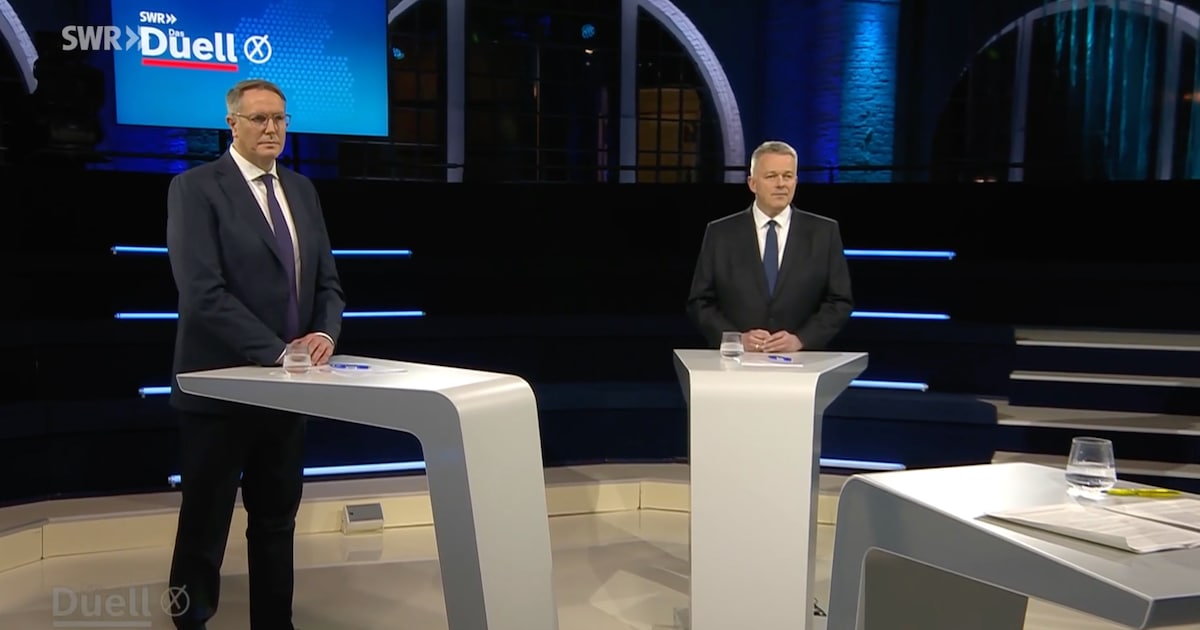
The next state election has what it takes to thoroughly shake up federal politics. SPD against CDU. This means there will be a clear loser in Berlin. This is exciting. But who, pray tell, can tell the difference between the two? There is only one topic where things become toxic.
Baden-Württemberg was a political earthquake. Rhineland-Palatinate has what it takes to become an improvement. The Prime Minister comes from the SPD, the challenger from the CDU. Whoever wins in the state will result in a loser in the governing coalition. So there are still twelve days until a highly dramatic confrontation. “The duel,” is what it is alarmingly called on the regional broadcaster SWR. The discussion of the top candidates, however, is the calm before the storm. Who is supposed to distinguish between these two politicians?
Two gentlemen – confusingly similar
Running: Prime Minister Alexander Schweitzer, SPD. Opposite him is Gordon Schnieder, CDU. The two candidates appear to dress at the same men’s clothing store. They bring dark gray into the studio. The tie? Muted blue tones. The hair color? Subtle gray. Even the names make it difficult to distinguish. In the future, Rhineland-Palatinate will have a Prime Minister with “Sch…”, no matter which party wins. And political? There’s only one topic where they end up at loggerheads at the very end.
And of all things on the brittle subject of civil service law. Can a civil servant with full pension entitlements be released from his tax-financed work to support a politician? The two candidates make violent accusations against each other. This is fatally reminiscent of the accusation of nepotism that another party had to endure. With one difference: the legal situation here is not clear.


Excessive gasoline prices? Both call for the cartel office
Before: Yawning unity. Ban on social media? Accordance. “This is the right direction,” says challenger Schnieder. Freedom of learning materials in schools? “This is important to me,” says Prime Minister Schweitzer, “I ensure that the normal family is relieved. Every child is equally valuable to me.”
Schnieder only adds discreetly with a view to migration and parents’ failures: “I would like to get the children to the point where they can also read the free learning materials.” Excessive gasoline prices? Schnieder calls on the cartel office: “Oil companies are putting the money in their own pockets.” Schweitzer demands that prices at gas stations should only be changed once a day: “Politicians have to get involved in this, we also want to get involved with antitrust law.”
Who has what position please?
Schweitzer and Schnieder, Schnieder and Schweitzer: Who has which position again? This question could be wonderfully turned into a competition. The difficulty increases with mutual kindness.
Investment program? “You have graciously agreed,” we hear. Battery cell production? “It’s good when you get everyone together at the table.” Schnieder answers “Colleague Schweitzer”. He thanks him: “I would like to agree with Mr. Schnieder.” And the moderator? He joins in with this harmony: “I think it’s great when they talk to each other.”
Realpolitik is not that exciting. It may well be that the radicals will be happy about this on election Sunday in less than two weeks.