whizzy1919@gmail.com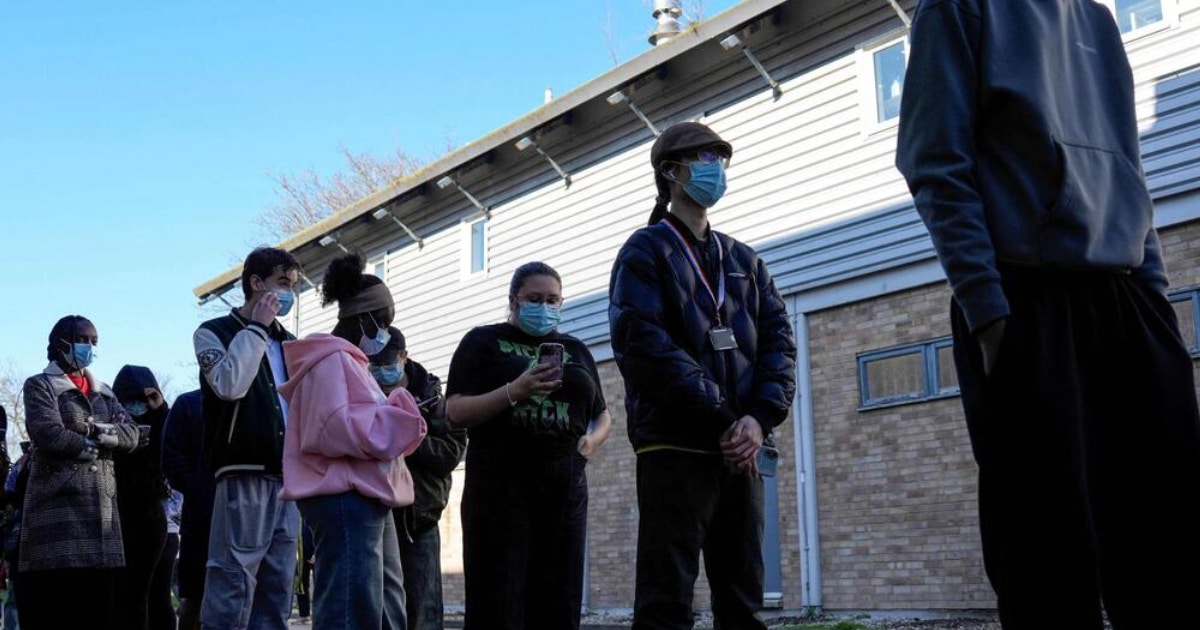
There has been an outbreak of meningitis in Great Britain. Two young people died of meningitis, and there are said to be 27 cases in total. According to a student, there are Covid-like conditions at the University of Canterbury.
In view of rising meningitis cases in England with two deaths, Prime Minister Keir Starmer has reacted. He called on visitors to a discotheque in focus on Wednesday to come forward for treatment with antibiotics. According to Health Minister Wes Streeting, all cases of infection can be traced back to the Chemistry club in Canterbury.
Starmer asked anyone who visited the club “on March 5, 6 or 7” to come forward, he said in Parliament in London. Corresponding appeals had already come from the health authorities. Starmer said close contacts of those who were infected were currently being identified. An 18-year-old student and a 21-year-old student died. According to Starmer, there are more Infected people seriously ill in hospital.
27 infected people according to the health authority
According to the health authority UKHSA on Wednesday, the number of infected people rose from 15 to 20 within 24 hours. As of Thursday, the cases had increased to 27, as the UKHSA announced. 15 cases have been confirmed by a laboratory to be attributed to the outbreak, and twelve reported cases are being further investigated. The authority is criticized for its information policy. It announced the deaths on Sunday, two days after it was informed of the first case of infection.
The first case has now become known in a French hospital – the patient returned from Kent but is in a stable condition, according to French authorities.
Student: “It’s like Covid 2.0.”
So far, the British authorities have focused their measures on the University of Kent in Canterbury, which has around 18,000 students. Some students are hospital patients. As a precautionary measure, 700 doses of antibiotics were given to young people who may have come into contact with the pathogen. A spontaneous vaccination campaign is also being offered on campus.
One of the infected lives in Kent but fell ill in London. With the Easter holidays approaching at the beginning of April, there are fears that the wave of illness could spread if students go home for the holidays.
According to the British “Guardian“In-person exams were canceled, which would now be held online. Many of the students would therefore leave early for the Easter holidays. The newspaper quoted a student as saying: “It’s like Covid 2.0. Many students have left. Three of my roommates have already moved out.” Many students were wearing masks. You could see them making their way to the city’s two train stations with their suitcases.
“Nobody goes out,” the 24-year-old tells the Guardian. “It’s really, really quiet.”
How to recognize meningitis
The first signs of a meningococcal infection are often flu-like. According to this, those affected notice European vaccination information portal:
- Fever
- severe headache
- Neck stiffness
- Nausea and vomiting
- Sensitivity to light
- Confusion or altered mental status
- Rash (a red or purple rash that does not go away when pressed)
- rapid breathing
- cold hands and feet
If severe and without rapid antibiotic treatment, the infection can become life-threatening. Septic shock, organ failure and brain damage can occur. Around 10 percent of those affected succumb to the pathogens.
Pathogens: blood poisoning and meningitis
Meningitis, an inflammation of the meninges, can be caused by bacteria or viruses. Often it is certain bacteria, the meningococci. In severe and rare cases, they lead to life-threatening illnesses such as meningitis or blood poisoning (sepsis). The pathogens are transmitted from person to person through droplet infection, including through kissing or sharing e-cigarettes or drinks.
Health Minister Wes Streeting spoke of an “unprecedented” situation, but emphasized that the risk for the general population was low: the bacteria spread primarily through close, prolonged contact.
According to the information, the bacterial pathogen group B was detected in some infections in Canterbury, for which the mortality rate is around ten percent, according to the British health service NHS. Are particularly at risk
There is a vaccination against meningococcal B. In general, invasive meningococcal B diseases occur very rarely and have declined significantly and relatively steadily over the last 20 years.
There is a meningococcal vaccination
Vaccination against meningococci is available. Depending on the subgroup, also known as the serogroup, the vaccination recommendations differ. In Germany, various vaccines are available for serogroups B and C as well as a combination vaccine for groups A, C, W and Y.
- The combination vaccination A,C,W and Y (MenACWY) has been recommended by the Standing Vaccination Commission as a standard vaccination for all children and adolescents aged 12 to 14 since October 2025.
- The vaccination against Meningococcal B has been recommended for infants aged two months and older since January 2024. To ensure complete vaccination protection, two further vaccinations are planned at the ages of four and twelve months.