whizzy1919@gmail.com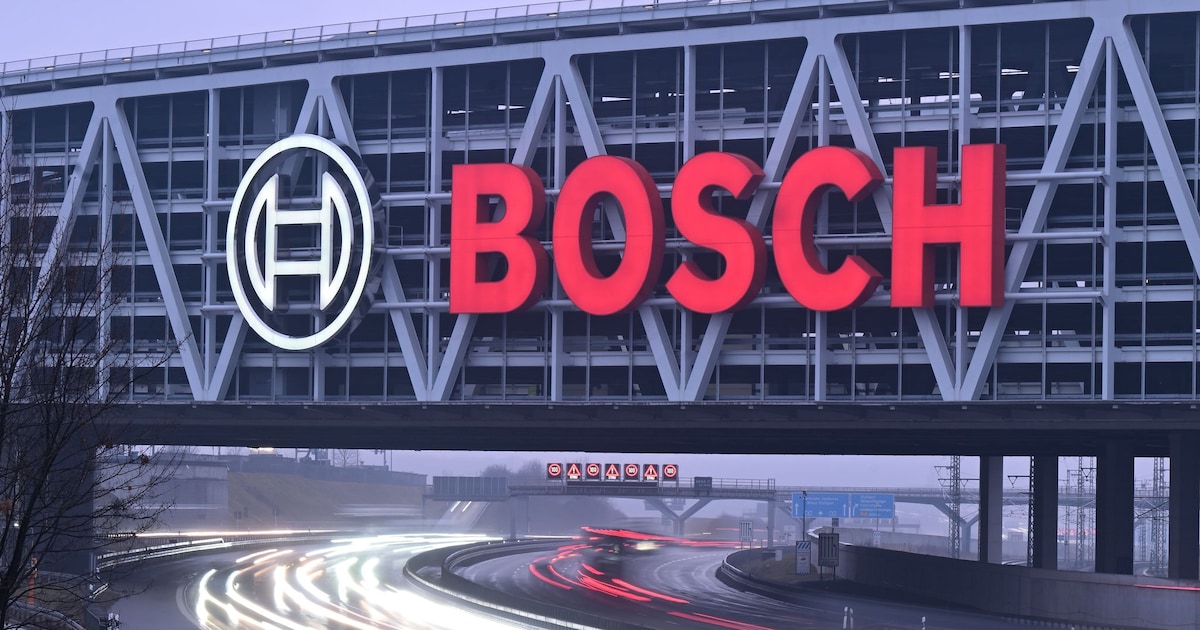
Frank Sell is chairman of the general works council at Bosch. In a video available to FOCUS online, he describes the company’s dramatic situation and the consequences and challenges of the electric car policy.
As part of the international engine congress in Baden-Baden, Frank Sell (50), chairman of the general works council at Bosch, delivered a ruthless reckoning with the group’s situation. According to information from FOCUS, the 18-minute video was not intended for publication online, but was then made available to IG Metall members on a website.
“We made wrong decisions”
According to Sell, he represents 80,000 employees in Germany. According to Sell, Bosch, one of the most important and traditional automotive suppliers, has set itself three goals in transforming the auto industry towards more electric cars: This transformation must be “social, ecological and economic”. At the same time, technology leadership in the automotive segment must be retained. “Unfortunately, we have broken this promise in many places,” Sell continued. The employees are “extremely afraid of losing their jobs” and the works council’s “heart is bleeding” in view of the many layoffs – Bosch wants to cut 22,000 jobs. This is also the case because wrong decisions were made in many places.
“I’ve never seen so many people cry”
Sell describes disappointment and frustration among the workforce, some of whom have worked at Bosch for generations. The transformation is currently “anything but social,” says Sell. He has never “seen so many people crying.” At the same time, technologies such as electromobility or autonomous driving have led to significant economic risks for the company. The new areas would still generate far too little profit compared to the traditional business areas. New players like China are putting a lot of pressure on companies. The result is an “incredible number of bankruptcies” among small and medium-sized supplier companies.
Reckoning with the combustion engine ban
Then follows a reckoning with European climate policy and the EU ban on combustion engineswhich one rarely hears with this clarity from a trade unionist: “It cannot be the case that Europe sets itself a goal and 21 countries in Europe do nothing about it – be it infrastructure or expanding charging stations – and then we continue to stick to a goal that we know is not technically possible.” “No normal person out there” understands that these goals cannot be deviated from. It is completely unrealistic to say: “On December 31, 2024, one model will end and when the hand goes to 0 o’clock, the other model applies.” What is currently being discussed in Brussels is more likely a tightening of the ban on combustion engines as an adjustment to the actual developments on the car market.
Technology leadership in combustion engines is being lost to China
This is not only political madness, says Sell, it also does not reflect the realities of the car market. Bosch must maintain technological leadership in all types of drives. Even on the Chinese market, not everything is biased towards electric cars, where Bosch has to admit that “they are two to three years ahead of us.” In China, however, not only are new hybrid drives being developed at the same time, but there are also requests for new high-pressure injection systems for gasoline engines and even new, efficient diesel engines.
2035: One third electric, one third hybrid, one third gasoline
For the global market, Bosch assumes that by 2035 – the year from which the EU will effectively ban all new non-electric drives – the market share of battery vehicles will be one third, but two thirds of all cars will still have a combustion engine on board, be it as a normal gasoline engine or as a hybrid. So we will say goodbye to two-thirds of the world market if we continue to phase out combustion engines in 2035, says Sell.
,regionOfInterest=(276,327)&hash=2f8adb336af62f568a80024c381367eda25c1833d99ab803e584a4d70105d73e)
“Either you can offer at China prices or you’re out.”
“We are also saying goodbye to our know-how when it comes to understanding the system,” said the trade unionist – but that is still exactly the strength against China, but also against the USA. This means you are “shooting yourself more and more out of the market”. There should be no “either or” when it comes to drive, only “both and”.
At the same time, the supplier industry is under extreme pressure because the supplier industry built up in China offers products cheaper and the car manufacturer then puts the gun on you: “You can either offer at Chinese prices or you’re out.” At the same time, China can also be a role model, for example in cooperation between car manufacturers and suppliers the much-hyped “China Speed” make it possible. With a new collaboration, the speed of development could also be significantly increased in Germany and at the same time deliver higher quality and better product safety.
Sign up for the car newsletter here!
Don’t want to miss any articles from our car experts? Then register now for the FOCUS car newsletter online.