whizzy1919@gmail.com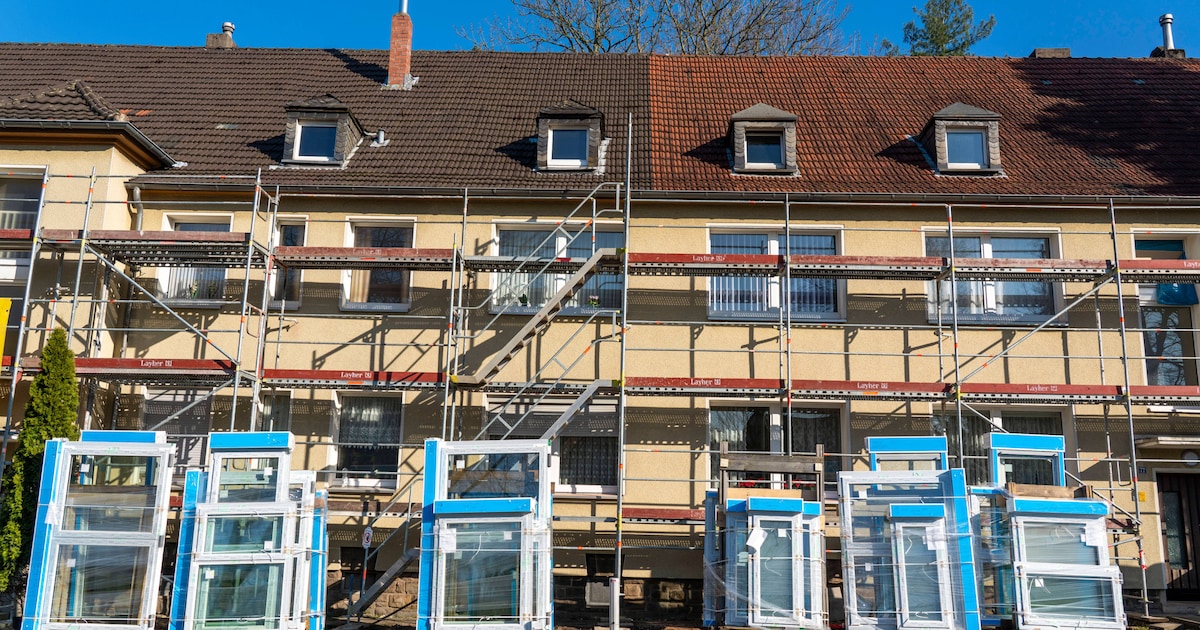
Germany must implement the new EU Buildings Directive by the end of May 2026. For millions of apartments, this means more renovations – and uncertainty about who will pay in the end.
There is no blanket obligation to renovate every house immediately. But the pressure will increase through new laws, stricter standards and funding programs. Anyone who owns an energetically weak building will hardly be able to avoid modernization in the medium term.
For owners, this means that the pressure to modernize heating, insulation or windows is likely to increase. For tenants, this means that such renovations are likely to become more common – and with them discussions about higher rents.
Industry associations assume that the renovation rate would have to increase significantly in order to achieve the climate goals. That would mean investments worth billions of euros per year. For many landlords, the question is not just ecological, but above all economic: who will bear the costs?
Landlords are allowed to change this
The crucial distinction is between maintenance and modernization. Repairs or the replacement of defective components serve to preserve value. The landlord generally has to bear these costs himself.
The situation is different with energy-related modernizations, such as additional insulation or more efficient heating technology. The landlord can pass on up to eight percent of the modernization costs incurred per year to the rent.
Example 1: Smaller house with four apartments
If the modernization costs amount to 80,000 euros, eight percent of that amounts to 6,400 euros per year. For four apartments, this corresponds to 1,600 euros per year per apartment – around 133 euros per month.
This shows that fewer apartments mean a higher burden per tenant.
Example 2: Medium-sized apartment building
If the modernization costs 120,000 euros, at eight percent per year it is 9,600 euros annually. If the house has six apartments of the same size, the calculation costs 1,600 euros per apartment per year – around 133 euros additional per month.
Example 3: Larger house with ten apartments
If the costs are 250,000 euros, eight percent results in 20,000 euros annually. Spread over ten apartments, that would be 2,000 euros per year and therefore around 167 euros per month per apartment.
- Funding must be deducted beforehand, so the actual levy may be lower
- There are legal limits per square meter within a period.
- The measure must be announced correctly. Errors in the announcement or calculation may result in the increase being vulnerable.
- Even if the 8 percent calculation results in a large increase, a legal cap applies: within six years, the rent per square meter can only increase by a maximum of three euros – for cheap apartments even by only two euros.
What tenants should check now
With the May deadline in mind, tenants should pay special attention. Three points are central:
- Was the modernization properly announced with the start, duration and expected rent increase?
- Were only real modernization costs included or are repairs “priced in”?
- Have government subsidies been taken into account? These must reduce the apportionable costs.
During energy-related modernizations, rent reductions are legally excluded for three months. After that, depending on the impairment, it may be possible again.
In special cases, tenants can claim unreasonable hardship, for example if the increase is not economically viable. Whether this applies depends on the individual case.
The tax office participates, but differently than tenants
In addition to the levy, there is a second lever for landlords: tax.
The maintenance costs for rented properties can be deducted as business expenses – either immediately or spread over several years. If extensive measures trigger production costs, the relief comes via depreciation.
This means: While tenants often feel the burden directly, the tax relief for landlords is spread over several years.
Energy certificates are becoming more visible
With the implementation of the EU directive, energy certificates will be standardized across the EU. In the future, a scale from A to G will apply. Anyone who sells or rents a new property must disclose the efficiency class.
This can be an additional reference point for tenants: a poor class indicates high heating costs and a potential need for modernization.
What the May date means specifically
The May 2026 deadline is not a demolition date for old buildings. But there is much to suggest that it marks the beginning of a new phase: national rules are being tightened, proof requirements are being made more precise, and funding conditions are being adjusted.
For landlords this means planning investments strategically, clearly separating costs and taking advantage of subsidies. For tenants it means: check documents, check calculations and know your rights. One thing is certain: energy-saving renovations will become the norm in the coming years.