whizzy1919@gmail.com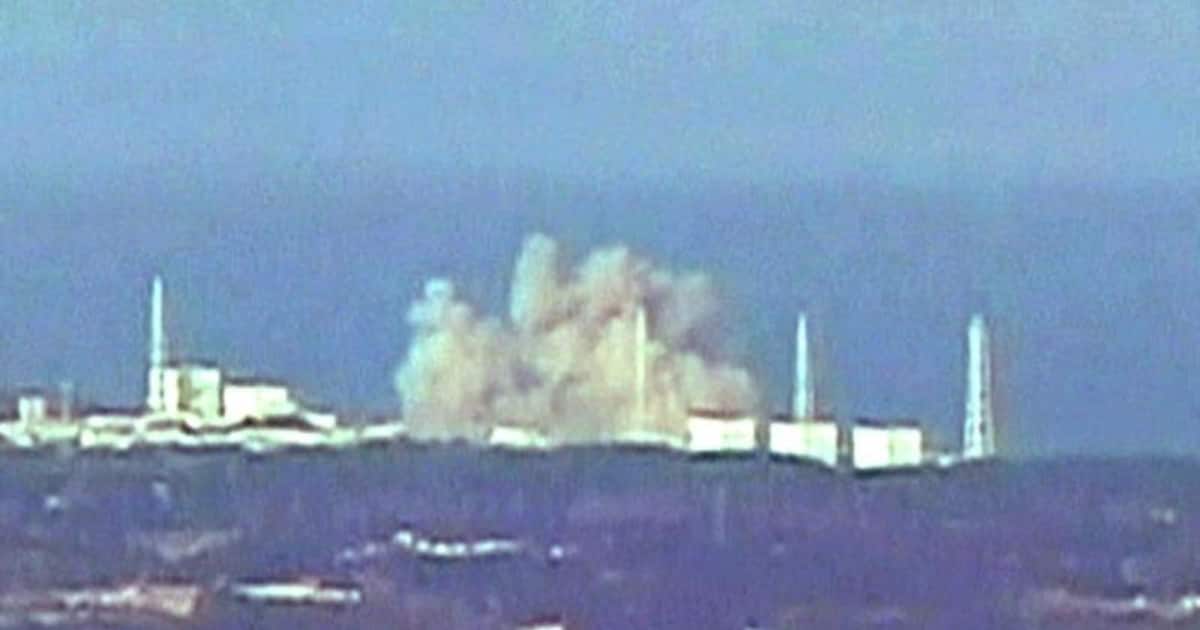
15 years after the Fukushima disaster, nuclear energy is being debated again. But a look at the numbers and costs shows that a nuclear renaissance in Europe is hardly realistic, says Volker Quaschning.
EU Commission President Ursula von der Leyen has described the move away from nuclear power as a “strategic mistake”. FOCUS online asked two experts to rate the pros and cons. Below you can read Volker Quaschning’s view against nuclear power. Here you can find Veronika Wendland’s pro view.
Today everything sounds different. The physics are still the same, but the perception of risk is not. EU Commission President Ursula von der Leyen describes the move away from nuclear energy as a serious strategic mistake, and the discussion in Germany is not slowing down.
Only three percent of the energy requirement
In the end, there was a dispute in this country over six nuclear power plants that were still online in 2021. The 30-year-old reactors were supposedly the most modern in the world. If this statement were true, that alone would be an indictment of this technology.
The reactors covered around twelve percent of Germany’s electricity needs in 2021. Since, in addition to electricity, we also need energy for heat, transport and industry, they do not even supply three percent of Germany’s total final energy requirements.
A nuclear renaissance is unrealistic
In the current oil and gas crisis, it would not have helped to stabilize prices. In order to ensure a relevant contribution to our energy needs, nuclear energy would have had to be massively expanded. For example, if nuclear energy is to cover half of Germany’s final energy needs, we are talking about around 100 nuclear power plants.
Imagine how enthusiastically Mr Söder would have been received in the Bavarian districts if he had campaigned for the construction of two dozen new nuclear power plants. Of course including nuclear waste repository.
Since this scenario would almost certainly never have happened in Germany, a significant contribution from nuclear energy to our energy supply has long been ruled out.
The nuclear facilities in France are also outdated
Even in France, a model nuclear energy country, there is no sensible concept for the future. There are currently 57 nuclear reactors in operation in the Grande Nation, most of which, with an average age of around 40 years, have already reached the end of their originally planned service life. It should be stretched further. Otherwise, France would soon run out of electricity.
As a replacement, six new nuclear reactors are currently planned, which are scheduled to go online from 2038. How the remaining reactors will be replaced is anyone’s guess. In France, nuclear energy covers two thirds of the electricity demand.
When it comes to final energy consumption, however, it is only just under 20 percent. It remains to be seen how France will become climate neutral in 25 years given its aging nuclear energy park. This would actually only be possible with a massive expansion of renewable energies.
,regionOfInterest=(984,662)&hash=490a611b6d797248f8a601a9508b9a1d2176f39bf1f28a4bdf956ca33e0fb55b)
Nuclear power is poorly compatible with the energy transition
Only then does the problem arise that solar and wind energy are not really compatible with nuclear energy. Nuclear power plants are planned so that they can provide electricity around the clock, if possible. Renewable energies fluctuate greatly. At times they cover all electricity requirements, at other times there are gaps.
Filling these gaps with nuclear energy would cause the already high costs of nuclear energy to explode. You would either have to slow down the expansion of renewable energies or place additional storage facilities next to nuclear power plants in order to guarantee capacity utilization. Neither makes sense.
Only two reactors completed in the EU
Nevertheless, it is often claimed that nuclear energy is celebrating a great renaissance in Europe. On closer inspection, there is little behind it. In the past ten years, just two nuclear reactors have been completed in the EU: in France and Finland.
Small reactors are not a solution
Now small modular reactors, so-called SMRs, are supposed to be the salvation. In the past, reactors were always enlarged in order to become more economical. Now they want to go back to smaller systems. However, these are more expensive and only have cost advantages if large numbers are mass produced.
The design does not change the fact that they should run around the clock if possible in order to be reasonably economical. Even if such reactors are – optimistically – available in ten years, the rapidly increasing share of renewable energy in Europe will have destroyed the business model.
Nuclear energy and nuclear weapons are related
Nevertheless: We will still see nuclear power plants in Europe. They have advantages for countries that also want to master the atomic bomb. It is possible that other countries will plunge into financial adventures.
When the bill is presented at the end, the enthusiasm for nuclear energy will quickly come to an end. It’s good that the time for such adventures in Germany is over.
Volker Quaschning has been a professor of renewable energy systems at the HTW Berlin University of Applied Sciences since 2004, speaker for the renewable energy course and heads the solar storage systems research group. He earned his doctorate in the field of photovoltaics and completed his habilitation on climate-friendly energy supply. He is the author of several successful specialist books. His podcast and YouTube channel have received a lot of views and he is in demand as a speaker and interview partner.