whizzy1919@gmail.com
The largest social reform of the last 20 years is planned and initiated. But abolishing citizens’ money probably won’t even save a billion euros. Merz is happy, while Bas is celebrating his retirement.
It is a day on which the Minister of Social Affairs decided to do this controversial social reform Better not to justify it in the Bundestag. SPD frontwoman Bärbel Bas remains silent on the matter, unlike the CDU Chancellor. There are reasons for that.
Citizens’ money: SPD prefers to distract with pensions
Bas prefers to celebrate another social feat; she calls it “good news for pensioners.” The Pensions increase by a whopping 4.24 percent and no party has such an elderly supporter and membership as the SPD. It is no longer the party of the workers, it is the party of the pensioners.
There is nothing to gain for the SPD in the citizens’ money debate, but a lot to lose. When it comes to pensions, it’s the other way around, and that’s why the SPD’s PR strategy follows this three days before two elections – with almost 20 million eligible voters.
This Sunday, almost eight million people from Baden-Württemberg will vote for a new state parliament and a new prime minister. And ten million Bavarians new local parliaments.
CDU promotes social reform
At the CDU the “order of battle” is virtually reversed. After the pension dispute with the young people from their own party, there is not much to gain for them on the issue. That’s why the higher ups are silent about it. Friedrich Merz and his people have a great need for justification for citizens’ money. Especially when elections are coming up in the two “high-performing countries” in the south.
The Union wanted to save 30 billion here, a gigantic sum. There are probably less than a billion left.
That’s why the Union sent Merz drummer Linnemann as the first speaker to the Bundestag plenary session, while at the same time the Chancellor promoted social reform on the digital platform
SPD reassures: “We don’t punish people across the board”
The Union made as large as possible what the SPD had previously negotiated as small as possible. The SPD, in turn, reduced what had previously been reduced again, which sounded like this:
“We’re just sharpening things up.” No, it’s “not a system change.” “Nothing changes for those who follow the rules.” “We don’t punish people across the board.” “We stand by the people who need help.” “If you take part, you won’t even come into contact with benefit cuts.” “We are not abolishing anything, we are looking forward.”
The SPD rhetoric followed the motto: Something has to be done. But nothing can happen. With the Union it was the other way around: If nothing happens, at least something has to happen.
It is still not clear to the SPD what its brand core really is beyond the label “socially just”. This was clear to Gerhard Schröder and Wolfgang Clement and Bodo Hombach when they launched the Hartz reforms almost a quarter of a century ago. Roughly speaking: If you don’t work, you don’t get any social benefits. That was the essence of the working society back then: if you don’t pay into the social system, you don’t get any benefits from it. There can be no talk of that anymore today.
AfD benefits
In Berlin, the CDU social worker Ottilie Klein reported in the Bundestag, between 30 and 50 percent of appointments at the social welfare office were canceled because those receiving citizens’ benefit did not even show up at the office.
There are also no plans to change the fact that almost half of the citizen’s allowance is paid to foreigners who have never paid into the German social system. The AfD feeds on this fact – and you can say: it feeds them well.
Would a Helmut Schmidt SPD or a Gerhard Schröder SPD have allowed such a redistribution of social contributions from those who pay to those who do not? Hard to imagine. But the fact remains: whether this is “socially just” is debatable. Not about who is now scoring highest among workers in elections: the AfD.
The Greens’ new direction is striking. Since losing the federal election and leaving government, you have moved significantly to the left. This became abundantly clear in the citizen’s benefit debate.
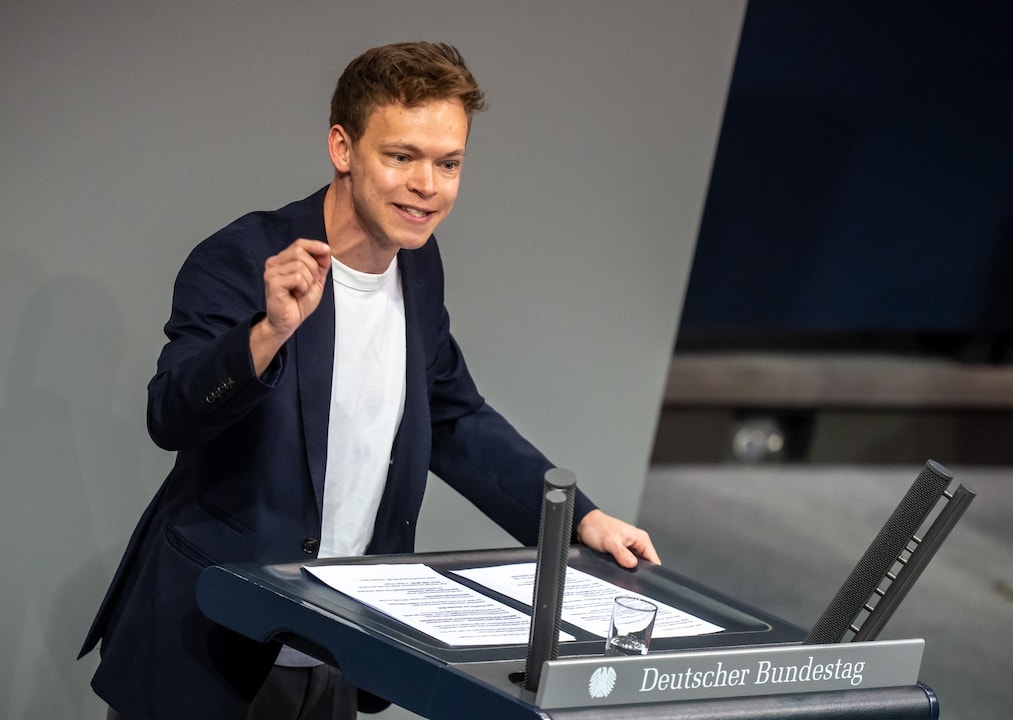
The Greens are moving hard to the left
Because there they were represented by the party leftist Timon Dzienus, who, as chairman of the Green Youth, once got on the nerves of the two foremen, Annalena Baerbock and Robert Habeck, who wanted to position the Greens as a center party.
Dzienus positioned the Greens, the party of higher earners, as the party of the poor. Dzienus shouted that he wanted to give a voice to “those affected by poverty”. The citizen’s benefit reform is “anti-social crap”. Merz and Co. would constantly “insult their own population” and paint a picture of “lazy citizens”. Dzienus called the planned “sanctions” “unconstitutional”.
In Baden-Württemberg, however, the Green top candidate Cem Özdemir is running a business and medium-sized business-oriented election campaign. With understanding for sanctions in the event of social abuse – and tries to meet the expectations of the working society in Baden-Württemberg.
The representatives of the Left Party remain extremely pale against Dzienus on this day of the debate. Especially since the Left did not send Heidi Reichinnek as the main speaker, but rather the party chairman Pellmann, who is not a beer tent speaker. The Greens feel – in the federal government – the Left Party breathing down their necks – and want to overtake them on the left.
Baerbock and Habeck are very far away. Physically and mentally.