whizzy1919@gmail.com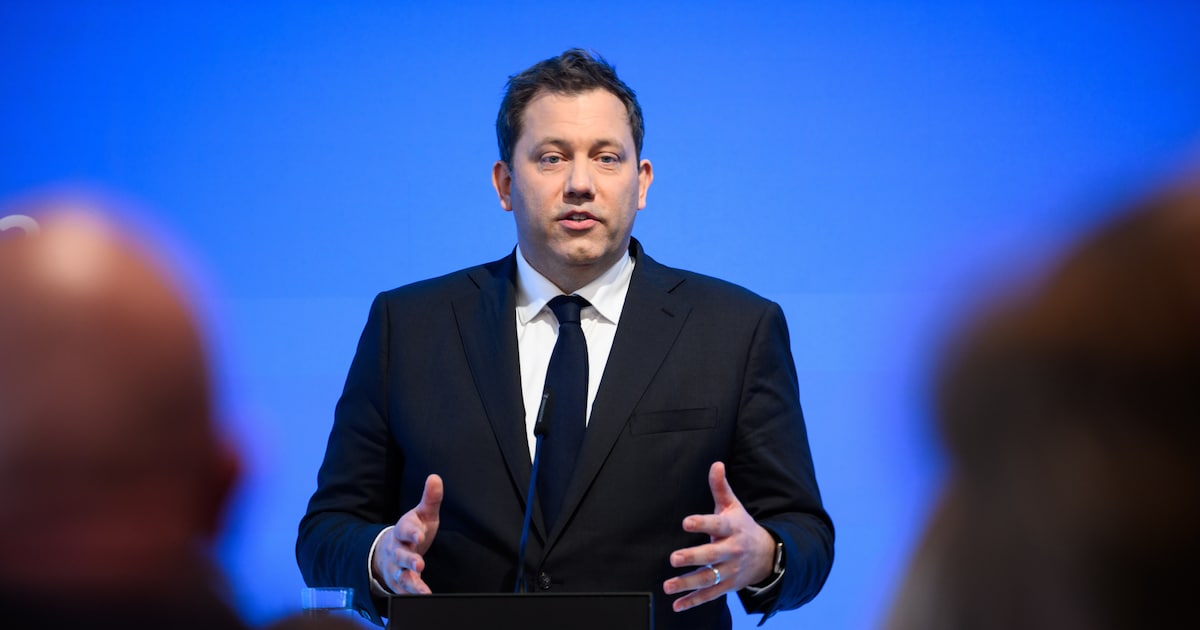
The SPD leader attacks the system that his party created itself and relies on more work, less government and tougher reforms. This is politically explosive – and could tear the SPD apart. But despite all the hardship, one crucial question remains unanswered.
It is an appearance that occurs again and again in the history of the SPD: the boss gives his own comrades a pass. Helmut Schmidt, Gerhard Schröder – the successful Social Democrats did it that way, now too Lars Klingbeil.
Lars Klingbeil: Broadside against the SPD
His findings at the Bertelsmann Foundation is devastating: Germany is not only in danger of falling behind, but, according to Klingbeil, must develop a new growth model based on technological leadership, functioning capital markets and economic sovereignty.
When he says that the world used to follow Germany and today it is following Germany, then that is a rejection of the self-image of a fed-up republic. His tone becomes particularly sharp when he explains that those who stick to the status quo choose decline. This is a declaration of war on our own party, which has defended this very status quo for years.
The real explosiveness of this speech lies where Klingbeil begins to draw concrete conclusions and in doing so crosses red lines that were long considered sacrosanct in the SPD. When he says that Germany will have to work more overall, he is shaking up sacred things such as collective agreements and co-determination.
He becomes even clearer when he admits that his own party has created a system in which work is too often no longer worth it. At this moment, talk of analysis turns into self-accusation. Klingbeil is demanding unreasonable demands on his party that it has avoided itself for decades. If he sticks to this course, the SPD will face a test that will decide its future. For Klingbeil, the real opponent is no longer just outside, but also within his own ranks.
SPD leader wants more than corrections
Klingbeil intervenes deeply in the socio-political foundation of the republic when he openly questions false tax incentives, early retirement and high part-time quotas and at the same time becomes very specific: Spouse splitting should be abolished for future marriages, and transfer payments should be reformed so that extra work actually pays off. Here it is not a party leader formulating cautious corrections, but someone who is questioning the statics of his own house. The statement that longer working hours should be encouraged more than early retirement would have been seen as a provocation in the SPD just a few years ago.
At the same time, Klingbeil remains clearly a social democrat. While on the one hand he demands performance, on the other hand he sticks to classic redistribution goals. Higher burdens for wealthy people, a reform of the inheritance tax and interventions in the housing market are still part of his repertoire and are intended to ensure that growing inequality is limited. When he describes how even hard-working people without inheritance can hardly buy home ownership, he hits a nerve that reaches far beyond the SPD.
Klingbeil leaves a blank space
In terms of economic policy, Klingbeil is trying to find a new balance: instead of watering cans, funds should flow specifically into clusters and, above all, the state should become faster. The previous pace of planning and implementation is clearly no longer enough for him.
That is why he has announced that investments will be managed in the future using a bonus-malus system: those who invest quickly and effectively will be rewarded, while those who work late or inefficiently will have to expect cuts. This is a tough control approach and is probably due not least to the recent criticism that the so-called “special fund” for infrastructure and climate protection is largely wasting away.
But despite all the willingness to engage in self-criticism, there remains a crucial gap. Klingbeil describes in great detail what is not working and what needs to change. But it says surprisingly little about where this country should actually develop. The big picture is missing, the clear idea of what a reformed Germany should look like in ten years. Instead of a vision, the impression is of a repair program that turns many screws without actually redrawing the blueprint.