whizzy1919@gmail.com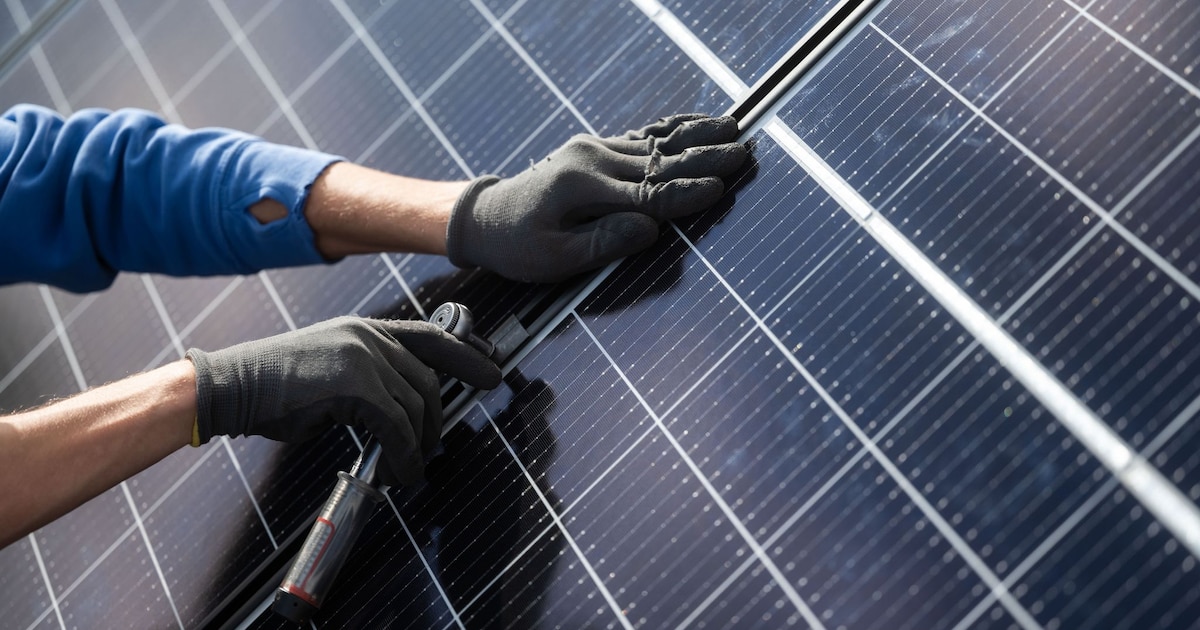
The Federal Ministry of Economics wants to end the so-called EEG subsidies for newly installed small and medium-sized solar systems.
This emerges from a working draft for an amendment to the Renewable Energy Sources Act (EEG) as of the end of January.
Accordingly, funding for systems with an installed capacity of up to 25 kilowatts should be discontinued. “In order to strengthen the cost efficiency of the expansion of solar energy, a greater focus will be placed on cost-effective open-space systems in the future,” says the draft, which is available to FOCUS online Earth. There should be grandfathering protection for existing systems.
More responsibility for renewables?
Small solar systems in particular are now usually economical without additional funding because prices have fallen, the reason given is. Already in the summer, when presenting an interim report on the energy transition, Reiche announced that he wanted to cancel the funding. Renewable energies would have to take more responsibility for the electricity system.
The ministry’s working draft states that the EEG requires a fundamental reorganization for a number of reasons. “It is important to consistently align the EEG with affordability, cost efficiency and security of supply.” Renewable energies have arrived at the “centre of power supply”.

Fatal disincentive
So far, anyone who generates solar power on their roof and feeds it into the grid receives a fixed amount per kilowatt hour for 20 years. However, the fixed remuneration now creates a disincentive for the owners of small solar systems to feed in their electricity even at times when it is not needed and the networks are overloaded. Since last year, new solar systems have no longer received any remuneration if the price of electricity on the stock exchange is negative due to oversupply.
The remuneration should now be eliminated completely. A spokesman for the ministry said that the amendment was still being prepared internally. The draft is currently still being worked on. There is a need for action regarding the EEG. “Goals of cost efficiency and security of supply have not been given enough consideration in recent years.”
“… is likely to come to a complete standstill”
Critics fear that the removal of funding could slow down the expansion of renewable energies in Germany. “If these measures are actually implemented, the construction of new solar power systems on private buildings is likely to come to an almost complete standstill,” says Carsten Körnig, Managing Director of the Federal Association of the Solar Industry (BSW-Solar). The EEG feed-in tariff is still absolutely necessary for the majority of new solar system operators in order to ensure sufficient profitability.
The working draft sets the goal of increasing the share of electricity generated from renewable energies in gross electricity consumption to 80 percent by 2030. According to the energy industry, in 2025 the share of renewable energies in electricity generation was 58 percent.
FOCUS online Earth is dedicated to the climate crisis and how to overcome it.
Fact-centered. Well-founded. Constructive. Every Friday as a newsletter.