whizzy1919@gmail.com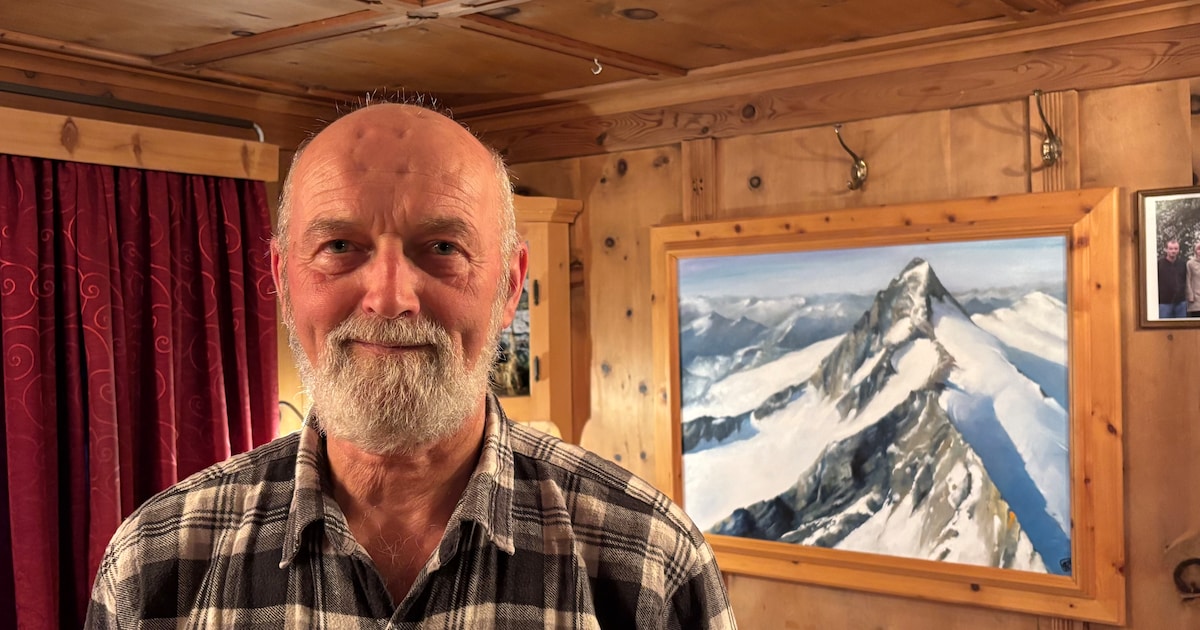
A 33-year-old freezes to death, left alone by her boyfriend on the Großglockner. In the town of Kals with 1,100 inhabitants, just a few kilometers from the scene of the accident, dissatisfaction with the verdict is growing more and more. It is not yet legally binding.
Sepp Kunzer first has to take a deep breath in the warm room of his large East Tyrolean farmhouse, which is clad in dark larch wood, before he says something about the tragedy.
A 33-year-old woman from Salzburg froze to death on the night of January 18th to 19th, 2025, just 50 meters below the summit of the Großglockner, the highest mountain in Austria, after her boyfriend Thomas P., who was three years older, left her alone at two in the morning in a completely exhausted state.
Among other things, she accused the extreme mountaineer of being poorly equipped. Having misjudged the performance of his girlfriend, who had no experience in a “combined winter high tour” with crampons on ice and rock. Having missed the right moments to cancel the tour. And he failed to make a mountain emergency call in time.
However, that the judge of the Innsbruck regional court rejected the accusation of all things, Sepp Kunzer cannot understand that the then 36-year-old left his girlfriend alone without any protection. “Leaving a person alone on the mountain in such a life-threatening situation is not something that exists in mountaineering circles.”

Kalser disappointed with the verdict: “A prison sentence would be more appropriate”
Even if the court had accepted the demand for a nine-month suspended prison sentence (four months of which the judge converted into a fine of 9,600 euros), this would not have changed his “disappointment with this too lenient sentence,” Kunzer adds. “In my view, it was more than grossly negligent homicide. I think that a prison sentence without parole would have been the more appropriate sentence.”
Kunzer – robust, white-grey beard, black-and-white checkered shirt – freely admits that he only knows details of the Glockner drama from the media. He is neither a mountain guide nor a lawyer. But “up there at the Glockner” he still knows his way around. “I did my first climbing exercises on rocks as a boy, when I was cutting hay on steep mountain meadows with my father.” He stood on the Glockner summit about 40 times, in summer and winter.
“If that had happened to me – I would have stayed at the summit”
The tour that Thomas P. did there with his girlfriend, who was in good physical condition but, according to experts, was still a beginner on a high mountain winter tour on rock and ice, was, in his eyes, “sheer madness”.
The mountain farmer admits that it is undoubtedly a great challenge to help a completely exhausted person in the middle of a bitterly cold winter night at almost 4,000 meters. Especially when there were icy gusts of up to 74 km/h during the night. “But if that had happened to me, I would have stayed at the summit,” said Kunzer. I would have made an emergency call, put her in a bivouac bag, which at least the extreme mountaineer’s partner had with her, protected her as best as possible with my body and waited for help.”

When the rescue helicopter arrived, the extreme mountaineer did not react
Help was very close only once on that dramatic night: at 10:50 p.m. an Alpine police helicopter flew over the climbing duo several times. Another group of mountaineers had previously seen the lights of the two Salzburgers high up in the summit region while descending further down and alerted the mountain rescue team.
According to the Alpine police, this observation had already taken place more than two hours earlier. Since then, however, Thomas P. had not responded to numerous attempts to contact the mountain rescuers because he had switched his cell phone to silent. The police identified the 36-year-old as a climber on the Glocknerwand using the license plate number of his car, which P. had left standing in the parking lot at the Lucknerhaus on Sunday morning.
What stuns Sepp Kunzer is why the high mountain professional didn’t even give the helicopter a sign that everything was okay. “That would be a given for any normal mountaineer.”
Thomas P. did not deny in court that he did not signal the helicopter. At Thursday’s court hearing in Innsbruck, he again claimed that although he and his girlfriend had made slow progress, “everything was fine” at the time. But in the end, neither the public prosecutor’s office, a mountain sports expert nor the court believed him.
What could have driven P. to his “mad tour” is beyond his imagination, admits the Kalser Glockner connoisseur. “Was it ambition, was it incompetence? I don’t know.”
Taxi driver: “The defendant deserved prison”
Resident Magdalena Burger also cannot understand the Innsbruck ruling. “This mountain drama has been the talk here in Kals for a year. I think the defendant deserved to go to prison for the death of his girlfriend instead of just getting a suspended sentence. That’s not enough. And many people here in the village see it that way,” says the only taxi driver.
It is also repeatedly criticized that mountaineers are putting mountain rescuers in unnecessary danger through careless tour planning. Whether giving the Salzburg extreme climber a short prison sentence suspended for three years would be enough to deter other climbers from similarly daring tours, “I cannot assess,” says Magdalena Burger. “The Kals mountain guides are certainly not satisfied with the verdict either.”

Kalser mountain guide remains silent as to whether the punishment is appropriate
One of the mountain guides, who does not want to give his name, appears cautious. “It’s good that he was convicted. Whether the punishment is appropriate or not is another matter; I don’t want to comment on that. However, the man would be doing himself a disservice with an appeal,” he believes.
The mountain guide has his doubts about the deterrent effect of a conviction for grossly negligent homicide. Even in the event that Thomas P. had to go to prison. “I think people don’t learn from other people’s mistakes. It’s like avalanche warnings. They are issued and people still go and die,” the mountain guide told FOCUS online
Sad addendum: Five people died in avalanches in Austria from Friday morning to Sunday evening alone.
Extreme mountaineer sticks to his descent version
The fact that Norbert Hofer, judge and respected expert on mountain accidents, rejected the charge in his verdict at the Innsbruck regional court that Thomas P. had left his girlfriend “unprotected, exhausted, hypothermic and disoriented” and without a bivouac bag at 2 a.m. caused astonishment not only in the town.
The reasoning was no less surprising. Because Hofer did not follow the defendant’s version. During the court hearing, Thomas P. stuck to his version that he had secured Kerstin G. to a place protected from the wind with a noose on steel hooks. He then took the backpack with the splitboard strapped on it from her, placed his girlfriend, who can only walk on all fours, on the backpack and sat down next to her. After an hour and a half, he made his way to the Erzherzog-Johann-Hütte in consultation with his girlfriend.
The prosecution ultimately accused him of setting off completely alone and leaving his girlfriend Kerstin G. behind.
Judge comes to a surprising reason
However, Kals mountain rescuers did not find Kerstin G.’s body in the place described by the defendant, but rather hanging on a rope on a small ledge ten meters further down.
The judge came to the conclusion that, contrary to the defendant’s description, the 33-year-old apparently was no longer able to continue at this point during the climb together and collapsed. Hofer explained that this also explains why she was carrying her backpack and splitboard on her back when she was found. In this case, the defendant “did the only right thing,” namely going down to the Erzherzog-Johann-Hütte to get help.
However, Hofer did not explain why Thomas P. continued to stick to his own version, which seems to be more difficult to justify from a moral point of view in terms of leaving alone.
Four weeks time for a revision request
The verdict is not yet final, as both the extreme mountaineer’s lawyer and the Innsbruck public prosecutor’s office announced an appeal against the regional court’s decision at the beginning of this week. You now have four weeks to justify the appeal.
If at least one of the two applications is accepted by the Higher Regional Court, the proceedings will be referred back to the Regional Court. However, a different judge will be appointed at a new trial, a court spokesman confirmed to FOCUS online on Tuesday.