whizzy1919@gmail.com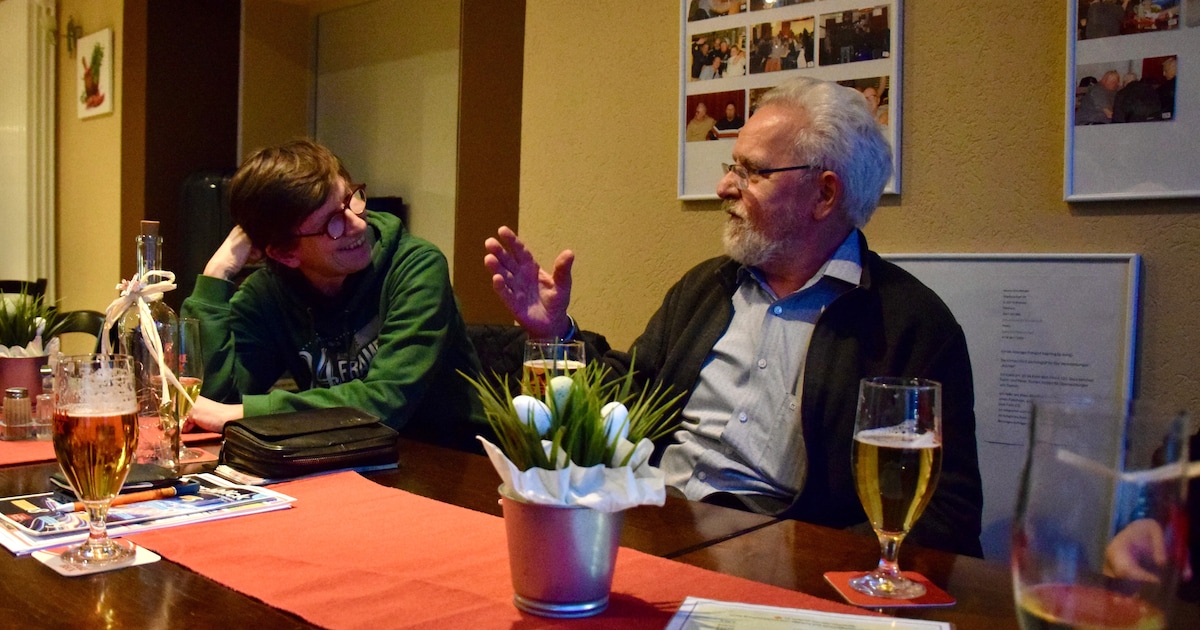
In the heartland of social democracy: A visit to the Burglesum local association in Bremen is about Willy Brandt, advancement through education and performance, which must be worth it again. But there is also self-criticism about the SPD’s course. “People don’t vote for us because we open a multi-cultural café.”
It’s almost 6 p.m. in the SG Marßel clubhouse in Bremen. Four comrades from the Burglesum local association are scheduled to come soon; citizen representative Kevin Lenkeit arranged the meeting. The menu includes the classics: schnitzel, currywurst, the fish dish “Kibbelinge” – and horse sausages, five pieces with toast and mustard for seven euros.
This is the heartland of social democracy, and since 1945 it has provided the mayor. On the counter is the sea rescuers’ collection boat, behind it are trophies from the sports community.
,regionOfInterest=(2208,1739)&hash=aaa10a58a8cabaf5567fab831e0828ba15749ccfb02c1c7d7a8d7fa013a4add6)
SPD grandee Peer Steinbrück once opened the new sports center building. “I brought him here back then,” says Werner Müller, Marßel veteran and one of the comrades from the local club, proudly. “Evil tongues claim that he came because there was an election campaign,” adds Kevin Lenkeit and laughs.
Bremen SPD: “Federal trend plus ten – that’s only 24 percent”
Little by little the other comrades are also arriving; they have taken the time this evening to talk about social democracy. The party has suffered one blow to the neck after another; the lost election in Rhineland-Palatinate was particularly bad.
Since then, things have not just been fermenting, they are boiling – even in Bremen, one of the last strongholds that the SPD still has in Germany. Lenkeit has to laugh about that, it sounds bitter. “In Bremen it used to always be said: national trend plus ten – but now that’s only 24 percent.”
The resignation of co-boss Lars Klingbeil he already asked for it on X. What does he want for the SPD? “We have to win the election in 2029 and the Chancellor must be Boris Pistorius.” Klingbeil could remain finance minister and vice-chancellor, you find here – but party chairman? “He is no longer viable in this triple role,” says Lenkeit. And it’s not just Klingbeil. Social democracy is in crisis; the causes and symptoms are diverse.
The Jusos look down on those with low qualifications
If you ask the older people at the table why they joined the SPD, the answer is simply: “Willy Brandt.” His kneeling in Warsaw, his peace policy, his charisma. But also: “I wouldn’t be who I am today without the SPD’s education policy.” That’s what Hans Pfeiffenberger says, who made it from his parents’ working-class household to do his doctorate and to the Alfred Wegener Institute in Bremerhaven.
Advancement through education has always been a big issue for the SPD, but the youngest person at the table draws a sober conclusion: “I also come from a working-class household, my father is a craftsman. I studied, but I can’t come close to his earnings,” says Lizza Besecke.
,regionOfInterest=(2298,1469)&hash=b0c8b5777d1fa7e07ae77acd9b0737cb66b213186eb4925f36e85d83f6cc9f61)
The 32-year-old sees another, fatal tendency in the SPD, at least with the Jusos: People with low qualifications are sometimes looked down upon there. Most members are students, and trainees are almost in vain in the party’s youth organization. “The party is academic.”
“We have to bring back awareness of the work we have done”
Is the SPD now failing because of its own success? Anyone who enables advancement through education shouldn’t complain afterwards if the party is academic – right? The SPD is in a quandary. Opponents accuse her of only caring about those receiving benefits and no longer caring about those who actually do something.
Werner Müller, the oldest at the table at 83, also says: “We have to bring the work we have done back into awareness.” But they know only too well that you can definitely achieve what you do and that there are still situations in which you can’t do it alone.
“I’ve lived on social welfare before and know how important it is that the state catches you up if you get screwed,” says Maren Wolter, local association leader in Burglesum. The 57-year-old trade unionist works in IT at the Bremen steelworks. “The SPD is a community of values,” she says. Solidarity, participation, freedom. She gets passionate while talking about it.
What do these values mean to you? “That no one falls on their face just because they have a child. That as a human being you have a voice. And that you can decide for yourself what you do with your life.”
“I’m not a proud social democrat at the moment”
Everything that the once proud social democracy still has to offer is gathered at this table: the promise of advancement, the class struggle, the proximity to the citizens. And yet 75-year-old Hans Pfeiffenberger says: “I’m not a proud social democrat at the moment. That would be pure nostalgia.”
He doesn’t see how the party can “work its way out of this mess.” The “muddle” is what he and the others at the table mean by the increasingly fragmenting party landscape in Germany – which, out of state political responsibility, is increasingly forcing the SPD into government constellations that are not good for it.
“People don’t vote for us because we open a multicultural dance café”
So she gets bogged down in peripheral issues and would not address the big problems. “People don’t vote for us because we open a multicultural dance café in Marßel,” says Lenkeit. “You choose based on what you pay at the checkout at Edeka.”
Lenkeit has to go now to have dinner with the family. The remaining comrades don’t stay seated for long. There’s another ouzo for Werner Müller, Lizza Besecke has ordered “Kibbelinge”. She hasn’t given up hope yet: “We’ve lost our way, but I believe we’ll find the way again.”
And Maren Wolter at least still sees Bremen as the social democratic model country that it always was: “We just can’t waste it.”