whizzy1919@gmail.com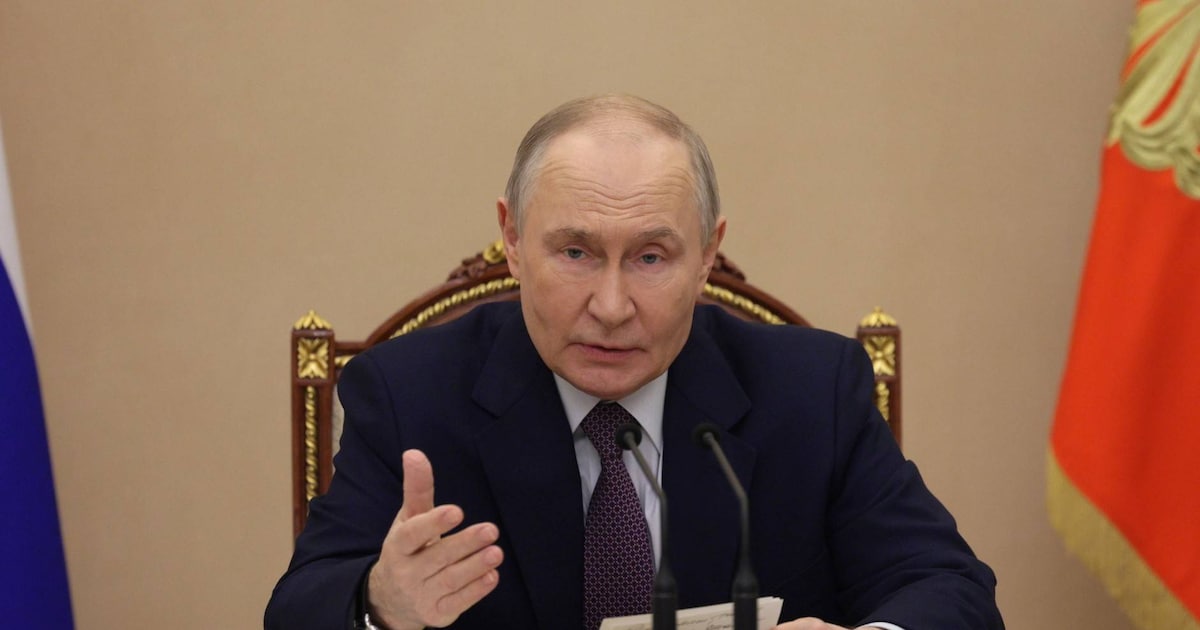
The US is lifting sanctions on Russian oil. This is intended to reduce the increase in oil prices. That would bring billions to the Kremlin. Putin had just been forced to adopt a new austerity course.
The released ones Oil reserves could bring the Kremlin around 8.9 billion euros. This is what figures from Friday show. Accordingly, Russia expects to be able to sell 100 million barrels of oil in the period up to mid-April. On Friday the price of the Russian type of oil was Urals Crude at $89 per barrel. Before the outbreak of war in Iran, it was hovering around $58 per barrel.
Iran war brings more money into Putin’s coffers
The Moscow government is already benefiting significantly from the Iran war. The extreme shortage of LNG and crude oil supplies means that the remaining quantities are becoming expensive. In addition, the United States’ move to ease important sanctions has allowed India, for example, to take massive action on Russian oil.
For February, the Center for Research on Energy and Clean Air (CREA) already reported an increase in Russia’s monthly fossil fuel exports. Compared to the previous month of January, these rose by seven percent to 492 million euros per day.
The war also hits China, a massive buyer of raw materials from the Gulf region. Several Asian countries must increasingly look to Russia to meet their needs.
Russia’s economy in trouble: budget cuts ahead
The demand comes at a time when Russia is clearly feeling the pressure on its economy. This is mainly because Russia Most of its money usually comes from the sale of oil and gas. Since massive Western sanctions have been imposed on the energy sector, these revenues have been weakening. In January and February, oil and gas revenues reached their lowest level since Russia’s invasion of Ukraine began.
These Western sanctions recently forced Russia to adopt tough austerity measures. The Russian government has apparently just discussed further cuts in various government spending. The reason for this is that they are far behind the Kremlin’s remaining revenue. The budget deficit is growing. “The Ministry of Finance has informed the authorities distributing budget funds that spending must decrease,” Reuters news agency quoted an anonymous source as saying.
According to insiders, the budget in “insensitive” budget categories could shrink by around ten percent. Defense spending, which is so important for Russia, is not affected, nor are social items such as public sector salaries or social benefits.
“Some new projects could be stopped,” it said. “For the Example construction projects or road repairs.” The discussion about these cuts alone shows how tight Kremlin boss Vladimir Putin’s budget looks. According to current figures from the Ministry of Finance, Russia currently has a deficit of over 44 billion US dollars, the equivalent of around 38.1 billion euros.
Short-term oil price increase fizzles out
The final decision on budget cuts depends largely on how long the rise in oil prices triggered by the Iran war lasts, it said. The Reuters sources believe that the short-term changes in the oil market cannot address the underlying problems.
In recent years, the Kremlin has repeatedly cut investments. At the beginning of February, Deputy Prime Minister Alexander Novak announced that investments had only grown by 0.5 percent between January and September 2025. Economists had already spoken of an “obvious” crisis in Russia’s economy.
Critics warned that the effects of the sanctions could be negated by easing them. The USA, on the other hand, assumed that the easing would hardly be noticeable.