whizzy1919@gmail.com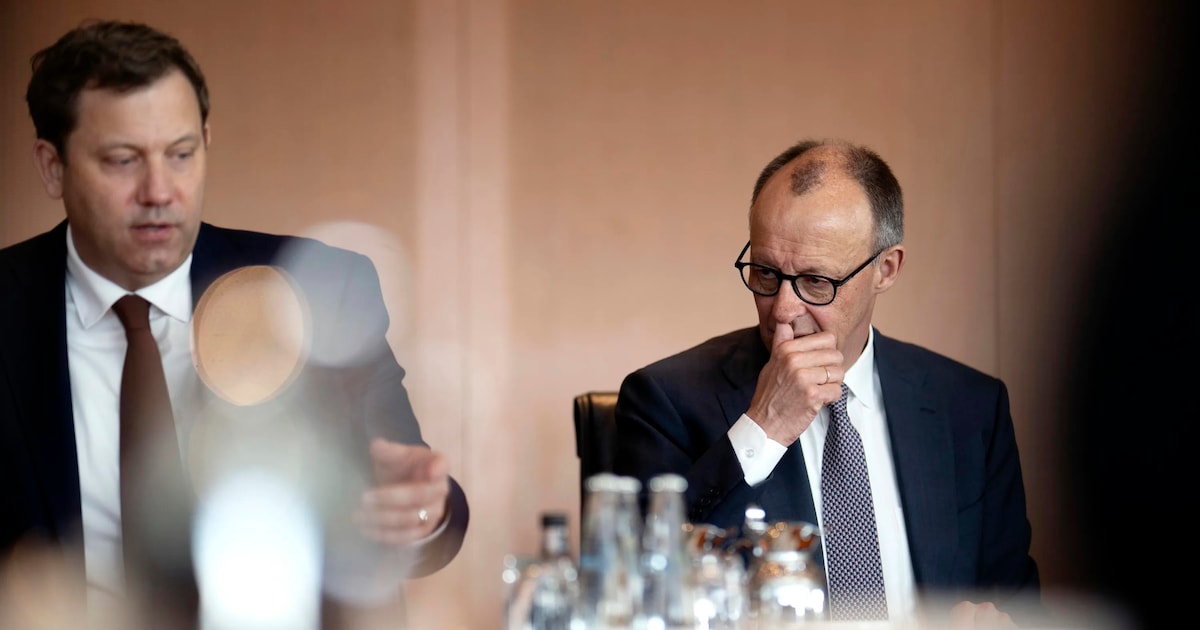
The CDU is breaking the SPD dominance in Rhineland-Palatinate. What is a success for the CDU leader Merz is more than a huge mortgage for the Chancellor. What will happen to the reforms?
Major international weather conditions are making life difficult for Merz
A success that does not provide a tailwind for his work as head of the grand coalition with the SPD, but rather a headwind. From now on, his chancellorship will be more difficult, not easier. Quite apart from the general weather situation, the two wars and their consequences, both energetic and financial, which can even completely steer German domestic politics in a different direction.
Shortly before the election weekend it was said that the Federal Chancellor and his Vice Chancellor had agreed on a major reform package. From taxes to debts to pensions. But apart from how concrete such an agreement can actually be, the question now arises: Can what Merz agreed with Klingbeil actually hold?
A one-on-one conversation between two party leaders is something completely different than a coalition partner who loses his nerve after two crushing election defeats in two regional states in western Germany. There are still five weeks of sittings in Parliament before the parliamentary summer break. After that, there is a political standstill, so to speak. And after the summer there will be state elections in East Germany – with strong results for the AfD predicted in the opinion polls.
For Merz, it will probably be the most difficult weeks of his political life
What cannot be passed in the Berlin coalition under Friedrich Merz by autumn will hardly get a stable majority in the Bundestag afterwards. From tomorrow there is a political window for reform. And for those for whom there will be no applause.
For Merz, these are likely to be the most difficult weeks of his political life – and as German Chancellor he has been in office for less than a year. The repercussions of the international situation on Germany will cause a dramatic increase in uncertainty. Ukraine is running out of money and a loan worth a whopping 90 billion euros is on hold in Brussels. The second theater of war in Iran, which has long been perceived as the first, is causing massive uncertainty – German energy supplies have never been so uncertain.
And Iran is currently threatening to completely close the Strait of Hormuz – currently the most important bottleneck in the global economy. What does this mean for the reform debate in Germany, which will break out with all its might tomorrow? “Reform” sounds positive. But that’s not it – perhaps it would be good for Germany if the Union and the SPD agreed to relieve the middle of taxes and increase taxes on high earners.
SPD takes a stand
But: Tax reform will definitely result in losers. This is also the case with pensions. So far, Labor Minister Bärbel Bas (SPD) has been at odds with every approach that follows simple actuarial mathematics. If the coalition partners still agree, it will probably mean that academics in particular will have to work longer – much longer – than they do today. Even with a pension reform, the number of losers would initially be greater than the number of profiteers. Such a pension reform can be good for the pension insurance, but also bad for a large group of people.
Friedrich Merz is Chancellor in times of uncertainty. After the Rhineland-Palatinate election, he now has to deal with a coalition partner who actually hardly knows what to do anymore. The workers’ party is no longer the social democracy, but the AfD. But what does the SPD stand for then? Merz it’s a big mortgage. The victory in Rhineland-Palatinate is a great success for the CDU. Ultimately, there is only one thing left for him: to hope that the SPD does not allow itself to be carried away by the panic that is spreading within it.