whizzy1919@gmail.com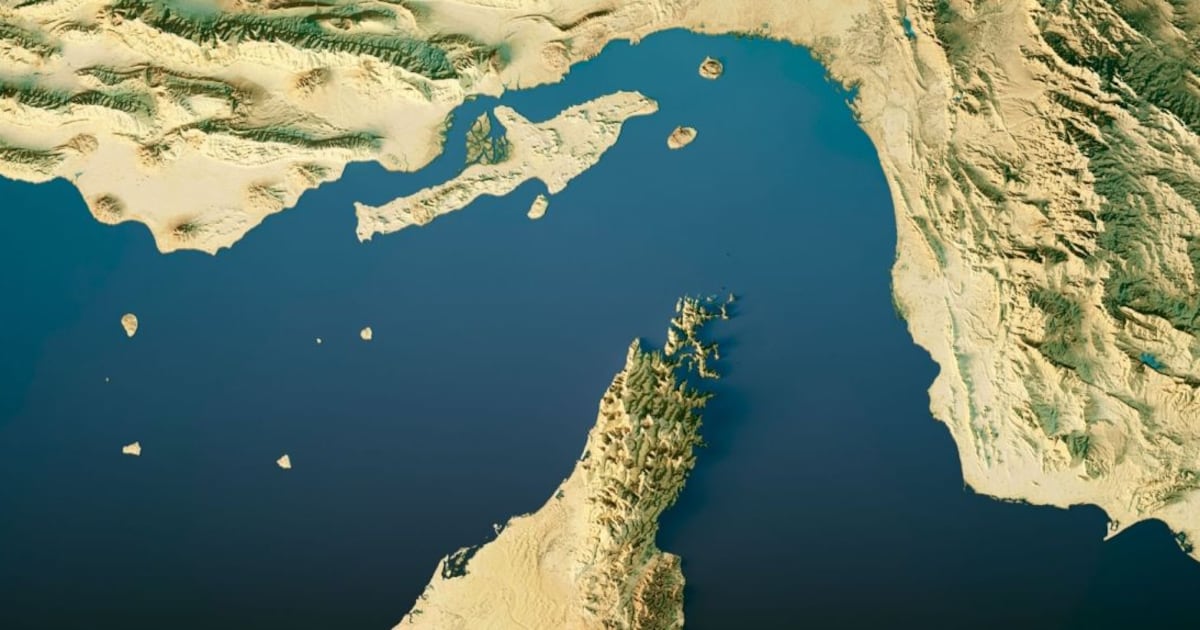
The Iran war is increasing pressure on key trade routes in the Persian Gulf. The Strait of Hormuz in particular comes into focus.
Practical hurdles such as sharply increased insurance premiums for war risks have significantly reduced the transit times of cargo ships. While the financial markets react to possible bottlenecks in crude oil and liquefied natural gas, another risk is emerging against the backdrop of the Iran war: a global fertilizer shock could endanger global food security.
Wheat, corn and rice crop yields at risk
Modern agriculture relies largely on natural gas. Since the invention of the Haber-Bosch process in the early 20th century, methane has been converted into ammonia, which in turn is converted into nitrogen fertilizers such as urea.
Without this process, global crop yields of wheat, corn and rice would decline sharply, as Nima Shokri, professor of applied engineering, and Salome Shokri-Kuehni, lecturer in environmental engineering, from the United Nations University in Tokyo explain in a recent analysis for The Conversation.
Around 30 percent of global urea exports come from the Middle East
The Gulf region is a global hub for this industry, driven by access to cheap natural gas and decades of investment in large-scale production facilities.
According to the UN Food and Agriculture Organization, around 30 percent of global urea exports come from the Middle East. This leaves the market vulnerable to operational disruptions in this important strait.
There is also another dependency on sulfur. The element necessary for plant growth and phosphate fertilizer production is largely a byproduct of oil and gas processing. A decline in energy exports to the Persian Gulf also reduces global sulfur availability.
Indirect consequences for the German market
For Germany and Europe, this crisis does not necessarily mean empty supermarket shelves. The risks are indirect in nature and affect prices with a time lag. Germany has a robust position when it comes to basic agricultural foods.
Current data from the Federal Office for Agriculture and Food (BLE) show a solid starting position. The degree of self-sufficiency for grain was almost 100 percent in 2024/25, with common wheat even reaching 108 percent. When it comes to meat, German farmers produced 120.5 percent in 2024, significantly more than the domestic market demands.
Germany: Around two billion euros for the purchase of fertilizers
The real problem lies in the operating costs of the farms. European fertilizer supply is closely linked to the price of gas. This connection was already clear in 2022.
When gas prices rose sharply, 70 percent of ammonia production capacity in the EU had to be shut down at times, as gas accounts for up to 90 percent of variable costs. As a result, in September 2022, according to the EU Commission press release, European farmers recorded a 149 percent increase in the price of nitrogen fertilizer compared to the previous year.
In 2025, agricultural businesses in Germany spent an estimated two billion euros on purchasing fertilizer. Nitrogen accounted for a full 75 percent of this total. A global price shock on the raw material markets would put this cost base under renewed pressure.
International networking of the market
The EU does not primarily source its imported nitrogen fertilizer directly from the Gulf region, but primarily from Egypt, Russia and Algeria. According to a market analysis by the EU Commission from 2024, the corresponding shares were almost 30 percent for Egypt and Russia and almost 12 percent for Algeria. Germany is also integrated into this network as an exporter. However, this geographical diversification of supply chains does not provide complete protection.
The vegetable sector is particularly vulnerable
The global fertilizer market was already tense before the recent escalations in the Iran war. High natural gas prices in spring 2025, for example, forced Egypt and Iran to reduce their production.
Both countries together supply 15 percent of the world’s urea. In such a market environment, a failure in the Middle East drives up world market prices across the board, which also makes purchasing fertilizer more expensive for local farmers.
Even before the new crisis, food was at a high price level
While bread and meat remain physically available, the financial impact is likely to weigh on consumers. The consumer price index for food in Germany was already at 137.7 points in January 2026, based on the base year 2020. Food was therefore already at a high price level before this new crisis.
The vegetable sector is particularly vulnerable. Self-sufficiency in Germany was recently only at a good 40 percent. According to BLE, a particular example is tomatoes with a self-sufficiency level of just 3.8 percent in the 2023/24 season.
Imports from greenhouse-intensive and therefore often heavily gas-dependent and fertilizer-dependent production countries such as the Netherlands and Spain cover the majority of demand. Here, cost increases are likely to become noticeable relatively quickly at the supermarket checkout.
Energy markets can often partially cushion failures through strategic reserves. However, the global food system has significantly smaller buffers. A persistent disruption in the Strait of Hormuz does not only affect the price of crude oil. It tests the resilience of the industrial nitrogen cycle, which is essential to modern agriculture.
Sources: The Conversation; “Fertilizer market developments” (FAO, 2024); Federal Agency for Agriculture and Food; European Commission; “EU Fertilizer Market analysis” (EC, 2024); Federal Statistical Office