whizzy1919@gmail.com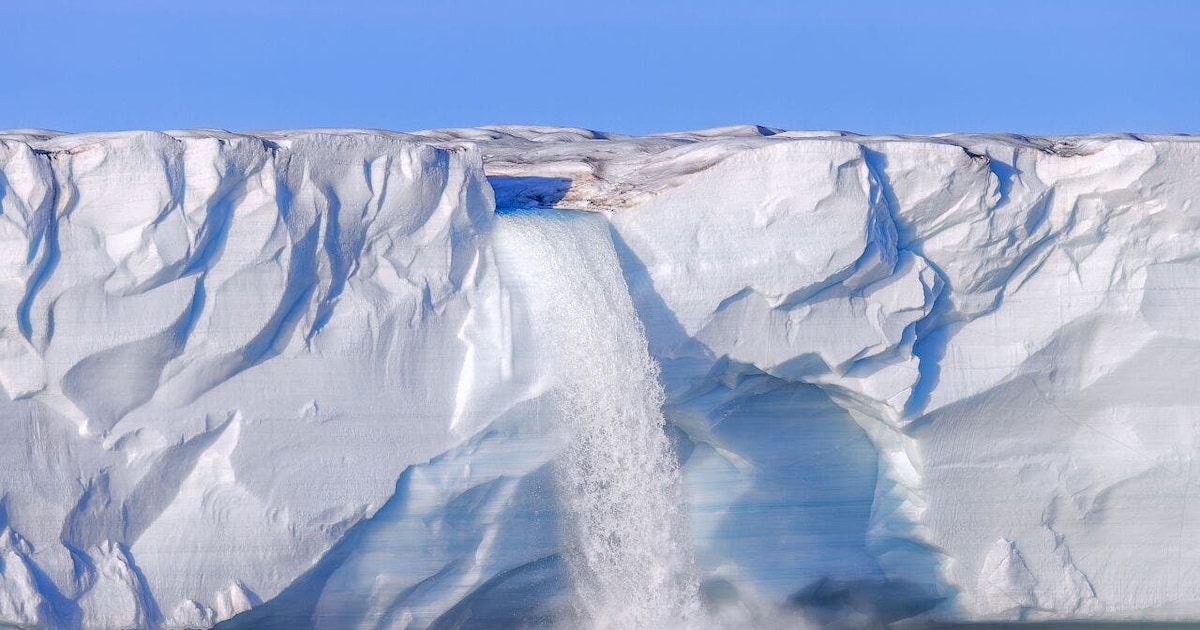
Glaciers around the world are melting and retreating. But some are pushing forward – sometimes at high speed. Water is to blame.
But this is not the case for around 3,000 of these ice tongues: they are actually advancing – and sometimes at a speed of dozens of meters per day, which is high for glaciers. A team led by Harold Lovell from the University of Portsmouth examined whether there were fundamental similarities and regional priorities.
The record movements of the wandering glaciers
For their work, the working group evaluated satellite images and on-site measurements on a global scale, which show a clear picture: Most of the rapidly advancing glaciers are found in the Arctic and sub-Arctic, in the Himalayas and adjacent Asian high mountains such as the Karakoram – both areas together comprise 98 percent of these glaciers – and to a much smaller extent in the Andes.
In Europe and Antarctica, on the other hand, there are at most isolated cases, which scientists attribute to the respective climatic conditions: At the South Pole it is too dry and cold, in Europe it is now so warm that melting predominates completely.
In order for glaciers to advance strongly, two conditions must come together:
- On the one hand, these glaciers need high levels of precipitation in the form of snow, which freezes over time and thus causes an increase in mass in the original area.
- On the other hand, the temperatures in the glacier area must be above the zero degree line at least temporarily in order for meltwater to form.
This then seeps at least partially to the base of the ice tongue and reduces friction there, which facilitates the movement of the glaciers and can increase the flow speed. Factors such as the size of the glacier or the geological subsurface can promote these advances regionally, but play a minor role overall.
Natural hazard due to advancing ice
The data shows that many of the advances can last for months or years, and only partially are they interrupted by shorter periods of calm. In the case of the Nathorstbreen glacier on Svalbard, the forward movement took ten years between 2008 and 2018.
During this time he advanced 15 kilometers and fundamentally changed the landscape around him. Other glaciers moved up to 60 meters per day and maintained this speed for up to a year.
In recent years, at least 81 glaciers have caused natural disasters in regions below the end of the glacier: meltwater accumulated behind ice walls until the pressure behind the barriers became too high and the water emptied like a gush downstream. These events, which occurred several times at the Shisper Glacier in the Karakoram, for example, repeatedly cost human lives or cause damage to the infrastructure.
At the same time, these water outlets cause brief pauses in the movement of the glacier until enough water has accumulated at the bottom to allow movement with less friction.
Climate change increases advances – makes forecasts more difficult
Global warming plays a double role: In some regions it is causing advances to become more frequent because more meltwater is produced or rain falls more frequently instead of snow, which can also seep through the ice.
In other areas, glacier melt has now caused the glaciers to become thinner, so that they now lack the ice mass to advance. Overall, this makes predicting such events increasingly difficult, the scientists write.