whizzy1919@gmail.com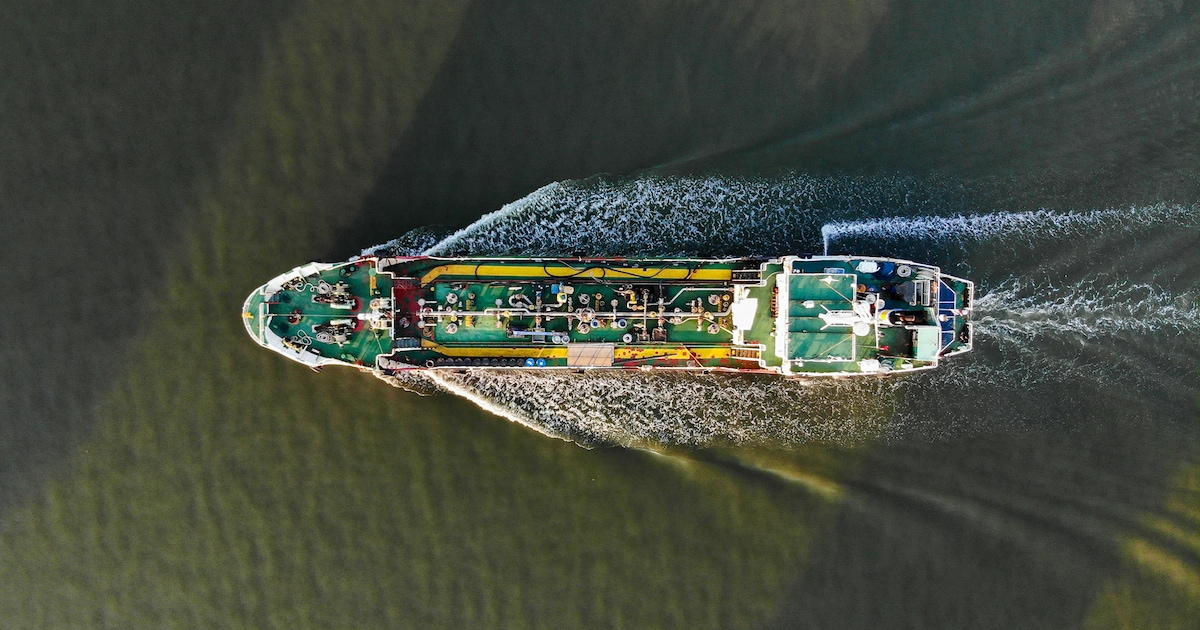
The Greek shipowner Georgios Prokopiou is defying Iranian threats in the Persian Gulf with his tankers. While he makes immense profits through risky maneuvers, the sailors’ resistance to the dangerous missions grows.
Iran’s “nuclear bomb” is not in the silo. It lies in the sea. The Strait of Hormuz is the world’s most important energy artery. If it is blocked, the flow of oil will stop – and the global economy will falter.
Despite Iranian threats, some shipping companies continue to send their tankers through the dangerous passage. One of them is the Greek Georgios Prokopiou, 79 years old. For some, he is a modern-day hero of global supply chains. However, this image is met with skepticism in his home country.
Hormuz “death trips”: hundreds of thousands of dollars per day
Last week alone, Prokopiou sent five supertankers through the Strait of Hormuz. On Saturday, the tanker Smyrni left the passage – fully loaded and undamaged. The Shenlong had previously mastered the route.
The strategy is simple but risky. The ships turn off their tracking systems. This makes them harder for potential attackers to track. But also for allies and rescuers. They are only visible via radar or with the naked eye.
Heavily armed security forces are on board during the passage. The background is drone attacks, for example by Iranian cheap drones of the Shahed type. The risk is financially worth it. For a successful trip, a shipping company currently collects around $538,000 in freight costs per day. Before the crisis, the price was around $200,000.
The competition’s tariffs are even higher. The Greek shipowner Epaminondas Empeirikos reportedly charges around $770,000 per day for a 23-day trip – a total of almost $17.7 million. Maria Angelicoussis is said to be demanding the second highest price: around $693,000 per day.
Greek self-made billionaire Prokopiou
Empeirikos and Angelicoussis come from old shipping dynasties. Prokopiou, on the other hand, is a self-made entrepreneur. He was born on June 8, 1946 in Athens. His family were ethnic Greek refugees from Odessa and Izmir. He actually studied civil engineering in order to later take over the family’s real estate business.
In 1971 he ventured into shipping. Together with two friends, he bought his first tanker from Getty Oil – the Pennsylvania, a ship with a capacity of 55,000 tons – for ten million dollars. Greece was under military dictatorship at the time and the tanker market was extremely volatile.
,regionOfInterest=(1055,589)&hash=5a66623a77e47acd4c561a68aa2067d4d50986d3f6146f9f988d4fb9899ee40f)
Today Prokopiou is one of the most powerful shipping companies in the world. Its fleet includes around 120 ships. By the end of 2027 there should be 240. His empire includes the shipping companies Dynacom, Dynagas and Sea Traders. In total he has managed more than 500 ships in his career. The US magazine Forbes estimates his fortune at around $4.7 billion.
Industry trend sleuth
Prokopious’ success is based on a reputation as an early strategic thinker. Already at the beginning of the 2010s he invested heavily in liquid gas transport. He ordered floating LNG terminals in 2013 – at a time when Europe was still relying heavily on Russian pipeline gas.
After the Russian attack on Ukraine in 2022, this bet paid off. Germany suddenly needed LNG infrastructure. Prokopious company Dynagas provided two of the four required terminal ships.
In the same year, the entrepreneur bought the largest Greek shipyard: Skaramangas near Piraeus. It is considered a key location for the Greek marine industry. Prokopiou is considered influential in the industry. He is the chairman of an exclusive Greek yacht club. His daughter serves as vice chairwoman there.
In his private life, the billionaire lives at sea for much of the year – on board his luxury yacht Dream. Four daughters already work in the family empire and are considered possible successors.
Shortly before entering crisis areas, crews would have to sign that they were informed about all risks – and would voluntarily remain on board. In return, you will receive multiple salaries and success bonuses.
According to the unions, crews on several ships have recently refused these signatures. Many seafarers feel let down by politics and shipping companies alike. Their accusation: The industry’s enormous profits were bought at the expense of the sailors’ risk.
Political restraint
Greek politicians are reacting remarkably cautiously to the debate. One reason: The Strait of Hormuz is not officially a war zone. If it were, seafarers would have significantly stronger rights against their employers.
Another reason lies in the special role of shipowners. They shape the Greek economy – and have great influence in the media landscape. At the same time, almost every Greek family has relatives at sea. There is great concern for the crews.
There is also another area of tension. International media repeatedly report that Greek shipping companies continue to transport Russian energy. Just on Saturday, a Greek tanker was shot at off the Russian port of Novorossiysk in the Black Sea. The ship belongs to the Angelicoussis fleet. On board: 24 sailors – ten Greeks and fourteen Filipinos.
Greek shipowners live largely income tax-free in their homeland. That’s why they aren’t heroes for many compatriots. They are seen as something else: extremely skilled businessmen. And Georgios Prokopiou is one of the best in his field.