whizzy1919@gmail.com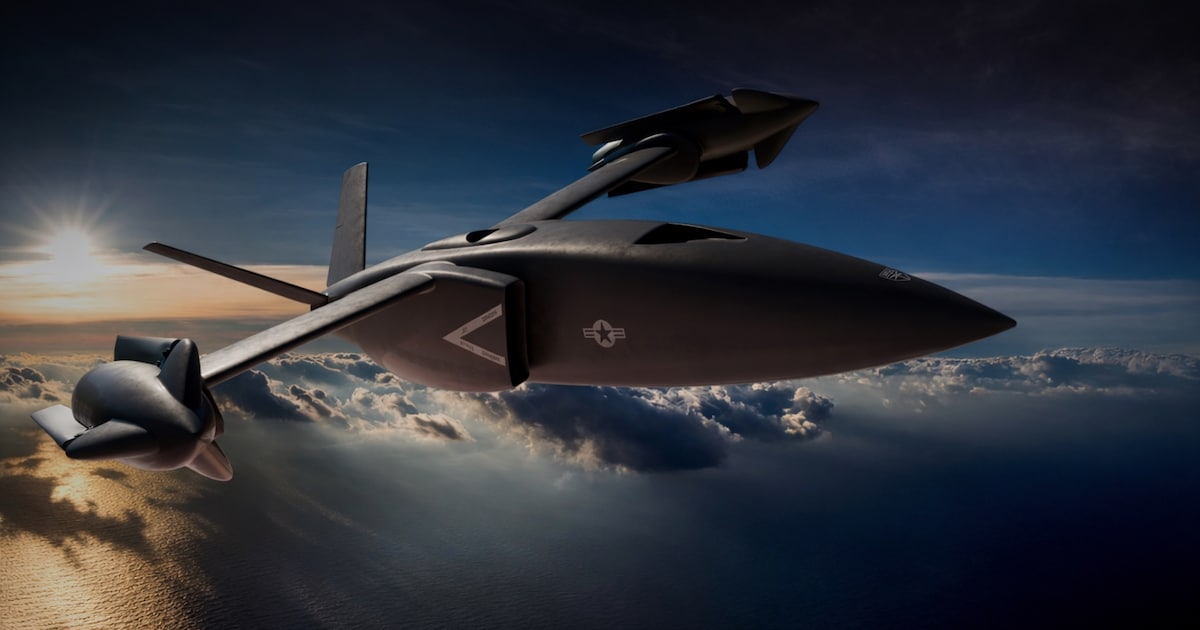
Bell Textron is poised for a revolution in a new military aircraft. The X-76 should be able to take off and land like a helicopter, but at the same time reach the speed of a jet.
For many, the slim silhouette of the Bell UH-1 Iroquois – better known as the Huey – and its characteristic rotor noise are inseparable from Vietnam War films. Now the American manufacturer wants to write another chapter in aviation history.
Bell Textron announced that it has successfully completed the Critical Design Review for the Speed and Runway Independent Technologies – or Sprint for short – program of the Defense Advanced Research Projects Agency, or Darpa for short.
The X-Planes are intended to test new technologies
Bell has been involved in so-called X-Planes for decades. The X stands for experimental – i.e. for aircraft that are used to test new technologies. Darpa, in turn, reports directly to the US Department of Defense. At the heart of the project is an aircraft that can operate independently of runways.
It should be able to take off and land in “harsh environments” and in areas that are barely larger than a parking lot. At the same time, it should fly at higher altitudes at more than half Mach speed.
“Continuing the spirit of American innovation”
The concept belongs to the Hsvtol (High-Speed Vertical Take-Off and Landing) category: an aircraft that can take off like a helicopter but is intended to reach near jet speed. Bell’s proposal has already been given an official name: X-67.
They are honored to receive the designation “and thereby continue the spirit of American innovation that dates back to the founding of the United States in 1776,” said Engineering boss Jason Hurst.
Bell had already been selected for phase two of the program last summer – another chapter in the ninety-year history of X-Plane development. We look forward to developing the next generation of vertical take-off aircraft together with Darpa, said Hurst. With the successful design review, Bell can now begin building the demonstration aircraft.
Flight tests will finally follow in phase three
The Sprint program is jointly funded by Darpa and the US Special Operations Command. The aim is to develop technologies for next-generation runway-independent aircraft that can later be transferred to various military platforms.
In Phases 1A and 1B, Bell had already completed the concept and preliminary construction. Phase two now includes detailed development, construction of the demonstrator and ground testing. Flight tests will finally follow in phase three.
Those responsible have so far remained silent about the costs
Bell refers to previous pioneering projects in high-speed and vertical take-off aircraft – from the X-1 to the experimental models XV-3 and XV-15. The Sprint program is intended to combine these experiences into an aircraft that combines runway independence with high speeds.
Those responsible have so far remained largely silent about the costs. Since the project is still in the development phase, no official total cost was given. However, around $55.2 million is earmarked for the Darpa Sprint program in the 2026 US defense budget.
Slow-flying aircraft are more vulnerable to fire
The Vietnam War already showed that helicopters can be particularly vulnerable in combat. The US armed forces lost around 2,200 Bell UH-1s at the time. In total, the Pentagon estimated helicopter losses at around 5,600.
Slow-flying or hovering aircraft are generally more vulnerable to fire – in Indochina the Viet Cong often even hit the Hueys with simple Kalashnikovs.
How resistant the new X-Plane will be to enemy fire will only become apparent when it experiences its baptism of fire in action one day.
By gerard.alfil@aerotelegraph.com (Gérard Al-Fil)