whizzy1919@gmail.com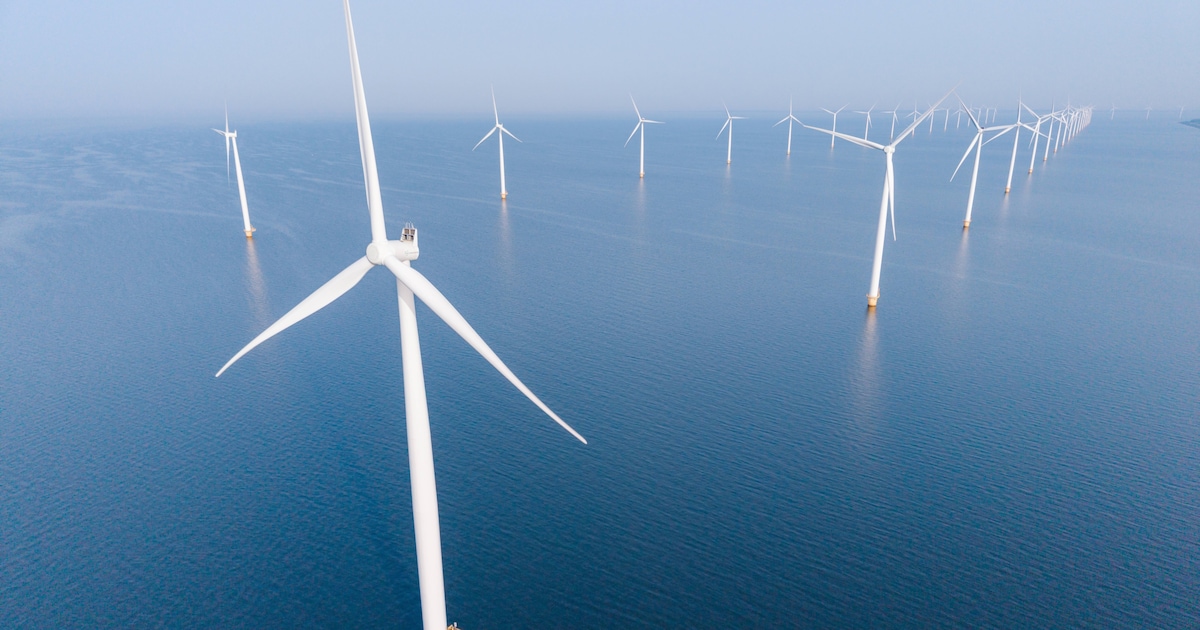
After five legal defeats, the Trump administration is relying on money instead of courts: almost $1 billion is intended to convince the French energy company TotalEnergies never to build two wind farms on the east coast.
Bad times for Donald Trump’s campaign against offshore wind power: A few days ago, Vineyard Wind installed the last of its 62 turbines off the Massachusetts coast. Shortly thereafter, Revolution Wind reported that its turbines off Rhode Island were feeding electricity into New England’s grid for the first time. The Trump administration tried to block both projects for months by halting construction. However, the US President did not get away with this in the federal courts.
Now the White House appears to be embarking on a new strategy that marks a fundamental change in course.
Trump’s plan: money instead of courts
As the “New York Times” reports that senior government officials are working on settlement agreements that would bring French energy giant TotalEnergies more than $928 million. In return, the company will permanently abandon two planned offshore wind farms: the Attentive Energy project off the coast of New York state and Carolina Long Bay off North Carolina.
TotalEnergies bought the lease rights for both locations in federal auctions in 2022: the Attentive Energy lease for $795 million, Carolina Long Bay for $160 million – a total of around $955 million. The sum of $928 million now offered would correspond to almost a full refund of the purchase price at the time.
The Interior Ministry would terminate the leases in federal waters and the Justice Department would make the payment. In return, TotalEnergies would bury its wind plans – and instead commit to investing in natural gas infrastructure in Texas, in line with Trump’s energy policy.
Energy transition is at stake
The two projects are still in an early planning phase and are therefore not yet under construction. Nevertheless, their dimensions would be considerable: Attentive Energy is designed for a capacity of up to 3 gigawatts, Carolina Long Bay for more than 1 gigawatt. Attentive Energy could have supplied more than a million households in New York and New Jersey with electricity, and Carolina Long Bay could have supplied around 300,000 households in North Carolina.
Legal failure forces a new path
Why this billion-dollar grab into the state treasury? The answer lies in a long series of defeats in federal courts.
The reason given was a classified report from the Ministry of Defense, which allegedly classified the wind farms as a threat to national security. All five affected projects sued against the measure and received preliminary injunctions from federal courts allowing construction to resume.
Since Trump has so far failed to get the courts on his side, the US President is now apparently turning directly to the energy companies.
Experts are concerned. “It’s quite unusual for the government to make this kind of spending, seemingly just because Trump doesn’t like offshore wind,” John Leshy, who served as Interior Department general counsel under President Clinton, told The New York Times.
What happens if TotalEnergies refuses?
It is unclear whether TotalEnergies will accept the offer. If the company rejects the deal, the leases would still be terminated, according to documents obtained by The New York Times. The government claims that it can terminate the leases at its own discretion, for example on grounds of national security. If TotalEnergies were to reject the deal, it would result in a costly legal battle that both sides would probably prefer to avoid.
Continuing the projects would be difficult anyway: TotalEnergies would need the approval of the Trump administration for environmental assessments and construction plans – an approval that is hardly expected under the current political circumstances.
“Wind turbines drive whales crazy”
Trump’s aversion to wind power has been known for years. As early as 2011, he lodged an objection against a planned wind farm in front of his golf course in Scotland. He filed a lawsuit in 2013 after the Scottish government approved the project. The British Supreme Court unanimously rejected his lawsuit in 2015. Since then, he has regularly described wind turbines as ugly and inefficient, and he also claims that they drive whales “crazy”.
Whether the deal with TotalEnergies will actually come about will be seen in the coming weeks.